The Heartwarming Shelter Secret Behind Max the Dog in How the Grinch Stole Christmas
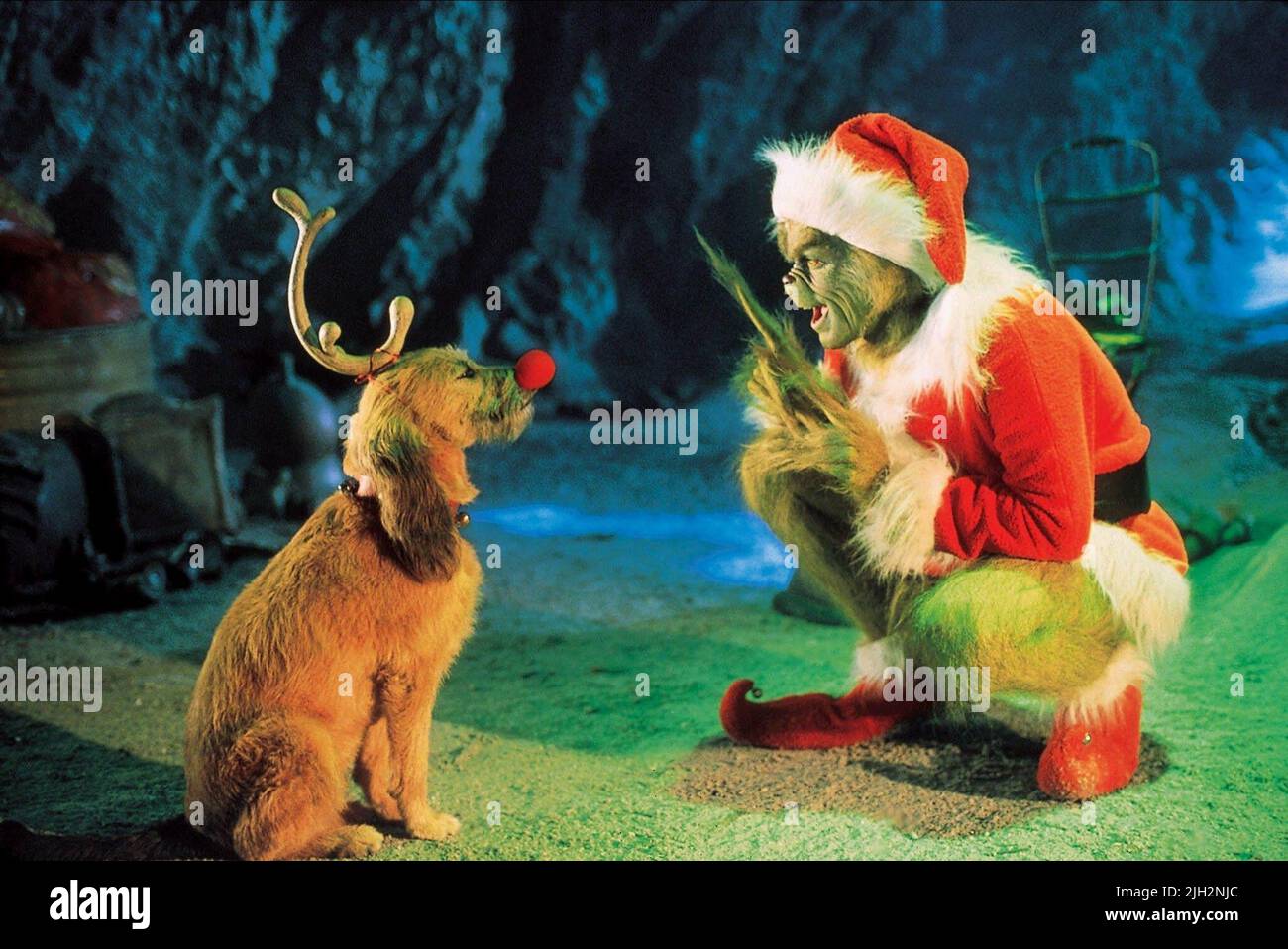
Jim Carrey spent hours inside an agonizing green foam-latex prosthetic suit to portray the Christmas-hating hermit in the 2000 live-action adaptation of How the Grinch Stole Christmas. Yet across decades of holiday re-watches, audiences routinely hand their hearts to the quiet four-legged companion trapped on Mount Crumpit: Max. With his floppy ears, anxious eyes, and a solitary horn strapped to his head, Max ground the film’s chaotic slapstick in raw emotional warmth.
What casual viewers rarely realize is that Hollywood did not purchase Max from an elite kennel or an established animal agency. The dog at the center of director Ron Howard’s Whoville was Kelly, an abandoned mixed-breed stray rescued from a municipal animal shelter just weeks before production began. Her journey from kennel obscurity to major motion picture stardom was supervised under stringent American Humane Society Report guidelines, establishing a casting philosophy that still influences holiday productions today.
📌 Key Takeaways:
- The Casting Discovery: Lead performer Kelly was a shelter rescue dog discovered by animal trainers shortly before shooting started for the 2000 Jim Carrey Grinch film.
- The Mixed-Breed Identity: Max is not a purebred show dog; trainers selected a scruffy terrier and hound cross to match the ink-drawn sketches of Dr. Seuss’s original 1957 storybook.
- A Living Tradition: The pipeline established on set carried over into theme parks, where Universal Studios Grinchmas productions recruit shelter rescues to play Max.
From Kennel Isolation to Mount Crumpit: Kelly's Path to Stardom
In 1999, lead animal coordinator Roger Schumacher scoured Southern California animal shelters seeking a dog that could embody Dr. Seuss's iconic canine companion. High-pedigree Hollywood show dogs had glossy coats and refined postures that completely clashed with Theodor Geisel’s hand-drawn vision of a scruffy, slightly worn outcast pup. Schumacher needed an authentic mutt.
He discovered Kelly, a medium-sized stray with expressive, saucer-shaped eyes and sand-colored fur, waiting in a rescue pen. She possessed two non-negotiable qualities needed for film sets: intense food drive and an unshakeable, gentle disposition around loud mechanical equipment. Schumacher and his crew adopted Kelly alongside five lookalike shelter pups, named Chip, Topsy, Stella, Zelda, and Bopper, to split the demanding physical duties of the film.
Kelly performed roughly 80% of the dog scenes in the 2000 film, handling complex interactive moments with Carrey. Her stunt doubles stepped in for specialized cues. Chip tackled fast-sprint sequences, while Zelda and Stella handled specific technical stunts involving the oversized motorized sleigh. Every dog involved arrived via rescue pipelines, and every one of them transitioned into permanent adoptive homes with the production crew after filming wrapped.
Decoding Max's Breed: What Dr. Seuss Actually Drew
Online search queries spike every December asking about Max's official dog breed. The short answer: Max is an unadulterated American mutt.
Kelly herself was a mixed-breed rescue containing strong markers of Jack Russell Terrier, Wirehaired Dachshund, and Beagle ancestry. Her coat carried the wire-haired texture and warm brown hue typical of working terrier crosses, while her long back and drooping ears gave her that perpetually submissive, hopeful profile Theodor Geisel drew in How the Grinch Stole Christmas! in 1957.
Geisel never assigned Max a registered breed in his prose. In the original 1966 animated television special directed by Chuck Jones, Max retained those same ambiguous, hound-like terrier proportions. When Ron Howard transitioned the story to live-action, animal coordinators intentionally rejected purebreds to preserve the character’s identity as an overlooked Whoville holiday pet that found solidarity with an outcast master.
On Set with Jim Carrey: Antlers, Cheerio Treats, and Stunt Safety
Working opposite Jim Carrey's manic physical comedy presented genuine hurdles for the animal team. Carrey’s prosthetics, yellow contact lenses, and booming vocal delivery terrified unfamiliar dogs.
To bridge that gap, Schumacher integrated Carrey directly into the training regimen weeks before filming commenced. Carrey carried pockets filled with hot dog bites and Cheerios, feeding Kelly between takes so she associated the monstrous green creature with rewards and protection. When Carrey snarled or lunged during takes, Kelly stayed locked onto her trainer’s subtle hand signals positioned just behind the camera lens.
| Canine Actor | Primary Production Role | Key Sequence Handled | Post-Film Status |
|---|---|---|---|
| Kelly | Lead Character Actor | Emotional close-ups, dialogue reactions, sleigh cockpit work | Adopted by movie animal trainers |
| Chip | Speed & Running Double | Sled pull sprints across artificial snow drifts | Adopted by studio crew member |
| Zelda & Stella | Stunt & Reaction Doubles | Harness falls, biting the Grinch’s pants leg, running under beds | Adopted into trainer family homes |
| Bopper & Topsy | Stand-ins & Lighting Tests | Rigging marks, camera focus runs, environmental checks | Adopted as certified companion pets |
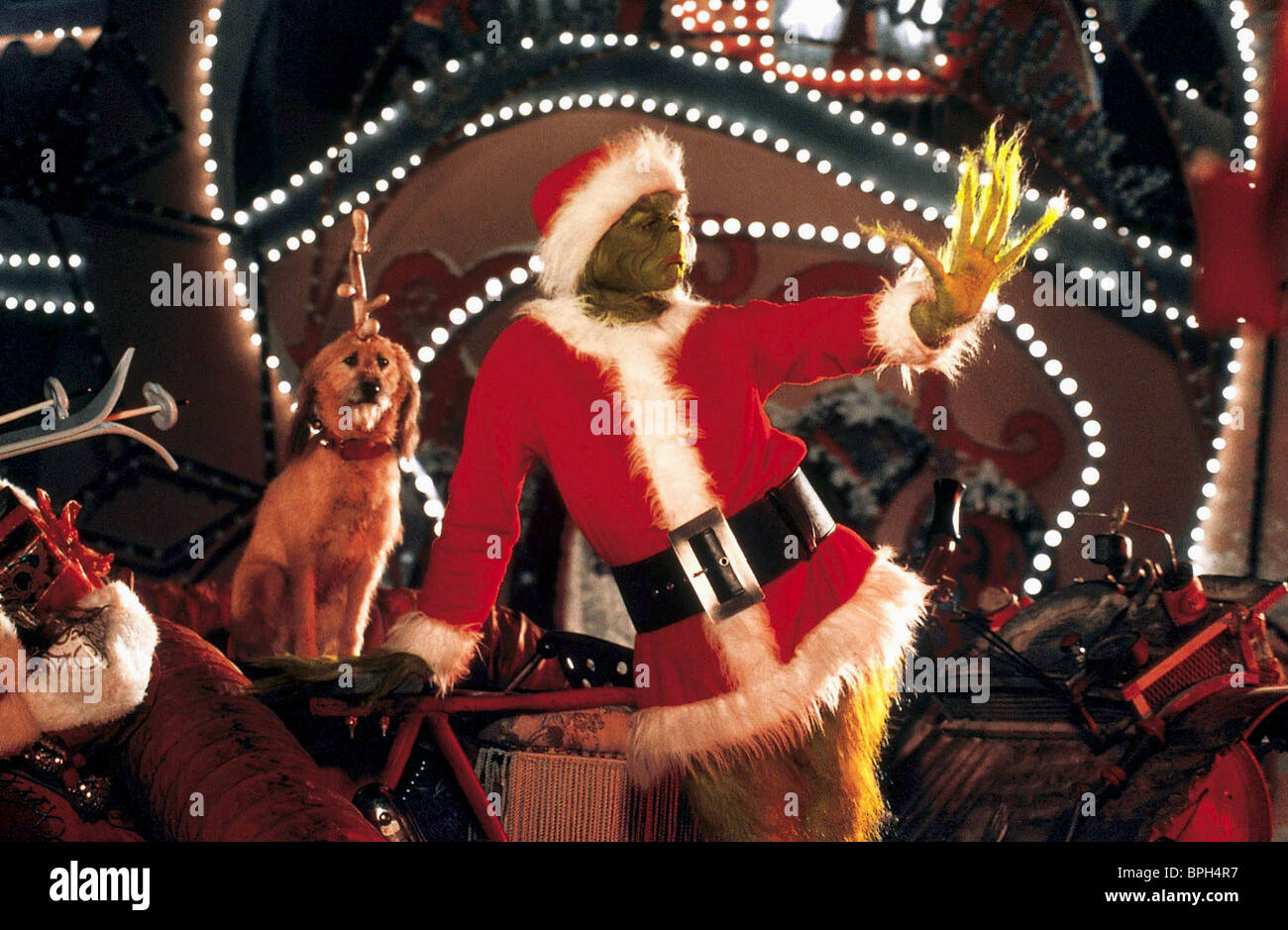
The iconic reindeer antler headpiece required dedicated engineering to ensure zero strain on Kelly's neck. The prop department molded ultra-lightweight foam wrapped in soft felt, secured by elastic nylon chin bands painted to match her fur. Under American Humane Society standards, trainers enforced strict weight thresholds on every prop attached to the dogs, limiting antler-wearing periods to short filming intervals separated by long rest cycles.
Universal Studios Grinchmas and the Continuing Adoption Tradition
The production’s commitment to shelter animals did not vanish when the film hit theaters. Over two decades later, that rescue-first model governs live stage entertainment at major theme parks.
At Universal Studios Hollywood and Universal Orlando Resort, the annual Grinchmas celebration features a live Max greeting guests and sharing scenes with the park's walkabout Grinch. In an industry that often relies on specialty breeders for performing animals, Universal Studios maintains an exclusive arrangement with animal rescue agencies.
Trainers evaluate shelters across the country for mixed-breed dogs with the distinct scruffy Max look. Selected candidates receive intensive positive-reinforcement conditioning to navigate park crowds, flashing smartphone cameras, and blaring audio systems. The dogs live with professional trainers during their theme-park tenure and retire into private families, turning the character of Max into a permanent pipeline out of shelter kennels.
Transforming Hollywood’s Relationship with Rescue Dogs
Before the release of the 2000 Grinch adaptation, major studio features relied heavily on purebred animal talent agencies. Iconic movie dogs like Lassie (Rough Collie), Rin Tin Tin (German Shepherd), and Toto (Cairn Terrier) set an expectation that high-value film sets required registered bloodlines.
Kelly’s performance helped alter that mindset. Her nuanced facial work proved that shelter dogs could handle intricate cues on massive studio lots with zero loss in discipline. Following the critical praise of Max’s scenes, studio productions during the 2000s and 2010s increasingly tapped animal shelters for feature films and commercial work.
More importantly, Kelly’s screen time challenged common cultural misconceptions about abandoned animals. Audiences saw an abandoned street dog execute precise dramatic beats beside one of the highest-paid movie stars on earth. That visibility encouraged thousands of viewers to seek mixed-breed rescue dogs at local shelters instead of defaulting to commercial breeders during the holidays.
Frequently Asked Questions (FAQ)
What exact breed was Max in the Jim Carrey Grinch film?
Max was played primarily by Kelly, a female shelter mutt. DNA testing was not common in 1999, but professional animal trainers classified her as a cross between a Jack Russell Terrier, a Dachshund, and a small hound.
How many dogs played Max in the 2000 movie?
Six rescue dogs appeared as Max throughout the film. Kelly handled the majority of dialogue and close-up scenes, while five lookalikes (Chip, Topsy, Stella, Zelda, and Bopper) performed specialized running stunts, sled pulls, and lighting tests.
Was the antler heavy or uncomfortable for the dog to wear?
No. The production team constructed the antler out of hollowed, ultra-lightweight foam and secured it with custom-fitted elastic bands. Monitored by the American Humane Society, the dogs only wore the headpiece for brief shooting intervals before receiving immediate rest breaks and treats.
The Enduring Legacy of Hollywood's Favorite Rescue Mutts
The Grinch's transformation remains one of literature's great moral arcs, but the emotional anchor of the narrative has always been Max. Without his unwavering loyalty, the Grinch is merely a bitter recluse. With Max, he is someone capable of companionship long before his heart expands three sizes.
Knowing that Kelly sat on a shelter's intake roster before captivating millions of theatergoers adds profound resonance to the holiday classic. Her story stands as living proof that overlooked, unwanted shelter animals possess extraordinary potential when given patience, humane training, and an open door.
