The Hidden Meaning of the Black American Flag: Defiance, Heritage, or Threat?
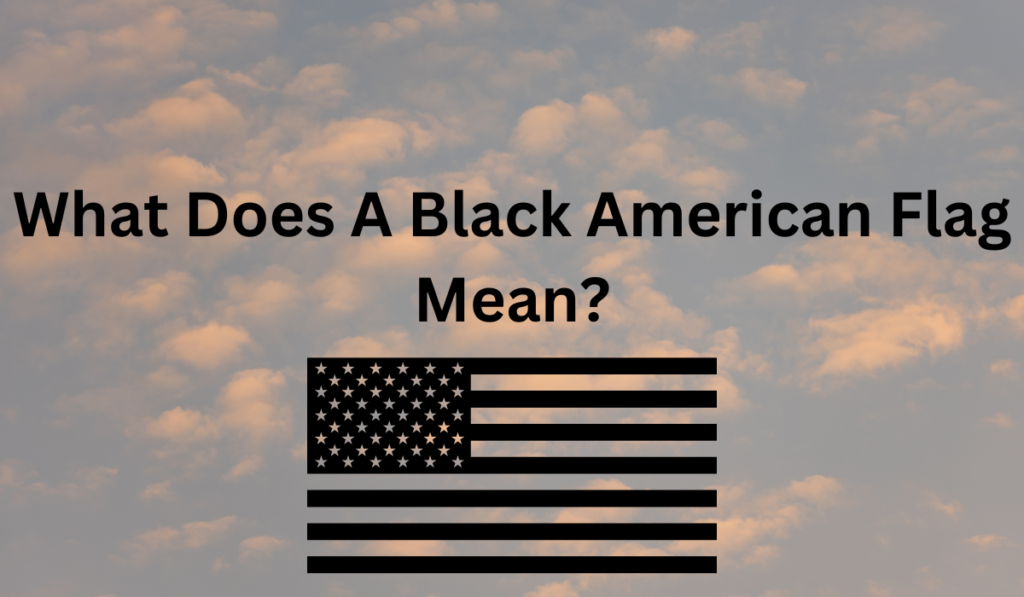
Across suburban subdivisions, rural fence lines, and tailgate assemblies, a stark monochrome silhouette has increasingly replaced the traditional red, white, and blue. Stripped of all color, the all-black American flag features dark fabric where crimson stripes once ran and deep obsidian fields where white stars previously shone. As the United States navigates its 250th anniversary milestone, symbols of national identity have splintered into competing ideological declarations. According to a recent WDET 101.9 FM Report examining shifting community perspectives, American iconography carries vastly different meanings depending on who hoists the banner.
The sudden visibility of the blackout flag has triggered unease among neighbors, municipal leaders, and law enforcement agencies. To some observers, the banner represents an aggressive declaration of violent intent. To others, it serves as an expression of tactical heritage, political alienation, or quiet grief over a perceived loss of national direction. Understanding the true meaning of the black American flag requires untangling battlefield history from viral folklore, military design, and modern political friction.
📌 Key Takeaways:
- The "No Quarter" Claim: Viral claims linking the all-black banner to Civil War military history represent an internet-era myth rather than documented army regulations.
- Tactical Origins: The aesthetic descends largely from low-visibility military patches developed for nighttime operations during post-9/11 counterinsurgency campaigns.
- Constitutional Status: Altering or flying monochrome flags violates advisory U.S. Flag Code regulations, but remains fully shielded under First Amendment flag rights.
The "No Quarter" Legend and Civil War Military History
The most common narrative surrounding the all-black American flag circulating across digital channels claims a direct link to the American Civil War. According to widely viewed videos on platforms like TikTok and YouTube, Confederate forces supposedly hoisted all-black flags to signal that "no quarter" would be given to enemy combatants, meaning prisoners would not be taken, and surrender would not be accepted.
That narrative does not match historical records.
While historical combatants across centuries occasionally utilized black banners as an inverse of the white surrender flag, most notably during the Golden Age of Piracy and selective skirmishes in the Mexican-American War, there is no formal record of an all-black Stars and Stripes serving as official military doctrine. Confederate irregulars such as William Quantrill occasionally rode under black silk flags during guerrilla skirmishes in Missouri and Kansas. However, these were crude personal banners, not inverted versions of the United States flag. The concept of an entirely blacked-out American flag signaling civilian rebellion is overwhelmingly a product of post-2015 internet culture, designed around historical lore rather than archival military procedure.
Under modern international humanitarian law, declaring "no quarter" is explicitly classified as a war crime under the 1907 Hague Regulations and the Geneva Conventions. The romanticization of this concept in domestic civilian life reflects an escalation in rhetorical hostility rather than an authentic continuation of recognized military tradition.
Tactical Subdued Flags and the Rise of Blackout Symbolism
The actual visual ancestry of the black American flag belongs to the United States Armed Forces, though not as a symbol of domestic defiance. During operations in Iraq and Afghanistan, standard bright red, white, and blue insignia posed an operational security risk. Bright colors stood out through night-vision optics and contrasted sharply against desert or woodland camouflage uniforms.
The military responded by issuing the tactical subdued flag. Produced in muted tones of olive drab, tan, charcoal, and matte black, these patches relied on infrared-reflective threads designed exclusively for night-vision identification by friendly units.
Over the past decade, tactical apparel manufacturers extracted this low-visibility aesthetic from the battlefield and injected it directly into civilian consumer culture. Blacked-out flags quickly adorned fitness gear, firearm cases, vehicle decals, and bumper plates. For many buyers, the subdued look represented utilitarian style, military support, or personal resilience. Over time, that tactical aesthetic evolved into blackout flag symbolism, moving from velcro shoulder patches to full-sized flags flying over private residences.
| Flag Variant | Origin & Timeframe | Primary Cultural Meaning | Legal & Civic Status |
|---|---|---|---|
| All-Black Flag ("No Quarter") | Internet lore & tactical gear (2016, Present) | Militant defiance, refusal to surrender, anti-establishment stance | Protected private speech; widespread civilian polarization |
| Tactical Subdued Flag | U.S. Military Night Operations (2001, Present) | Camouflage, infrared friend-or-foe identification | Standard military field equipment regulation |
| Thin Blue Line Flag | Created by Andrew Jacob (2014) | Support for law enforcement; counter-movement symbol | Banned on some municipal equipment; protected on private property |
| African American Flag | David Hammons (1990) | Pan-African liberation, Black American civil identity | Recognized fine art and cultural heritage banner |
Conflicting Meanings: Thin Blue Line to Pan-African Heritage
The proliferation of monochrome banners has created intense public friction because multiple designs share overlapping visual elements while conveying radically divergent ideas.
The most widely recognized predecessor to the all-black banner is the Thin Blue Line flag. As chronicled in investigative reporting by Politico, the black-and-white American flag with a single royal blue stripe was created in 2014 by college student Andrew Jacob during the emergence of the Blue Lives Matter movement. What began as an expression of police solidarity quickly sparked bitter civic fights. In November 2019, public officials in Montgomery County, Maryland barred a donated Thin Blue Line display inside a police station, prompting fierce debate reported by WAMU over whether the modified flag belonged in public facilities.
Similar disputes flared in New England. In April 2023, town leaders in York, Maine grappled with a prolonged police vehicle insignia controversy after residents petitioned to remove subdued black-and-gray flags from cruisers. The town ultimately opted to retain them, but the debate highlighted how easily altered flags provoke suspicion.
Compounding this visual landscape is an entirely distinct cultural emblem: the African American Flag created by artist David Hammons in 1990. Blending the layout of Old Glory with the red, black, and green colors of Marcus Garvey’s 1920 Universal Negro Improvement Association, this Pan-African liberation flag serves as an affirmation of Black cultural identity and struggle. Despite fundamentally different colors and historical origins, casual observers often confuse discussions of "Black American flags" between Hammons' celebrated cultural art and the all-black tactical banner flying from pickup trucks.
First Amendment Flag Rights and U.S. Flag Code Regulations
The spread of monochrome banners routinely leads to inquiries regarding legality. Federal law addresses the treatment of national symbols under Title 4 of the United States Code, widely known as the U.S. Flag Code.
Under 4 U.S. Code § 8(g), the flag should never have placed upon it, nor on any part of it, any mark, insignia, letter, word, figure, design, picture, or drawing of any nature. Section 8(b) adds that the flag should not be altered into monochromatic or customized color palettes. Consequently, producing or displaying an all-black American flag, a Thin Blue Line banner, or any commercial variation technical breaches federal flag etiquette.
The Flag Code functions strictly as an advisory guide. It carries zero criminal penalties, fines, or enforcement mechanisms.
Constitutional protections completely override statutory flag etiquette. Landmark Supreme Court decisions, specifically Texas v. Johnson (1989) and United States v. Eichman (1990), affirmed that modifying, coloring, or even burning the American flag constitutes symbolic speech protected by the First Amendment.
A related legal boundary emerged in disputes surrounding citizens flying the flag upside down. As documented by the Free Speech Center, flying the Stars and Stripes upside down, historically recognized in naval code as a signal of dire distress, enjoys robust First Amendment protection when used for political protest. The identical constitutional shield applies to all-black banners flown on private homes, private fencing, and personal vehicles. Municipalities cannot fine or restrict homeowners simply because neighbors view the flag as threatening or disrespectful.
Modern Political Protest and the Psychology of Blackout Banners
Why do individuals choose an all-black flag over traditional red, white, and blue? The shift reflects a psychological transition from conventional patriotism to militant political signaling.
Flags serve as civic shorthand. The traditional red, white, and blue banner communicates belonging to an established constitutional framework. Raising an all-black flag signals alienation from that framework. In modern political protest movements, the banner represents a surrender versus defiance symbol. The logic is stark: if a white flag signals surrender and submission, an all-black flag signifies absolute resistance.
For some owners, the flag acts as a warning to intruders or political opponents, broadcast across a front yard. It suggests an owner who views national institutions as compromised and values self-reliance, local defense, and resistance to outside authority. For others, the banner expresses mourning, signaling a belief that traditional constitutional liberties have died.
Because the banner lacks an official governing body or unified charter, its meaning remains volatile. One neighbor may fly the blackout banner purely as an admirer of tactical military gear. The neighbor across the street may view that same fabric as an open endorsement of political violence. That ambiguity fuels ongoing tension in communities across the country.
Frequently Asked Questions (FAQ)
Q1: Does the all-black American flag legally mean that "no quarter" will be given?
A1: No. Modern civilian displays carry no legal status, and declaring "no quarter" in wartime is a recognized war crime under the Geneva Conventions. The connection between the all-black U.S. flag and historical Civil War orders is an internet-era urban legend rather than documented military doctrine.
Q2: Is flying an all-black American flag illegal under federal law?
A2: No. While modifying the colors of the American flag runs counter to advisory standards in the U.S. Flag Code, the Supreme Court has repeatedly ruled that altering, modifying, or flying symbolic versions of the flag is fully protected as free speech under the First Amendment.
Q3: How does the all-black flag differ from the Pan-African American flag?
A3: The all-black flag is a monochromatic tactical design often tied to internet defiance lore or military aesthetics. The African American Flag, designed by artist David Hammons in 1990, incorporates the red, black, and green Pan-African liberation colors to celebrate Black cultural identity and heritage.
Reading the Cultural Barometer
Flags communicate what words often leave unsaid. In an environment marked by ideological division, visual shorthand has taken on outsized weight. The emergence of the all-black American flag is not an isolated design trend. It reflects a fractured national dialogue where even shared civic symbols are continuously altered, reclaimed, and contested. Whether interpreted as a tactical fashion statement, an expression of domestic resistance, or an implied warning, the blackout banner demonstrates how deeply the American cultural fabric continues to split along personal and political lines.
