The Mystery of Where Atoms End: What Modern Physics Gets Right and Wrong

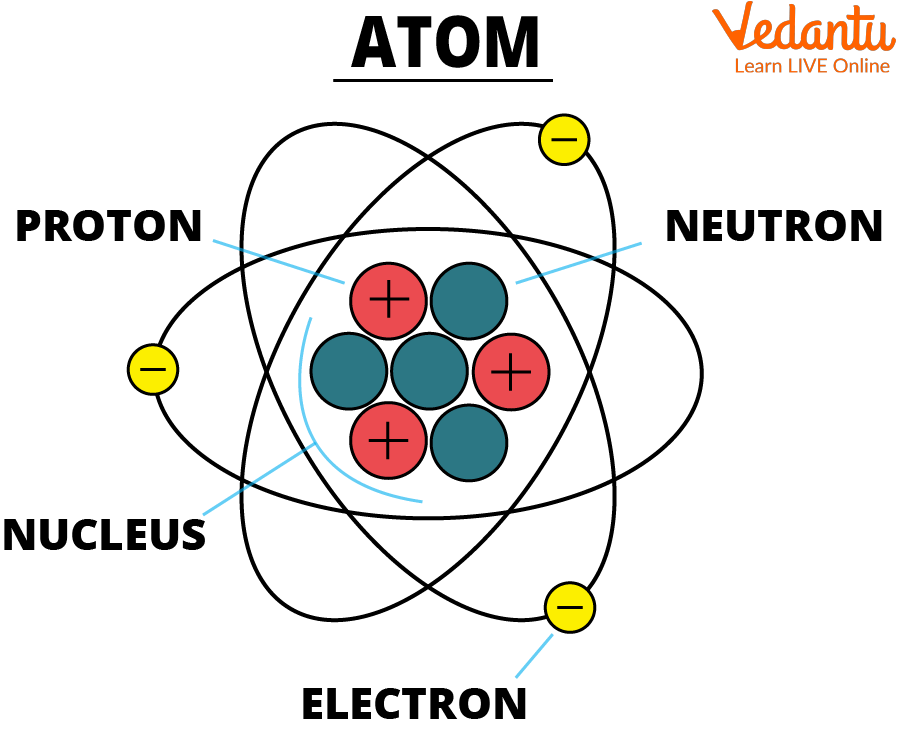
Every chemistry classroom displays a diagram that is fundamentally misleading. We are taught to envision atoms as miniature solar systems, with dense nuclei orbited by crisp, track-bound electrons. Yet, as highlighted in a recent Chemistry World Report exploring the quest to understand where atoms end, matter refuses to provide a clean edge. If you try to run your finger along the border of an atom, you find that its surface does not exist.
Atoms are the primary building blocks of matter, yet pinpointing where one atom stops and empty space begins remains one of the trickiest puzzles in contemporary physics. Modern quantum research has dismantled the neat borders drawn by twentieth-century textbooks. What replaces them is a shifting landscape of probability, dynamic force fields, and deformable electronic halos that warp depending on their chemical neighborhood.
📌 Key Takeaways:
- The Boundary Problem: Quantum mechanics dictates that an atom has no hard surface; its electron cloud technically trails off toward infinity.
- Operational Definitions: Scientists rely on working metrics like the van der Waals boundary and covalent radii, setting arbitrary density thresholds at roughly 90% to 95% probability.
- Structural Dynamics: Inside molecules and under extreme compression, atoms distort from symmetrical spheres into teardrops, lobes, and flattened disks.
The Persistent Flaws of the Planetary Model
Niels Bohr introduced his model of the atom in 1913. It was an intellectual triumph that explained the spectral emission lines of hydrogen by placing electrons in quantized, circular orbits around a central nucleus. It made physics teachable. It gave visual form to invisible building blocks of matter containing protons, neutrons, and electrons.
It was also wrong.
The Bohr model treats subatomic particles like miniature planets obeying classical mechanics, governed purely by electrostatic attraction. By the mid-1920s, Werner Heisenberg and Erwin Schrödinger showed that microscopic particles do not follow deterministic paths. An electron does not circle an atomic nucleus like Earth circles the Sun. Instead, it occupies a three-dimensional standing wave described by a wave function. The planetary model survives today on corporate logos and science museum banners, but it obscures how quantum mechanics truly governs reality.
Drawing the Line on Infinite Probability Clouds
In modern physics, the electron cloud model replaces rigid orbits with electron probability density. The Schrödinger equation tells you the likelihood of detecting an electron at any given coordinate in space. The resulting orbitals (the familiar s, p, d, and f shapes) describe fuzzy territories where an electron spends most of its time.
Herein lies the boundary dilemma: mathematically, the wave function never drops to absolute zero. The probability of finding an electron belonging to a carbon atom on your desk reaches across the room, out into the atmosphere, and across the galaxy. The probability becomes unimaginably small past a fraction of a nanometer, but it never technically terminates.
Because an atom lacks a physical skin, experimentalists must invent operational definitions. In standard practice, researchers define the atomic edge by enclosing a specific volume, typically where there is a 90% to 95% chance of locating the electron. When a measurement causes wave function collapse, the particle manifests at a single point. Until that interaction occurs, the atom remains an open-ended distribution of potential positions.
Measuring the Edge: Four Ways Physicists Size Up Atoms
Because no single ruler fits an object without edges, physical chemists rely on distinct operational radii depending on the environment. An isolated noble gas atom behaves differently than a carbon atom locked inside a diamond lattice.
| Radius Metric | Physical Basis | Typical Range (pm) | Primary Experimental Use |
|---|---|---|---|
| Covalent Radius | Half the distance between two identical bonded nuclei | 31 pm (H), 225 pm (Cs) | Mapping molecular bond lengths in organic chemistry |
| Van der Waals Boundary | Point where electron repulsion halts non-bonded atomic approach | 120 pm (H), 348 pm (Fr) | Predicting molecular packing in crystals and liquids |
| Ionic Radius | Share of inter-nuclear distance in an ionic crystal lattice | 30 pm (Al³⁺), 220 pm (I⁻) | Analyzing mineral structures and solid-state batteries |
| Calculated Atomic Radius | Theoretical distance from nucleus to outermost orbital peak | 53 pm (H), 298 pm (Cs) | Quantum chemical simulations and computational modeling |
The van der Waals boundary serves as the standard proxy for an atom's external size. When two neutral atoms drift toward each other, their negative electron clouds begin to repel each other via Pauli repulsion. The point of closest equilibrium approach, measured across thousands of crystal structures, establishes this effective diameter.
Inside the Core: Fundamental Forces and the Nuclear Boundary
If the outer edge of an atom is a soft, indeterminate fog, the core is the complete opposite. Packed within a diameter roughly 100,000 times smaller than the atom itself sits the atomic nucleus. This central cluster contains virtually all the mass, binding protons and neutrons together against fierce electrostatic repulsion.
Protons carry positive electric charges. Left solely to the electromagnetic force, they would fly apart instantly. What holds them together is the strong nuclear force, mediated by gluons acting between fundamental quarks. This force is remarkably potent but has an extremely short range, extinguishing completely past roughly 1 to 2 femtometers (10⁻¹⁵ meters).
Unlike the electron cloud, the nucleus possesses a comparatively sharp boundary. High-energy electron scattering experiments demonstrate that nuclear matter maintains a remarkably uniform density before dropping off steeply within a narrow skin depth of about 0.5 femtometers. Deep inside, matter is tightly packed; further out, the atom is mostly void.
Molecular Geometry and the Deformation of Atomic Shells
Isolated atoms in a vacuum remain spherically symmetrical. Put them in the real world, and that symmetry vanishes. When chemical bonds form, orbitals hybridize and overlap, redistributing electron probability density across the entire molecular architecture.
In a water molecule (H₂O), the strong electronegativity of the oxygen atom drags electron density away from the two hydrogen nuclei. The hydrogen atoms do not retain their spherical identity; they become exposed positively charged bumps on one side of an asymmetric electronic envelope. In conjugated carbon rings, such as benzene, electrons delocalize into doughnut-shaped pi-clouds hovering above and below the nuclear plane.
Under pressures exceeding 100 gigapascals, such as those found deep inside planetary mantles, core electron orbitals that normally remain inert begin to merge. Atoms lose their characteristic individual volumes entirely, squishing into interlocking polyhedral cells. The concept of an isolated atomic radius becomes meaningless in these dense environments.
The Practical Stakes in Advanced Nanotechnology
Arguing over picometers sounds like pure academic hair-splitting. It is not. The lack of a firm atomic edge creates concrete engineering hurdles for the semiconductor industry.
As commercial fabrication nodes push down toward 2-nanometer and sub-nanometer scales, the distance between transistor gates spans only a dozen atoms across. At these dimensions, electron probability clouds spill over physical barriers. Quantum tunneling occurs precisely because an electron wave function does not drop to zero at the edge of a silicon channel. Current leaks through gates, producing heat and logic errors.
Engineers cannot design modern microprocessors by treating atoms as rigid building blocks. Device models require full quantum mechanical calculations of electron density gradients to predict exactly where charge carriers will leak. The elusive boundary of the atom dictates the physical limits of modern computing.
Frequently Asked Questions (FAQ)
Q1: If atoms are mostly empty space, why does solid matter feel hard?
A1: Solid surfaces feel firm due to electrostatic repulsion and the Pauli exclusion principle. When you press against an object, the electrons in your hands and the electrons in the object are forced into identical quantum states. Quantum mechanics forbids identical fermions from occupying the same space and energy state, generating powerful repulsive forces that prevent your hands from slipping through.
Q2: Can we capture a direct photograph of an atom?
A2: Not in the optical sense, because atoms are smaller than the wavelengths of visible light (400, 700 nanometers). However, instruments like Scanning Tunneling Microscopes (STM) and Atomic Force Microscopes (AFM) map electron density and atomic forces using atom-sharp probes. These instruments render clear topographic visualizations of individual atoms arranged on surfaces.
Q3: How much volume does the atomic nucleus occupy relative to the whole atom?
A3: The nucleus occupies roughly one-quadrillionth (10⁻¹⁵) of the atom's total volume. If an atom were scaled up to the size of a professional football stadium, the nucleus would sit on the 50-yard line with the dimensions of a small marble, while the electron cloud would occupy the entire bowl up to the highest seats.
Rethinking Matter at the Limits of Detection
Centuries of classical intuition lead us to demand neat, distinct edges on physical objects. We expect reality to consist of tiny pellets stacked together like bricks in a wall. Subatomic physics reveals that nature operates under an entirely different architecture.
An atom is not a hard sphere bounded by a protective wall. It is an organized disturbance in universal quantum fields, a dense knot of mass and positive charge anchoring a diffuse, fluctuating cloud of electronic probability. As laboratory instruments measure subatomic behavior with attosecond precision, science is moving past the need for artificial borders. Matter is dynamic, relational, and fundamentally continuous with the space around it.
