The One Secret Ingredient That Keeps Grilled Shrimp Plump, Snappy, and Never Rubbery
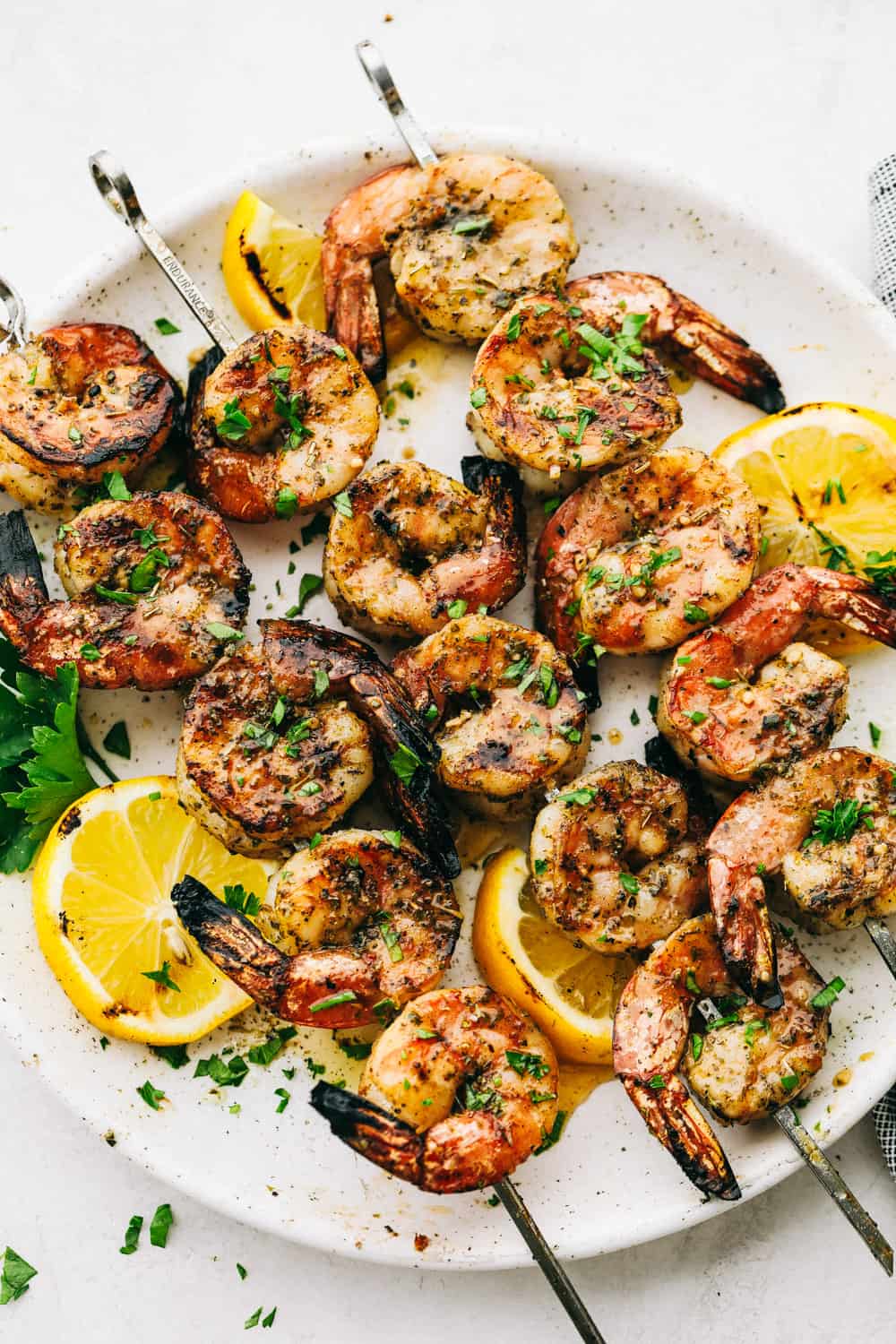
Few backyard grilling mistakes happen as fast as ruining seafood. You lay plump prawns over glowing coals, glance away to grab a pair of tongs, and return to find shriveled, rubbery commas welded to the grates. While home cooks often blame excessive heat or poor timing, culinary scientists point to an overlooked biochemical misstep: cooking naked proteins that lack moisture defense. As detailed in a recent Allrecipes Report tracking the season's most reliable cooking fundamentals, foolproof seafood demands treating delicate muscle fibers with precise pre-cook chemistry before they ever meet the grill.
📌 Key Takeaways:
- The Essential Prep: A brief 15-minute alkaline soak using sodium bicarbonate fundamentally changes shrimp proteins, locking in moisture and preventing rubbery texture under extreme heat.
- The Thermal Window: Grilling shrimp requires blistering direct heat for strictly two to three minutes per side, pulling the shellfish once it hits an internal cooking temperature of 135°F, 140°F.
- Flavor Timing: Sugary glazes and delicate dairy fats burn within seconds over high heat; applying a lemon herb glaze or garlic butter marinade during the final 30 seconds preserves vibrant flavor without bitter char.
Why Backyard Shrimp Turns Dry, Chalky, and Tough
Shrimp meat consists of short muscle fibers surrounded by a thin matrix of delicate connective collagen. Unlike beef brisket or pork shoulder, which require hours of low heat to break down tough connective tissues, crustacean muscle contracts violently when exposed to sudden temperature spikes. By the time shrimp reach 140°F, their protein coils tighten like clenched fists, squeezing out intracellular water. Push the meat past 150°F, and you end up with dry, fibrous nuggets stripped of natural sweetness.
Traditional marinades frequently worsen this structural breakdown. Dumping shrimp into bowls of raw lemon juice or vinegar for an hour does not tenderize the meat; it chemically "cooks" the surface proteins through acid denaturation. The acid prematurely uncoils proteins, leaving the exterior mushy before cooking even starts. Once exposed to intense flame, that compromised surface rapidly scorches while the core sheds its remaining juices.
Size also dictates margin of error. Selecting small varieties almost guarantees failure on a hot grate because their center overcooks before the exterior develops any flavorful browning. Starting with jumbo peeled deveined shrimp, specifically 16/20 or 21/25 count per pound, buys vital seconds over the coals, allowing a distinct crust to form while the interior stays tender.
The Alkaline Solution: How a Baking Soda Brine Rewires Crustacean Proteins
Commercial seafood houses and Cantonese dim sum chefs have relied on alkaline treatments for decades to create that signature crisp, bouncy snap in dumplings and stir-fries. Adapting this method for outdoor cooking transforms standard grilling. By applying a baking soda shrimp brine alongside kosher salt, you elevate the surface pH of the shrimp, which directly alters how actin and myosin proteins bond.
In an alkaline environment, shrimp proteins cannot bind as tightly together during thermal contraction. Because the muscle fibers remain partially open instead of squeezing shut, they hold onto intracellular moisture rather than venting it into steam. The higher surface pH also accelerates the Maillard reaction, allowing deep caramelization to develop in half the usual time.
To prepare the brine, toss 1 pound of thawed, deveined shellfish with 1 teaspoon of kosher salt and ¼ teaspoon of baking soda. Let the mixture sit uncovered in the refrigerator for 15 to 20 minutes. Avoid exceeding 30 minutes, which can impart a faint metallic aftertaste. After resting, pat the shellfish thoroughly dry with paper towels. Removing residual surface moisture ensures immediate searing rather than steaming, turning each bite plump and crisp rather than chalky.
Charcoal vs. Gas Grill Settings and Timing Benchmarks
Cooking shrimp requires high thermal energy delivered rapidly across a focused area. Attempting to cook shellfish over low or indirect heat simply bakes the meat, evaporating moisture before surface browning can form. Gas grills should run on their highest output, while charcoal setups require a consolidated bed of lump charcoal to create a blazing direct zone.
The following guide breaks down equipment configurations and operational limits across common grilling setups:
| Grill Method | Target Grate Heat | Direct Heat Grilling Time | Core Pull Temp |
|---|---|---|---|
| Lump Charcoal (Two-Zone) | 500°F, 550°F | 90, 120 seconds per side | 135°F, 138°F |
| Standard Gas Grill (High) | 450°F, 500°F | 2, 3 minutes per side | 138°F, 140°F |
| Pellet Smoker (Direct Sear Mode) | 450°F, 475°F | 2.5, 3 minutes per side | 138°F, 140°F |
When considering charcoal vs gas grill settings, charcoal delivers superior dry infrared heat that creates crisp blister marks before the internal core overheats. Gas grills deliver steady, repeatable temperatures, but their burners release small amounts of water vapor during combustion. To compensate on gas, preheat cast-iron grates for a full 15 minutes with the lid shut to build maximum thermal mass. Keep the lid open while cooking to monitor color changes in real time.
Prep, Skewering, and Quick Seafood Marinades
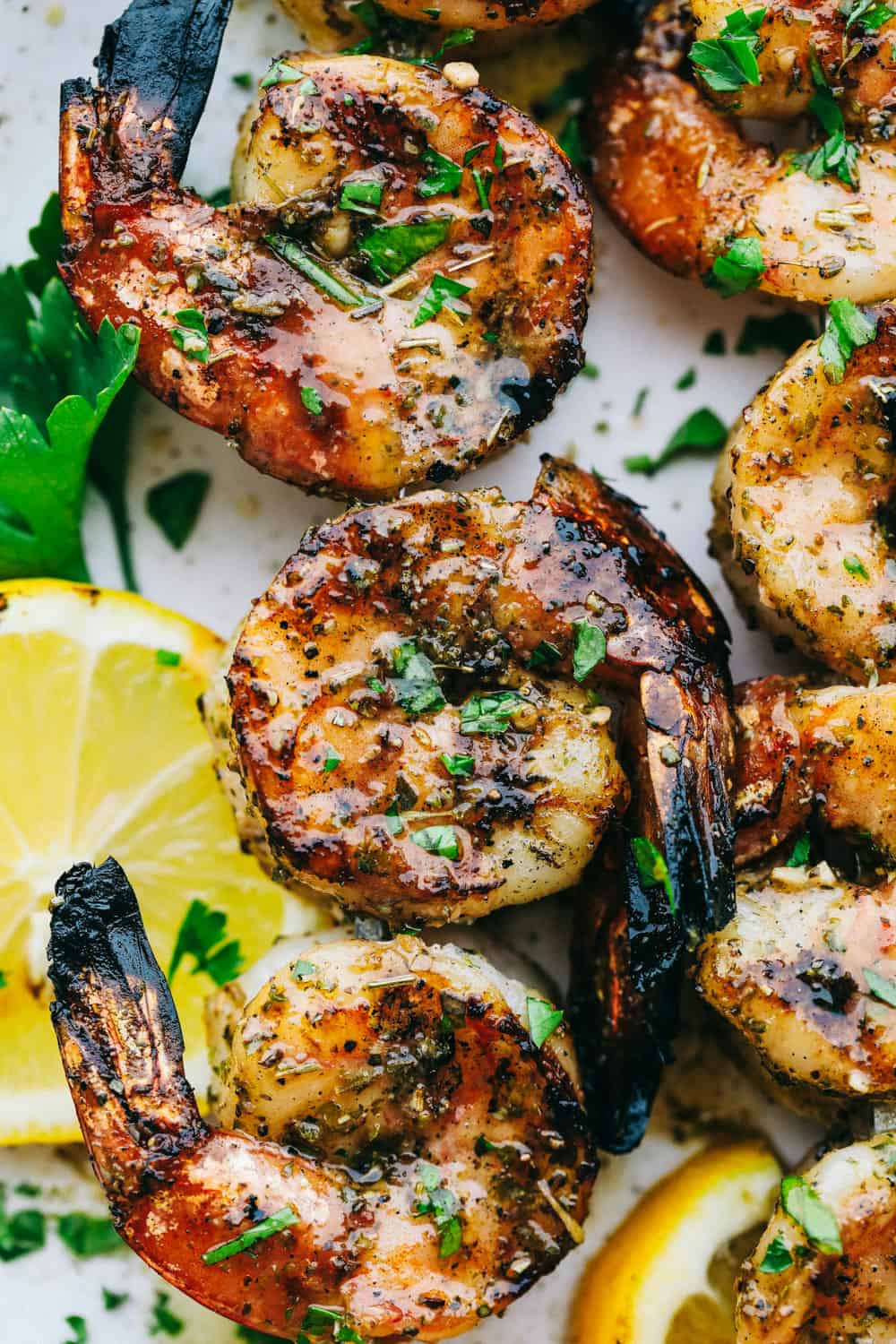
Placing loose pieces directly onto outdoor grates creates chaotic flipping and risks losing food between the bars. Skewering stabilizes the protein, allowing you to turn a dozen shrimp in one swift movement. If using bamboo, complete a 30-minute wooden skewers soaking routine in water to keep the timber from incinerating over direct flames.
Skewer your shellfish tightly through both the tail and head ends, packing them spoon-style against each other. Threading pieces closely together reduces exposed surface area, slowing down moisture loss while allowing the outer margins to char evenly. Using two parallel skewers rather than one prevents the pieces from spinning freely when flipped.
Before placing skewers over fire, coat them lightly in a high smoke point oil like avocado, canola, or clarified ghee. Avoid extra virgin olive oil at this phase; its lower smoke threshold breaks down into bitter compounds at 500°F. For flavor bases, rely on oil-and-spice-driven quick seafood marinades featuring smoked paprika, granulated garlic, ground coriander, and black pepper. Apply these oil rubs directly before cooking, skipping acidic liquids until the shellfish leaves the heat.
The Glaze Finish and Ideal Summer Barbecue Side Dishes
The most common way cooks scorch their food is applying butter and fresh garlic too early. Milk solids burn at 250°F, and minced fresh garlic turns bitter and black within 45 seconds of direct heat contact. The solution is dividing seasoning into two phases: a high-heat dry sear followed by a post-grill baste.
Melt four tablespoons of unsalted butter in a small pan alongside three minced garlic cloves, fresh parsley, and cracked black pepper to build a rich garlic butter marinade. Keep the sauce warm on the cooler edge of the grill. Alternatively, whisk olive oil, grated lemon zest, oregano, and honey for a punchy lemon herb glaze.
Brush your chosen sauce across the skewers during the final 30 seconds of cooking, or transfer the cooked skewers straight from the flames into a wide bowl containing the warm glaze. Tossing the hot shellfish directly in the sauce emulsifies the oils with surface juices, coating every crevice without scorching delicate flavor aromatics.
Complete the meal with balanced summer barbecue side dishes that handle residual grill heat. Charred sweet corn tossed with cotija cheese, grilled asparagus spears with sea salt, chilled watermelon mint salad, or toasted sourdough slices to catch runaway garlic butter all pair seamlessly with hot seafood.
Frequently Asked Questions (FAQ)
Q1: Why does baking soda stop shrimp from turning rubbery?
A1: Baking soda raises the surface pH of crustacean meat. This prevents actin and myosin protein coils from tightening too quickly and squeezing out water, keeping the interior tender and snappy while accelerating surface browning.
Q2: Should I keep shells on or peel the shrimp before grilling?
A2: Grilling shell-on shrimp protects moisture, but prevents dry seasonings and glazes from penetrating the meat. Peeling and deveining while leaving the tail on offers the best balance, allowing dry brines and marinades to adhere directly to the muscle.
Q3: How do I know the shrimp are done without a digital thermometer?
A3: Watch the shape and color transition. Raw shellfish is translucent and limp. Perfectly cooked shrimp forms a loose "C" shape with an opaque white interior and pink exterior. If it curls into a tight, closed "O" shape, the muscle fibers have contracted past the optimal window.
Mastering the Two-Minute Fire
High-heat seafood cooking leaves no margin for guesswork. By replacing long acidic marinades with a short baking soda dry brine, you structurally reinforce delicate crustacean meat against intense grill heat. Thread jumbo pieces closely on double skewers, sear them over high direct flame for roughly two minutes per side, and finish with fresh garlic butter away from flare-ups. This simple adjustment turns a finicky outdoor dinner into one of the most reliable fast-cooking meals in your warm-weather rotation.
