The Physical Therapist’s Blueprint: What Perfect Squat Biomechanics Actually Look Like
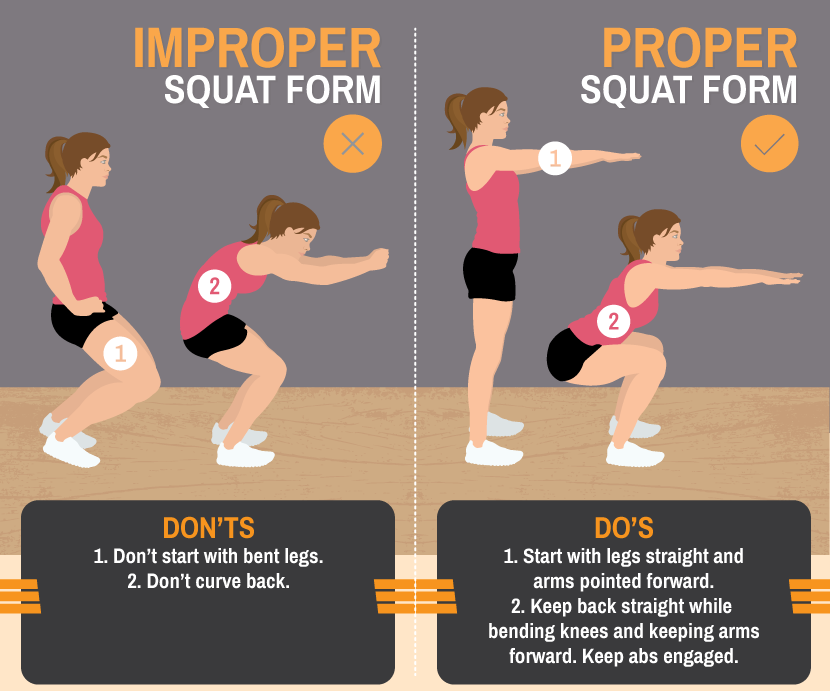
Every gym culture has its stubborn orthodoxy. For decades, lifters were told to keep their torsos entirely upright, push their hips back as if searching for a distant chair, and never let their knees cross the vertical plane of their toes. That dogmatic advice broke hips, strained lower backs, and left millions battling nagging joint inflammation. Real orthopedic mechanics tell a different story. As digital motion tracking transforms clinical rehabilitation, highlighted in a recent The Brighter Side of News Report on how BioCoach deploys computer vision for squat biomechanics feedback, physical therapists are pulling back the curtain on what functional alignment genuinely requires.
Human skeletons vary radically across populations. There is no universal geometric template for the descent. What exists instead is a series of biomechanical levers governed by skeletal ratios, joint mobility, and muscular timing. Achieving right squat form is not about forcing your limbs into a rigid, textbook posture seen on an infographic. It is an active engineering problem that balances moment arms across the hips and knees while stabilizing the spine under compression.
📌 Key Takeaways:
- Anatomical Variation: Individual femur length anthropometry dictates whether your torso remains upright or pitches forward to maintain center of mass.
- The Anterior Myth: Allowing intentional knee tracking over toes is required to hit depth without overloading the lumbar spine.
- Joint Preservation: Mitigating patellofemoral joint stress requires balanced hip hinge mechanics, an established foot tripod stance width, and active hip abduction.
How Femur Length Anthropometry Shapes the Squat
Look across any weight room and you will see two lifters performing identical back squats with completely different silhouettes. One stays nearly vertical, descending like an accordion. The other folds over at a 45-degree angle, resembling a human crane. Neither is inherently wrong. The primary driver of this visual disparity is femur length anthropometry relative to torso length.
When a lifter with disproportionately long femurs initiates a descent, the femur acts as a long lever arm driving the pelvis far behind the midfoot. To keep the systemic center of gravity directly over the midfoot, the lifter must create an aggressive forward torso angle. Demanding that an individual with long thighbones remain upright forces their hips backward without an offsetting forward knee translation. The result is an immediate loss of balance or catastrophic strain on the thoracolumbar junction.
Short-femured individuals experience the opposite mechanical reality. Their shorter thighbones produce a compact moment arm, enabling an upright torso with minimal forward lean. Assessing form without accounting for these proportions leads to flawed coaching. True mechanical integrity is achieved when the barbell or torso mass tracks over the midfoot in a straight vertical path, regardless of the angle formed between the ribs and thighs.
Joint Angles and the Truth About Knee Travel
The persistent myth that knees must never travel past the toes originated from a 1978 study that failed to account for total systemic loading. Restricting anterior knee excursion does reduce patellofemoral shear, but it spikes hip shear forces by more than 1,000% and places excessive rotational torque on the lumbar vertebrae.
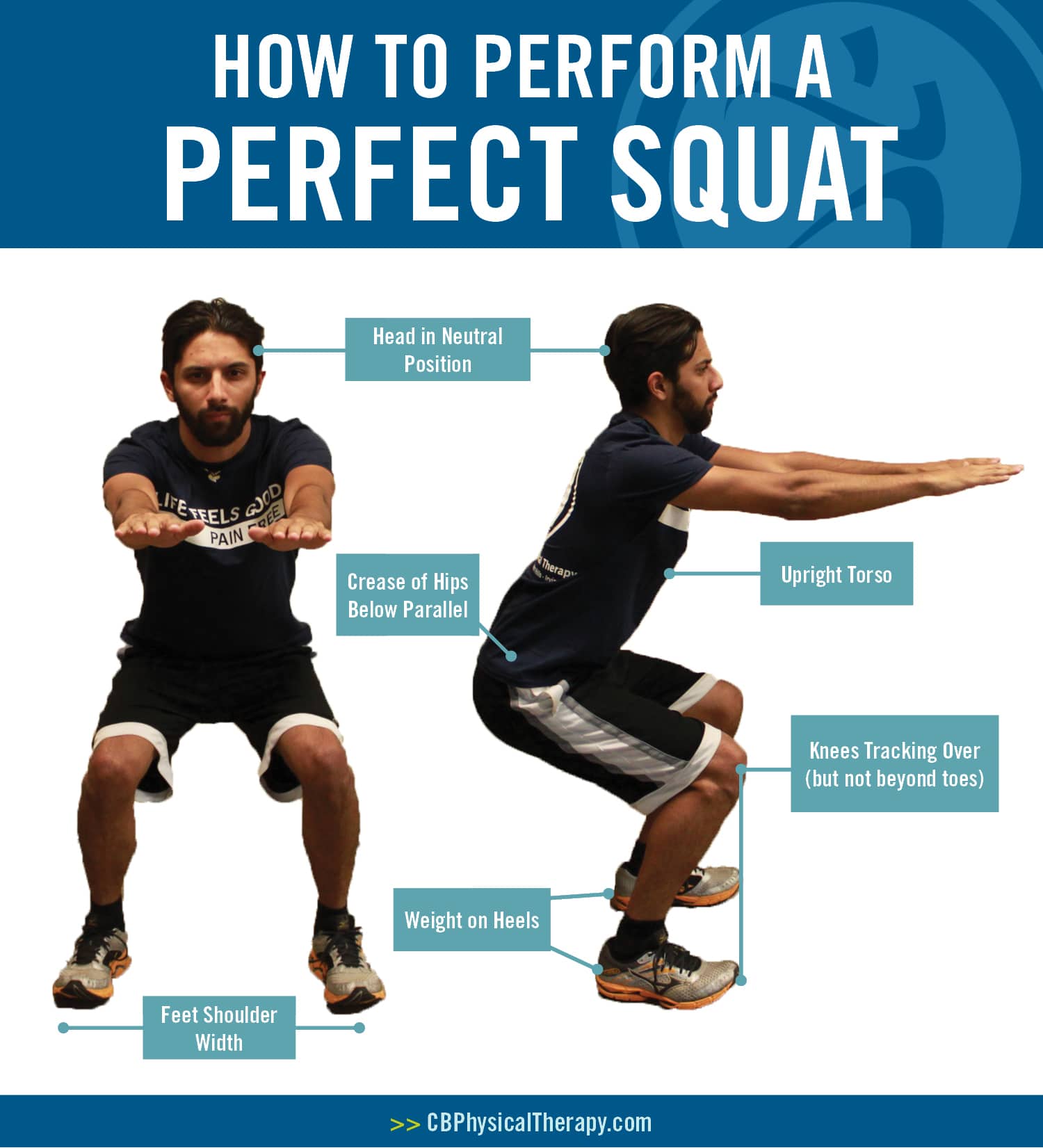
Physical therapists know that knee tracking over toes is not a structural fault; it is an orthopedic necessity. For the hips to sink below parallel, the tibia must tilt forward through adequate ankle dorsiflexion mobility. When a lifter possesses the required 35 to 45 degrees of closed-chain dorsiflexion, the knee glides smoothly in line with the second and third toes. This distribution divides load equitably between the quadriceps tendon and the posterior chain.
[Barbell / Center of Mass]
│
▼
(Pelvis) ── Hip Hinge Mechanics
/ \
/ \
(Femur) / \ (Femur)
/ \
▼ ▼
(Patella) (Patella) ── Knee Tracking Over Midfoot
│ │
(Tibia/Fibula) (Tibia/Fibula) ── Ankle Dorsiflexion (~35°-45°)
│ │
[Tripod Foot: 1st Metatarsal + 5th Metatarsal + Calcaneus]
When ankle mobility stalls, compensation occurs instantly. The heel lifts, the arch collapses into pronation, and the tibia rotates internally. That chain reaction unleashes harmful valgus collapse, where the knees buckle inward under load.
Comparing Squat Profiles Across Common Skeletal Archetypes
To diagnose why your squat feels unnatural or provokes pain, evaluate your structural levers and joint restrictions. The table below outlines how anthropometry directly governs joint angles and setup parameters.
| Biomechanical Profile | Torso Incline at Parallel | Anterior Knee Excursion | Primary Loading Zone |
|---|---|---|---|
| Short Femurs / Long Torso | 75°, 85° (Near vertical) | Moderate to High (Past toes) | Quadriceps, Patellar Tendon |
| Long Femurs / Short Torso | 45°, 60° (Pronounced lean) | Minimal to Moderate | Gluteus Maximus, Hamstrings, Adductors |
| Restricted Ankle Dorsiflexion | Variable (Compensated) | Blocked (Zero forward travel) | Lumbar Spine, Medial Knee Compartment |
Intra-Abdominal Pressure and Lumbar-Pelvic Alignment
A strong squat lives or dies by spinal stability. The spine is designed to handle immense axial compressive loads, but its tolerance for shear forces under flexion is minimal. Maintaining a neutral spine alignment requires understanding core bracing intra-abdominal pressure rather than relying on the outdated cue to "suck your stomach in."
Physical therapists instruct lifters to create a 360-degree cylinder of pressure. Before initiating the descent, inhale deeply into the diaphragm and pelvic floor, expanding the oblique walls, lower back, and abdomen simultaneously. Contracting the abdominal wall against this pressurized air pocket locks the ribs to the pelvis. This pneumatic splint preserves proper lumbar pelvic posture throughout the movement.
This rigid cylinder prevents the dreaded "butt wink", a rapid posterior pelvic tilt where the lower lumbar spine curls into flexion at the bottom of the movement. When the pelvis rotates under near parallel squat depth, the intervertebral discs endure hazardous uneven compression. Stopping two inches above full depth with an uncompromised lumbar spine builds far more functional strength than forcing a deep bottom position at the expense of your L4-S1 vertebrae.
Managing Patellofemoral Stress with Hip Hinge Mechanics
Knee pain during squats rarely originates in the knee joint itself. In clinical rehabilitation, the knee is recognized as a simple hinge caught in the crossfire between the hip and the foot. When patellofemoral joint stress becomes intolerable, the breakdown almost always stems from faulty hip hinge mechanics or an unstable base.
Fixing the problem starts at the ground. Lifters must dial in a foot tripod stance width, distributing body weight evenly across three structural anchor points:
- The base of the first metatarsal (big toe joint)
- The base of the fifth metatarsal (pinky toe joint)
- The central calcaneus (heel bone)
Once that tripod grips the floor, the lifter must generate torque by thinking about "screwing their feet into the ground" outward without physically moving their soles. This external rotation torque recruits gluteus medius activation, locking the femoral head deep inside the acetabular socket. With the gluteus medius actively firing, the knee joint tracks true, tracking over the middle toes without buckling inward or transferring destructive torsional loads into the meniscus.
For athletes recovering from patellar tendinopathy, modifying the lever arm is crucial. Clinical insights highlighted by Women's Health emphasize that swapping standard squats for box squats, Spanish squats, or kickstand split squats relieves anterior joint stress while providing the exact same hypertrophy stimulus to the glutes and quadriceps.
Functional Baselines Across Lifespans
How many squats should an individual be capable of performing cleanly? Functional benchmarks reveal a wide spectrum across demographic lines. Data reviewed by the New York Post demonstrates that a healthy adult under 30 years old should complete 35 to 45 unbroken bodyweight squats with parallel depth to demonstrate baseline functional endurance. That benchmark scales to roughly 25 to 30 reps for individuals in their forties, and 15 to 20 reps for adults over 60.
Falling short of these markers is rarely a pure muscular failure. It is almost always a loss of motor control and joint efficiency. When an individual tires, stabilizer muscles disengage, the lumbar spine loses tension, and the knees collapse into valgus drift. Prioritizing joint kinematics over raw rep counts protects cartilage and keeps lifters moving safely across decades of training.
Frequently Asked Questions (FAQ)
Is letting your knees move past your toes dangerous for your joints?
No. Healthy knee tracking over toes is normal and required for proper depth. As long as your heels remain glued to the ground and your knees track in line with your feet, anterior knee travel distributes force naturally across the quadriceps tendon rather than overloading the lumbar spine.
How wide should my squat stance be?
Stance width is determined by hip anatomy, specifically the angle and depth of your hip sockets. A reliable starting point is shoulder-width with your toes turned out between 15 and 30 degrees. If you pinch at the front of your hips at the bottom, widen your stance slightly and adjust the outward toe flare.
Why do my knees cave inward when coming out of the bottom position?
Knee valgus typically signals underactive hip abductors, insufficient foot arch support, or excessive load. Focus on firing the gluteus medius by driving your feet into the floor and thinking about spreading the ground apart as you begin the ascent.
Building Lifelong Biomechanical Resilience
The pursuit of right squat form is not an exercise in dogmatic perfection. It is a process of learning your anatomical levers and respecting structural realities. Your femur lengths, hip socket orientation, and ankle flexibility set the rules for your personal movement pattern. Forcing your body to mirror a generic gym template will only accelerate joint wear and provoke chronic knee and lumbar pain.
Dial in your foot tripod, generate intra-abdominal pressure, let your knees track naturally along your toe line, and respect your natural depth limits. When you treat the squat as a deliberate engineering problem rather than an ego contest, the movement stops grinding down your joints and becomes what it was always meant to be: the ultimate foundation for functional human power.
