The Resurgence of Nupe Culture: From Imperial History to Modern Film Showcases
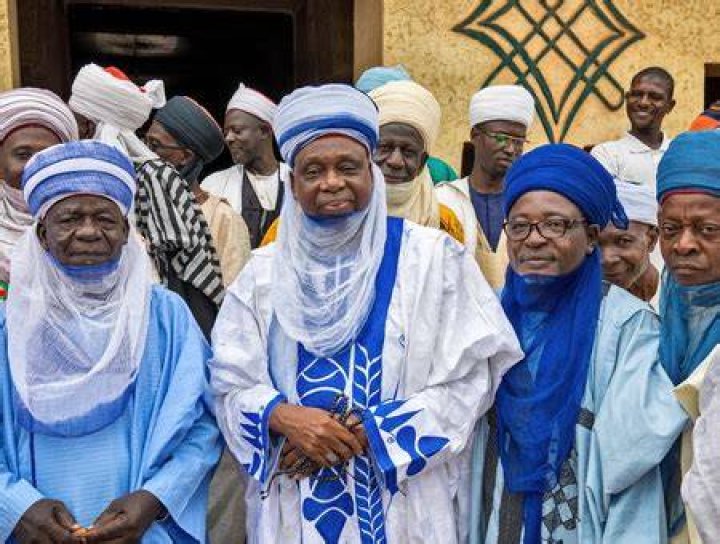
Across the floodplains of the middle Niger River Basin, an intellectual and artistic movement is redefining what it means to carry Nupe identity in modern Nigeria. Long categorized in colonial-era ethnographies as a quiet agricultural collective or remembered strictly through antiquarian museum displays, the Nupe people are asserting their cultural footprint on regional and international stages. From academic re-examinations of the Tsoede dynasty to regional box-office visibility, cultural historians and grassroots creators are challenging monolithic narratives that often flatten the diversity of North Central Nigeria. Early public milestones of this revival gained national momentum when regional screen projects commanded mainstage attention, as detailed in the Modern Ghana Report covering Nupe cinema’s sweep at the Festival of Indigenous Films.
Today, this renaissance extends beyond regional festivals. A distinct demographic push across Niger State, Kwara, Kogi, and the Federal Capital Territory is actively reclaiming indigenous literature, civic history, and traditional craftsmanship. Contemporary scholars, digital archivists, and filmmakers are demonstrating that defining Nupe requires moving past narrow textbook summaries to examine an empire that shaped pre-colonial West African diplomacy, trade, and metal engineering.
📌 Key Takeaways:
- Core Definition: The Nupe represent a distinct ethno-linguistic group native to North Central Nigeria, speaking a Benue-Congo language and centered historically around the Niger and Kaduna River basins.
- Institutional Roots: Modern Nupe identity remains anchored by the Bida Emirate and the royal office of the Etsu Nupe, drawing from centuries of political continuity tracing back to the legendary 15th-century founder Tsoede.
- Modern Renaissance: A self-driven media resurgence, spanning grassroots cinema, literary memoirs, and digital preservation, is repositioning Nupe language and heritage within mainstream Nigerian cultural discourse.
Origins, Linguistics, and the Historical Heart of KinNupe
Understanding the definition of Nupe begins with geography and language. The Nupe refer to themselves natively as Nupencizi, their homeland as KinNupe, and their mother tongue as Nupe. Geographically, their traditional territories stretch across roughly 7,000 square miles of fertile savannah and river valleys, primarily located within modern Niger State Nigeria, with contiguous populations inhabiting Kwara and Kogi States.
Linguistically, Nupe belongs to the Nupoid branch of the larger Benue-Congo language family, placing it in linguistic kinship with neighboring Gbagyi, Gbari, and Ebira tongues. Nupe is an intensely tonal language. Its structural cadence relies on pitch variations to differentiate vocabulary, creating a spoken complexity that European travelers frequently mischaracterized during their initial 19th-century explorations. Dialectical variations exist across sub-groups such as the Bini, Beni, Batache, Cekpa, Kupa, and Dibo. Despite these regional inflections, the Bida dialect functions as the standardized literary and broadcast medium.
Historical KinNupe emerged as an economic crossroads. Positioned squarely along the middle Niger, the society mastered both wet-rice cultivation along riverine marshes and extensive inland trade networks. Their settlements acted as an economic hinge connecting the savanna trade routes of the Hausa Kingdoms to the northern edge of the Yoruba rainforest belts. Rather than remaining isolated, Nupe urban centers developed cosmopolitan markets that exported woven textiles, smoked fish, and agricultural surpluses, setting an early foundation for regional influence.
The Tsoede Dynasty and Imperial Statehood in the Middle Niger
The political architecture of Nupe Kingdom history owes its foundational mythology and organizational blueprint to Tsoede, also venerated as Edegi. According to oral records and court histories preserved in Bida, Tsoede was an Idah prince born around the late 15th century to an Igala father and a Nupe mother. Returning upstream to his maternal homeland, he unified fractured riverine chiefdoms into a centralized, expansionist kingdom.
Tsoede introduced radical political and technological innovations. He established a sophisticated centralized administration overseen by a supreme monarch, the Etsu. Court tradition credits him with introducing state insignia that survive to this day, including bronze war canoes, royal trumpets (kakaki), and heavy iron chains utilized as symbols of judicial sovereignty. Under his rule, the early Nupe capital at Nupeko, and later regional seats such as Gbara, became heavily fortified political powerhouses.
By the 18th century, Nupe had constructed an expansive military apparatus. Its specialized cavalry forces operated across the savannah, while batache flotillas patrolled the Niger and Kaduna rivers. European explorer accounts, notably those of Mungo Park and later Richard Lander, documented a centralized state that maintained structured taxation systems, international diplomacy, and complex bureaucratic courts long before direct British colonial intervention disrupted local governance.
19th-Century Transformations: The Jihad and the Bida Emirate
The 19th century brought radical geopolitical disruptions across KinNupe. Internal dynastic struggles between competing royal factions weakened the central monarchy, creating an opening for external intervention during the expansion of the Sokoto Caliphate. Mallam Dendo, an itinerant Fulani Islamic scholar and diplomat, arrived in Nupe territory, leveraging local political divisions to consolidate power.
By the mid-1850s, Dendo’s descendants successfully supplanted the ancient Tsoede lineages, formalizing an Islamic political structure. This led to the founding of Bida as the new imperial capital and established the Bida Emirate. Rather than discarding the old royal customs, the new rulers blended traditional Nupe titles with Islamic administrative practices. The paramount ruler retained the indigenous honorific Etsu Nupe, operating alongside a unique tripartite rotational royal succession shared between three ruling houses: Masaba, Umaru Majigi, and Usman Zaki.
| Historical Epoch | Core Governance Structure | Defining Cultural & Economic Markers |
|---|---|---|
| Pre-Tsoede Era (Pre, 15th Century) | Decentralized village confederacies and riverine chiefdoms | Indigenous animist rituals, river fishing, subsistence agriculture |
| Tsoede Dynasty (c. 15th, 18th Century) | Centralized imperial monarchy headed by the original lineage Etsu | Expansionist cavalry, advanced metallurgy, development of Bida glasswork |
| Bida Emirate Foundation (1850s, 1901) | Fulani-Nupe Islamic Emirate with rotational royal dynasties | Islamic legal codes, trans-regional textile trade, armed resistance to the Royal Niger Company |
| Colonial & Post-Independence Era (1901, Present) | Sub-national traditional monarchy integrated into modern Nigeria | Preservation of craft guilds, rise of grassroots indigenous cinema, digital archival projects |
This administrative synthesis allowed Bida to emerge as an intellectual, industrial, and craft center throughout the late 19th and 20th centuries. The Etsu Nupe today retains significant moral, cultural, and informal political authority across North Central Nigeria, functioning as a primary custodian of traditional law and community peacebuilding.
Artisan Guilds: The Legacy of Nupe Brass and Glass Craftsmanship
Beyond military conquests and court intrigue, Nupe civilization is recognized globally for its guild-based artisanal manufacturing. Unlike societies where craft production operated purely as individual household labor, Bida developed tightly organized, hereditary occupational guilds (enyagike).
The most famous of these remains the Nupe brass work and silver smelting guilds located in distinct quarters of Bida town, such as the Masaga compound. Nupe brass smiths mastered lost-wax casting, repoussé, and intricate chasing techniques. They produced ornate ceremonial trays, kettles, and vessels that were traded across North and West Africa. British colonial anthropologists like S.F. Nadel documented this specialized division of labor in his seminal ethnography, A Black Byzantium (1942), highlighting that Nupe industrial organization rivaled the historic guild systems of Renaissance Europe.
Equally renowned are the Masaga glassmakers. Working over wood-fired kilns, artisans recycled imported trade beads and discarded glass to create heavy, lustrous bangles, cosmetic containers, and decorative beads. These guilds operate to this day. While modern consumer plastic imports disrupted traditional markets throughout the late 20th century, contemporary heritage initiatives are reviving commercial interest in authentic Bida brassware and hand-woven Zanua textiles as high-value artisanal luxury goods.
The Modern Cultural Revival: Literature, Screen, and Indigenous Media
In recent decades, Nupe cultural expression has shifted from preservation to active media production. The most visible manifestation of this renaissance appears in contemporary filmmaking. While Nigeria’s mainstream film industry, Nollywood, long operated primarily in English, Yoruba, and Igbo, a dedicated movement of North Central creators spearheaded Nupe-language cinema.
This movement gained critical acclaim when regional filmmakers entered mainstream national competitive spaces. At the national Festival of Indigenous Films, Nupe cinematic productions secured major nominations and awards, outperforming larger regional competitors. Directors such as Hassan Ndagi and production houses based in Bida and Minna showed that minority-language filmmaking could attract commercially viable audiences while documenting rural lifestyles, royal folklore, and linguistic nuances.
Alongside indigenous African cinema, political memoirs and historiographical works published by prominent Nupe scholars, civil servants, and military figures have entered the public discourse. These texts actively dismantle historical simplifications that categorized the Nupe merely as vassals of neighboring empires. Grassroots educational foundations in Niger State now produce standardized Nupe-language readers, host poetry competitions, and organize digital audio archives designed to safeguard the dialect against language loss among urbanized youths.
Clarifying Common Misconceptions About the Nupe
Nupe history is often clouded by misunderstandings, partly due to colonial-era texts and regional political narratives that obscure the culture's unique identity.
- Misconception: Nupe is simply a dialect of Hausa.
This is incorrect. While historical trade, shared Islamic ties, and geographic proximity led to widespread bilingualism, the Nupe language belongs to the Benue-Congo linguistic grouping. Hausa belongs to the Afroasiatic (Chadic) family. Grammatically, phonetically, and lexically, the two tongues are entirely distinct.
- Misconception: Nupe history began with the 19th-century Jihad.
Dynastic transformations in the 1800s introduced significant political changes, but the Nupe Kingdom had operated as an empire under the Tsoede dynasty for over four centuries prior to the establishment of the Bida Emirate.
- Misconception: KinNupe is purely homogeneous.
The modern Nupe ethnic umbrella brings together several sub-groups, including the Bini, Batache, Kupa, Dibo, and Kakanda. Each maintains distinct localized dialects, fishing traditions, and historical lineages, unified under a broader shared civic and cultural identity.
Frequently Asked Questions (FAQ)
Q1: What does the word "Nupe" refer to?
The term "Nupe" denotes both an ethnic group inhabiting the Middle Niger Basin in North Central Nigeria and the primary Benue-Congo language spoken by that population. It also designates the historical kingdom and civilization that flourished in the region.
Q2: Where are Nupe people located in modern Nigeria?
The vast majority reside in Niger State, particularly within the Bida, Agaie, and Lapai administrative zones. Substantial native Nupe populations also inhabit Kwara State (especially Pategi and Edu), Kogi State, and parts of the Federal Capital Territory (Abuja).
Q3: Who was Tsoede in Nupe Kingdom history?
Tsoede (also called Edegi) is the 15th-century founding monarch of the centralized Nupe Kingdom. A former Idah prince, he united diverse riverine communities into an empire, introducing advanced metalworking, political regalia, and administrative structures.
Q4: Why is Bida famous for brass and glass?
Bida is internationally recognized for its historic, hereditary craft guilds. For generations, guild families have manufactured distinctive beaten-brass ornaments, ceremonial vessels, and hand-blown glass jewelry using traditional furnace and forging methods.
Q5: What is the current role of the Etsu Nupe?
The Etsu Nupe is the traditional paramount ruler and leader of the Bida Emirate. While modern administration rests with Nigerian local and state governments, the Etsu exercises deep cultural influence, serves as an Islamic spiritual leader for his subjects, and acts as a central mediator in communal affairs.
What KinNupe's Resurgence Represents in Modern Nigeria
The ongoing revitalization of Nupe language, craft, and media marks a broader shift in how regional identities function within contemporary West Africa. For generations, minoritized languages lived in the shadow of Nigeria's dominant political blocs. By turning to independent film productions, publishing rigorous native-language historical texts, and re-establishing international markets for their historic artisan guilds, the people of KinNupe are taking ownership of their modern narrative.
This cultural renaissance proves that heritage is not a static museum exhibit. The definition of Nupe remains alive: grounded in the royal legacy of Tsoede, sustained through the trade guilds of Bida, and driven forward by a new generation of creators telling their own stories on screen and in print.
