The Rise of 500 Mbps Fiber Plans: Why Mid-Tier Broadband Is Becoming the Gold Standard
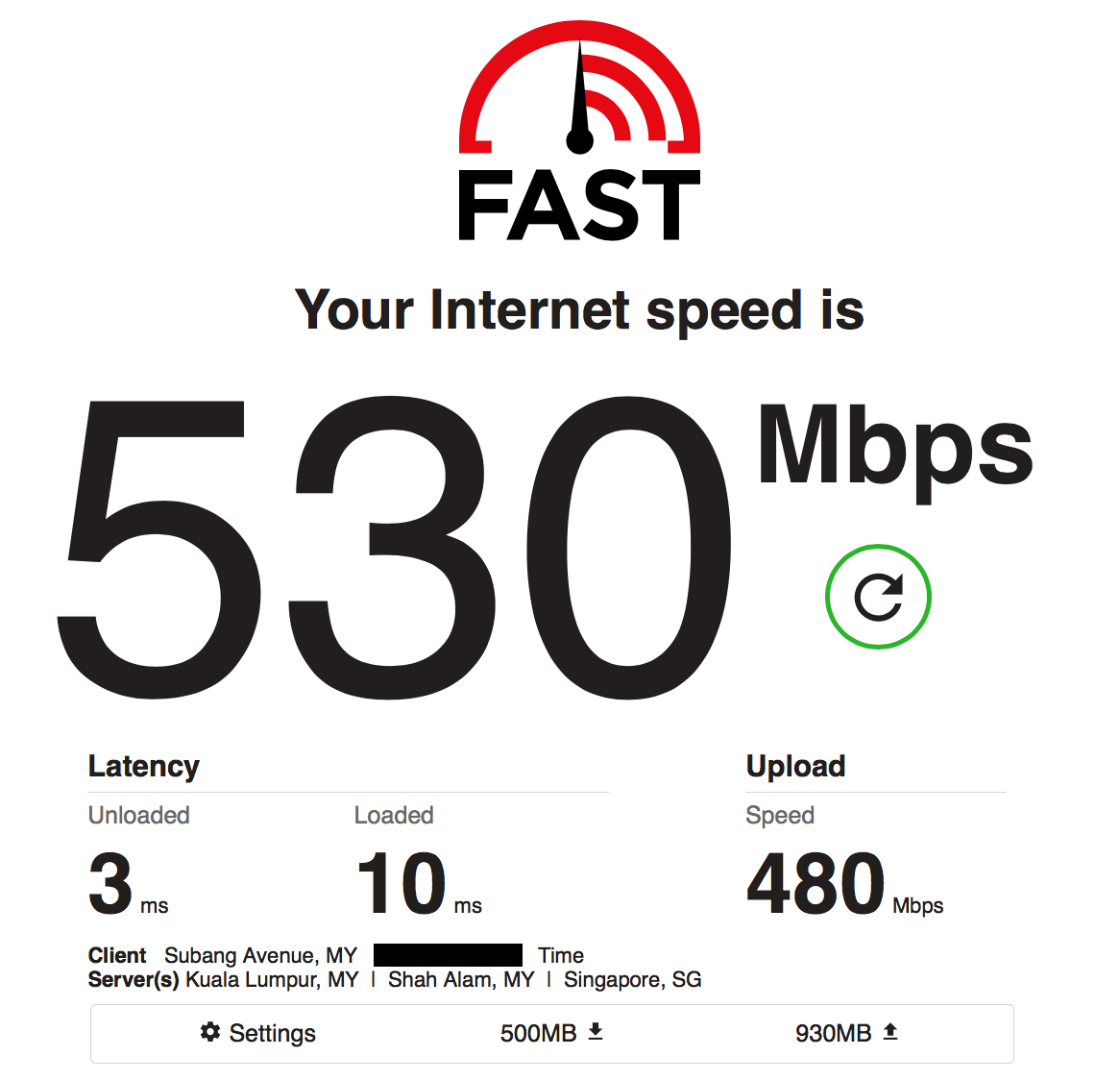
Telecommunications marketing has spent the past five years pushing residential subscribers toward gigabit and multi-gigabit connections. Service providers tout raw capacity as the ultimate fix for buffering screens and laggy video calls. Yet for millions of households, jumping from a basic tier to a gigabit connection yields zero perceptible improvement in daily performance. A 500 Mbps plan delivers 62.5 megabytes per second of raw throughput, enough to handle intense concurrent household workloads without breaking a sweat.
Speed tests tell only part of the story. A detailed investigation by the XDA Report highlighted an uncomfortable technical reality: an unoptimized 500 Mbps connection frequently feels slower and less responsive than a properly configured 100 Mbps line. When network latency spikes and low-tier hardware stumbles, extra bandwidth sits completely idle. As major fiber providers recalibrate their price sheets, 500 Mbps plans have emerged as the industry's premier value tier, balancing heavy multi-device demands against escalating subscription costs.
📌 Quick Summary:
- The Bandwidth Reality: A 500 Mbps pipeline supports more than twenty simultaneous 4K video streams, easily covering the real-world bandwidth requirements of a four- to six-person household.
- The Hidden Bottleneck: Connection responsiveness depends far more on latency, ping stability, and bufferbloat management than on upgrading from 500 Mbps to 1,000 Mbps.
- The Economic Shift: With gigabit packages climbing past $80 to $110 per month, symmetrical 500 Mbps fiber plans priced between $45 and $65 per month offer the highest performance per dollar.
The True Math of 500 Mbps Across Modern Households
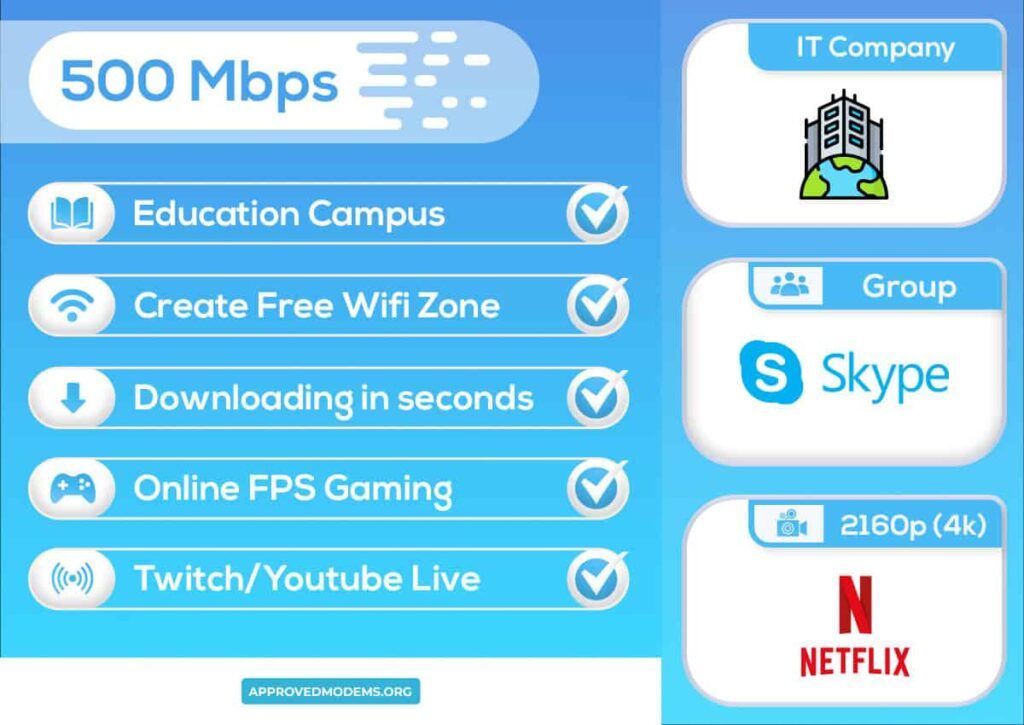
To understand whether 500 Mbps qualifies as fast, look at what popular digital services actually consume. Netflix recommends 15 to 25 Mbps for a single 4K Ultra HD stream. High-definition Zoom or Microsoft Teams video calls require between 2.5 and 4 Mbps for symmetrical transmission. Cloud backups, background software patches, and smart home sensors operate in tiny, intermittent bursts.
If four family members simultaneously stream 4K video on separate displays while another downloads a console game patch, the household consumes roughly 120 to 160 Mbps of total bandwidth. A 500 Mbps plan absorbs that entire concurrent workload with more than 300 Mbps of unused headroom remaining. Unless an individual routinely transfers massive raw media files to remote servers, household usage rarely saturates a half-gigabit pipe.
The distinction between download speed and upload speed dictates how that bandwidth feels. On legacy coaxial cable networks, an advertised 500 Mbps download speed often comes paired with an anemic upload speed of 20 to 35 Mbps. That asymmetry creates immediate friction when two people attempt high-bitrate video calls while cloud photo backups run in the background. On symmetrical fiber broadband, users receive 500 Mbps in both directions, completely removing upload bottlenecks.
The Gigabit Internet Comparison: Paying for Unused Overhead
Broadband advertising treats gigabit connections as the baseline for modern digital life. In an analysis published by Forbes, researchers noted that most consumers overpay for gigabit plans simply because marketing equates higher numerical ratings with lower latency. In real-world operation, your ping to a remote gaming server or web platform remains identical whether your raw bandwidth is 500 Mbps or 1,000 Mbps.
The practical difference between 500 Mbps and gigabit service comes down almost entirely to large file delivery times. Consider downloading a modern AAA video game like Call of Duty, which regularly demands a 100 GB storage footprint:
On a pristine 500 Mbps connection, that 100 GB download finishes in roughly 27 minutes. On a full gigabit connection operating at maximum theoretical capacity, the same file takes approximately 14 minutes. Saving 13 minutes on an occasional software download costs an extra $300 to $500 per year in ongoing subscription premiums. For the vast majority of consumers, that time savings fails to justify the markup.
When 500 Mbps Stutters: Bufferbloat, Packet Loss, and Latency
Network quality is not a single scalar metric. When users complain about lag during online gaming or choppy video during conference calls on a fast plan, raw throughput is rarely the culprit. The true culprit is network congestion under load, formally known as bufferbloat.
Bufferbloat occurs when a router holds excessive data packets in queue buffers rather than dropping or transmitting them promptly. When an unmanaged network suddenly receives a burst of traffic, such as an automated cloud backup or a stream buffering high-bitrate video, the router queues up packets. Your gaming ping or voice call data sits trapped behind bulk data transfers. A player's ping can instantly leap from 18 milliseconds to over 350 milliseconds, causing severe stutter and packet loss.
Throwing extra raw megabits at bufferbloat does not resolve it. A 1,000 Mbps connection with poor queue management will exhibit worse real-time responsiveness than a 500 Mbps connection utilizing Active Queue Management (AQM) algorithms like CAKE or FQ-CoDel. These algorithms prioritize lightweight, time-sensitive packets over bulk downloads, maintaining a flat, predictable ping regardless of background activity.
Hardware Bottlenecks: Why Your Router Chokes the Signal
Subscribers frequently run an app-based speed test, see a readout of 180 Mbps on their smartphone, and assume their internet service provider is shortchanging them. The bottleneck almost always lives inside the home. A 500 Mbps plan requires modern networking hardware to distribute its full capacity across a dense, multi-device household.
Legacy Wi-Fi 5 (802.11ac) routers struggle to deliver 500 Mbps to client devices through physical interior walls. Operating on congested 5 GHz channels or saturated 2.4 GHz bands drops real-world mobile throughput substantially. Upgrading to a Wi-Fi 6 or Wi-Fi 6E mesh setup allows individual wireless clients to actually pull 450 to 500 Mbps over local airwaves.
Physical cabling remains the ultimate baseline for demanding tasks. Running an inexpensive Cat6 Ethernet cable from your router directly to your workstation or gaming console completely bypasses wireless signal attenuation, interference from neighboring networks, and local packet loss. A wired 500 Mbps connection provides rock-solid performance that outclasses an unstable gigabit wireless feed every single day.
Household Tiers and Bandwidth Allocations Compared
The following performance breakdown outlines how a symmetrical 500 Mbps connection handles distinct home usage scenarios compared to common tier alternatives.
| Household Profile | Concurrent Demands | 500 Mbps Performance | 1 Gbps Necessity |
|---|---|---|---|
| Single Remote Worker | 1 4K stream, Zoom call, web browsing, 8 smart devices | Flawless; uses under 10% of total pipeline capacity | Completely unnecessary; pure financial waste |
| Family of Four | 2 4K streams, competitive gaming, 2 video calls, 25 smart devices | Exceptional; zero congestion when paired with decent Wi-Fi 6 gear | Marginal utility; only saves occasional download minutes |
| Power-User Household | Multiple game downloads, 4K live streaming, local NAS sync, 45+ devices | Stable; requires Smart Queue Management (SQM) during heavy bursts | Recommended if frequent multi-gigabyte uploads are routine |
| Creative Studio / Video Editor | Constant raw video uploads to cloud servers, multi-TB weekly transfers | Serviceable, but uploads will create noticeable workflow pauses | Essential; cuts upload render pipelines by half or more |
The Economic Realignment of Fiber Broadband
Regional fiber providers have recognized that customer churn accelerates when monthly broadband pricing pushes into triple digits. Carriers like AT&T Fiber, Verizon Fios, Frontier, and regional utility cooperatives have restructured their entry and mid-tier rosters. Symmetrical 500 Mbps service has settled into a national pricing sweet spot of $45 to $65 per month, frequently bundled with equipment fee waivers and no data caps.
Gigabit tiers, by contrast, sit comfortably between $80 and $115 per month. The marketing premise assumes consumers will automatically trade $400 or more per year for a number they rarely engage. When market surveys track consumer satisfaction across fiber tiers, user experience ratings between 500 Mbps and 1 Gbps subscribers show near-identical sentiment scores. Subscribers who step down from 1 Gbps to 500 Mbps typically report zero difference in day-to-day browsing, streaming, or working, noticing the change only on their bank statements.
Frequently Asked Questions (FAQ)
Q1: Is 500 Mbps fast enough for competitive online gaming?
Yes, thoroughly. Gaming relies on low ping, minimal jitter, and zero packet loss rather than raw throughput. Most multiplayer games transmit between 50 and 150 Kbps of data during active play. A 500 Mbps connection offers more than enough capacity; latency stability depends entirely on your route to the server and whether your router prevents bufferbloat.
Q2: Can a 500 Mbps connection handle multiple people streaming in 4K at once?
Easily. A standard 4K stream on platforms like Disney+, Prime Video, or Netflix consumes between 15 and 25 Mbps. A 500 Mbps plan can theoretically support up to twenty concurrent 4K streams simultaneously before maxing out available bandwidth.
Q3: How long does it take to download a 50 GB game on a 500 Mbps connection?
Under ideal network conditions, a 50 GB game file downloads in approximately 13 to 14 minutes. Actual download times fluctuate slightly based on server throttle limits from platforms like Steam, PlayStation Network, or Xbox Live.
Q4: Why does my 500 Mbps internet feel sluggish on my phone?
Sluggishness typically stems from local Wi-Fi interference, weak router antenna placement, or DNS server latency rather than the service line itself. Testing your connection with a direct Ethernet cable will isolate whether the slowdown originates from your provider or your internal wireless hardware.
Choosing Practical Speed Over Marketing Numbers
Broadband providers will keep pushing multi-gigabit connections because oversized tiers inflate average revenue per user. Yet technical utility does not track in a straight line with raw speed. Once a household clears the baseline required to run multiple simultaneous high-bitrate media streams and encrypted telework connections, additional bandwidth delivers diminishing returns.
For almost every modern family, apartment household, and remote professional, 500 Mbps represents the definitive practical standard. It provides abundant bandwidth to erase bottlenecks without padding ISP profit margins. Rather than paying a recurring premium for gigabit overhead you will never tap, invest that cash into a high-grade Wi-Fi 6 router or structured Ethernet cabling. The real quality of your internet connection lives in its stability, not its brochure headline.
