The Rise of Demus: How Backlash Against Streaming Ads Sparked a Viral Boom

Digital music listeners have reached their breaking point with traditional ad-supported streaming tiers. After years of tolerating escalating commercial breaks, Spotify hit a fresh wave of public fury when listeners reported being blasted with jarring political and federal law enforcement recruitment messages mid-playlist. As detailed in The Mary Sue Report, outraged subscribers rushed to cancel accounts and uninstall the app after unexpected ICE recruitment campaigns disrupted their listening sessions, crystallizing widespread disgust over how invasive corporate audio spots have become.
That mass frustration opened the floodgates for alternative music players on the iOS App Store. At the center of this movement stands Demus, an independent music app built by Czech developer Adolph Radestock. As listeners actively search for a viable Spotify alternative, the dominant question among newcomers is straightforward: does Demus have ads, and can it truly deliver an uninterrupted listening experience without demanding a monthly fee?
📌 Key Takeaways:
- The Direct Answer: Demus does not inject intrusive audio ads between songs; the free tier displays silent, static banner ads inside the UI, which can be permanently eliminated with a single one-time in-app purchase.
- The Streaming Engine: Demus operates as a lightweight YouTube API player, pulling music and metadata directly from public video streams while unlocking background playback without requiring YouTube Premium.
- The Essential Trade-Off: While Demus bypasses audio ad interruptions and recurring fees, it lacks native offline listening capabilities because local caching would violate third-party API terms.
The Breaking Point in the Ad-Supported Streaming Economy
For over a decade, streaming platforms conditioned audiences to accept a standard bargain: endure thirty seconds of promotional copy every few tracks in exchange for free catalog access. Over the past two years, that trade deteriorated rapidly. Major platforms increased commercial density, inserting multi-ad pods, unskippable sponsor messages, and automated programmatic spots that clash violently with the music preceding them.
The listener backlash peaked when automated ad exchanges began routing polarizing campaigns into user feeds. When political messaging and controversial recruitment drives started blaring through headphones during ambient study sessions or workout playlists, the social contract broke.
Online communities on Reddit, TikTok, and X responded by circulating guides on how to strip audio services from mobile devices. Disillusioned listeners did not want another $11.99 monthly recurring charge added to their bank statements, especially amid persistent streaming subscription fatigue. Instead, they hunted for utilities that respect user attention without charging forever. That search propelled Demus to the top tier of music utility charts across North America and Europe.
How Demus Actually Handles Advertisements
The short answer to whether Demus has ads is nuanced: Demus contains visual interface ads in its default download, but it never interrupts your music with audio commercials.
Unlike Spotify, Pandora, or commercial radio, where songs stop dead so an announcer can pitch car insurance, Demus plays continuous music. The developer chose a display-only monetization model. When browsing playlists, searching artists, or viewing album art in the free version, users encounter small banner ads anchored to the interface. The moment your screen locks or you switch to another app, those visual ads vanish from perception while your audio continues uninterrupted.
For listeners seeking an entirely clean interface, Demus avoids the SaaS trap. Rather than demanding an ongoing monthly fee, the app provides a permanent ad removal option via a single one-time in-app purchase of $5.99 to $9.99 (depending on regional App Store pricing). Paying this single unlock cleans the visual clutter across all connected iOS and macOS devices tied to the user's Apple ID.
Architecture of the YouTube API Player Model
Demus achieves its lightweight, cost-effective structure by functioning as an interface layer rather than a hosted streaming distributor. Instead of licensing multi-million-track catalogs directly from major record labels, the app routes playback through the public YouTube API player framework.
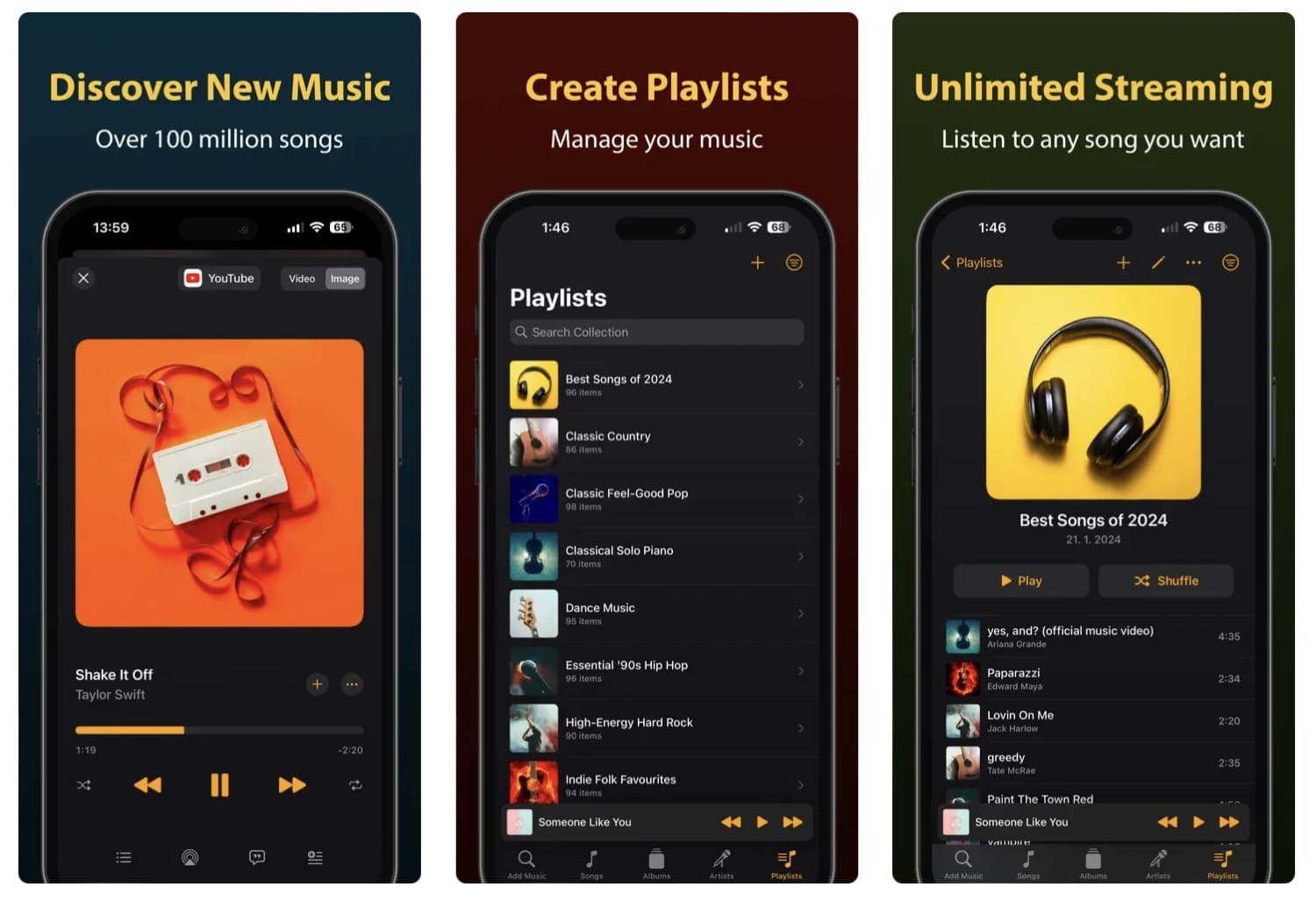
When you search for an artist, track, or album within Demus, the software queries YouTube's extensive database, retrieving matching audio tracks, music videos, and user-generated uploads. It wraps that stream inside a native iOS music player shell that looks and feels remarkably similar to Apple Music. This setup enables several premium features without the premium overhead:
| Streaming Feature | Spotify Free Tier | YouTube Music Free | Demus (Free / Unlocked) |
|---|---|---|---|
| Audio Ad Interruptions | Frequent (Every 3, 5 songs) | Frequent (Video/Audio ads) | None |
| Background Playback | Yes | No (Screen must stay on) | Yes (Native lock screen) |
| Track Selection | Shuffle-only on mobile | On-demand | Fully On-Demand |
| Offline Downloads | No | No | No |
| Monetization Model | Audio ads / $11.99/mo | Video ads / $10.99/mo | Banner ads / $5.99 lifetime |
By utilizing native iOS multimedia controls, Demus delivers true background playback. You can start a song, lock your iPhone, or run turn-by-turn navigation without the music stuttering or cutting out. It also incorporates time-synced lyrics, Last.fm scrobbling, and playlist importers that translate existing Spotify and Apple Music collections into Demus libraries in seconds.
Structural Limits and Offline Vulnerabilities
Despite its surging popularity, Demus comes with sharp operational compromises that prospective switchers must understand before discarding their standard subscriptions.
First, Demus does not provide offline listening capabilities. You cannot cache albums to local flash storage for subway commutes, airplane flights, or remote travel. The app streams data on demand across cellular or Wi-Fi connections. Because downloading and saving raw files from YouTube streams violates developer terms and invites immediate App Store removal, the application restricts itself to real-time streaming.
Second, the platform relies entirely on third-party stability. Because it draws from public video links, song matching occasionally surfaces acoustic live sessions, fan covers, or pitched audio modifications rather than pristine studio master tracks. While Demus includes a search adjustment tool that lets users re-link tracks to alternate uploads, the catalog lacks the uniform metadata curation seen on dedicated subscription platforms.
Finally, operating as an interface layer atop large tech APIs carries persistent platform risk. Google frequently modifies its streaming protocols and enforces stricter API quotas. While Radestock has routinely patched the client to maintain compatibility, users are placing their trust in an independent developer's capacity to navigate continuous platform updates.
Why the Rise of Demus Signals a Consumer Realignment
The momentum behind Demus reflects more than opportunistic app installs; it exposes a structural rejection of the subscription-everything digital economy.
By 2026, the average household carries dozens of competing monthly digital charges across video, cloud storage, productivity suites, and audio entertainment. When streaming platforms respond to plateauing user growth by raising subscription costs while simultaneously degrading their free tiers with high-frequency, jarring audio spots, listeners revolt.
Demus represents an emerging category of single-purpose utilities created by solo developers who reject recurring software rents. By giving users full playback control, zero audio disruptions, and a transparent path to pay once for software ownership, the app satisfies an underserved demographic. It proves that millions of listeners do not demand algorithmic podcast pushes, automated DJ voices, or social video feeds inside their music players. They simply want their songs to play from start to finish without interruption.
Frequently Asked Questions (FAQ)
Q1: Does Demus interrupt songs with audio advertisements?
A1: No. Demus never plays audio commercials between tracks. The free tier only features visual banner ads within the app interface, keeping audio streams uninterrupted.
Q2: Can I use Demus to download songs for offline listening?
A2: No. Demus requires an active internet connection (Wi-Fi or cellular data) to stream music. It does not support local offline audio storage due to API compliance standards.
Q3: How much does it cost to remove all visual ads from Demus?
A3: Demus offers a one-time in-app purchase, typically priced between $5.99 and $9.99 depending on your region. Paying this single unlock permanently removes all interface ads with no recurring monthly subscription.
The Road Ahead for Independent Audio Players
The rapid ascent of Demus highlights an unmistakable shift in user sentiment across the mobile landscape. Corporate streaming platforms spent the last half-decade testing consumer pain thresholds, piling aggressive ad campaigns onto free users while raising baseline prices for paid tiers. That gamble underestimated how quickly digital listeners migrate when user experience collapses.
Demus succeeded not by inventing an entirely new audio format, but by solving the basic irritations of modern music consumption: eliminating voice-over commercial breaks, unlocking lock-screen playback, and rejecting the monthly billing model. As long as big streaming providers treat user attention as captive inventory, lean and utility-focused players like Demus will continue claiming prime territory on listener home screens.
