The Road to Revolution: Chronological Timeline of District 11's Defiance Across The Hunger Games

District 11 fed the Capitol while its own children collapsed from malnutrition under armed surveillance. Long before Katniss Everdeen fired an arrow into the arena force field, the southern agricultural sector operated under the tightest security apparatus in Panem. As interest in the franchise surges around Suzanne Collins's upcoming prequel, contextualized in a recent Blunt Magazine Report covering Panem's hidden operational history, District 11 stands out as the true powder keg of the second rebellion. The territory did not merely join the war; its workers ignited it.
The district spanned vast orchards, cotton fields, and wheat plains, policed by watchtowers, electrified fences, and trigger-happy Peacekeepers. President Coriolanus Snow understood an elemental truth of totalitarian control: whoever commands food commands survival. When District 11 withheld its harvest and defied Capitol authority, the regime's veneer of invulnerability cracked permanently.
📌 Key Takeaways:
- The Economic Chokepoint: District 11 anchored the Capitol food supply, giving its workforce immense structural leverage despite extreme poverty and systemic suppression.
- The Spark: The alliance between Rue and Katniss during the 74th Hunger Games transformed localized labor grievances into Panem-wide political defiance.
- The Escalation: Public executions during the Catching Fire Victory Tour triggered open urban rebellion well before District 13 initiated full-scale military coordination.
The Breadbasket Panem Starved: Life Inside the Agricultural Sector
District 11 represented Panem's largest geographical territory and its most paradoxically impoverished population. Its workers harvested grain, picked orchards, tended livestock, and processed cotton. Yet eating the crops meant public whipping or execution. The Capitol designed this disparity deliberately. By maintaining workers at near-starvation caloric limits, authorities suppressed the physical energy required for organized dissent.
Peacekeeper brutality in District 11 surpassed the relatively relaxed enforcement seen in District 12. Public squares featured permanent whippings posts, machine-gun nests, and sniper platforms. Children as young as twelve worked twelve-hour shifts during harvest cycles, climbing high canopy branches where adult pickers could not fit. This industrial reality produced Rue, whose agility across the orchard treetops later defined her survival inside the arena.
The Capitol treated District 11 like an occupied colony rather than a constituent province. Every grain silo and refrigerated transport train moved under direct military escort directly to the western mountains. When shortages struck, the Capitol slashed local rations first. This dynamic built decades of quiet, simmering rage that waited only for a public catalyst.
The Catalyst of the 74th Games: Rue, Thresh, and the Defiant Bread Gift
The 74th Hunger Games shattered the Capitol’s carefully maintained cordon sanitaire around District 11. When Katniss Everdeen allied with Rue, she broke the Games' fundamental premise: pitted districts viewing one another solely as mortal enemies. Rue’s violent death at the hands of Marvel forced a human response that Panem’s state television could not edit away in real time. Katniss laid Rue out in wildflowers and rendered the three-finger salute toward the cameras.
What followed altered Panem's political history. District 11 sent Katniss a loaf of dark, crescent-shaped ration bread warm from the ovens. Tributes had never received a gift sponsored by a district other than their own. The cost to District 11's impoverished residents was staggering, paid for by pooling meager individual funds across an entire community to honor a tribute from District 12.
Concurrently, Thresh displayed a parallel refusal to play by Capitol rules. By sparing Katniss out of debt for her kindness to Rue, Thresh rejected the Gamemakers' social darwinism. These combined acts revealed that solidarity could cross regional boundaries, fatally undermining the Capitol's strategy of divide-and-rule.
The Victory Tour Execution and Open Insurrection
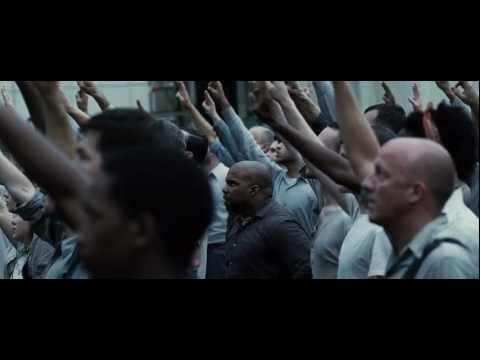
The unrest turned openly militant months later during the Catching Fire Victory Tour. Stopping at the Justice Building in District 11, Katniss spoke candidly about Rue and Thresh to a crowd assembled under Peacekeeper machine guns. An elderly man in the crowd whistled Rue’s four-note mockingjay tune. Thousands answered with the three-finger salute.
Peacekeepers dragged the elderly whistler onto the veranda and executed him on the spot. Instead of cowing the populace, the murder triggered an immediate, furious riot. Citizens attacked security barricades, set fire to administrative buildings, and dismantled surveillance infrastructure before Capitol feeds cut to static.
| Phase & Event | District 11 Resistance Action | Capitol Strategic Response |
|---|---|---|
| 74th Hunger Games | Bread gift sent to Katniss; arena alliance between Katniss and Rue. | Censored live arena feeds; reinforced security around local bakery sectors. |
| Victory Tour Arrival | Mass whistling and three-finger salute; violent plaza rioting against Peacekeepers. | Public summary execution; deployment of heavy armored personnel carriers. |
| Pre-75th Games Escalation | Orchard sabotage, crop burnings, and supply chain blockades. | Ration freezes, execution of suspected labor organizers, curfew enforcement. |
| Second Rebellion (Mockingjay) | Total seizure of grain hubs; full military alignment with rebel command. | Air strikes on transit rails; complete abandonment of regional agricultural bases. |
The uprising in District 11 proved that the rebellion was not an isolated sentiment restricted to underground cells in District 13. It was an organic, mass-scale labor revolt fueled by unendurable grief.
Chaff, Seeder, and the Veteran Underground in the 75th Games
When the Third Quarter Quell forced previous victors back into the arena, District 11 fielded two of its most seasoned figures: Chaff and Seeder. Their involvement cemented District 11’s participation in the covert plot to extract Katniss and overthrow the government.
Chaff, who won the 45th Hunger Games, lost his hand during his victory and notoriously refused Capitol prosthetic surgery. His open alcoholism and irreverent defiance masked close ties to Haymitch Abernathy. Seeder, sixty years old, retained physical strength from a lifetime working fields, looking remarkably healthy due to her refusal of Capitol luxuries.
During the tributes' opening parade and training sessions, Seeder privately confirmed to Katniss that Rue’s family survived the post-tour crackdowns, while Chaff deliberately defied Capitol social etiquette. Both victors understood their mission inside the arena was suicidal. Seeder died during the initial Cornucopia bloodbath, while Chaff fell protecting the alliance during the final arena hours. Their sacrifice proved that District 11’s elite victors were just as committed to dismantling Panem as its field hands.
From Orchard Sabotage to Capitol Siege: The Mockingjay Timeline
Once the 75th Games collapsed, District 11 became an active war zone. Unlike District 12, which was carpet-bombed into ash within hours, Snow could not afford to vaporize District 11. Utter destruction of the orchards and wheat silos would bring immediate famine to Capitol citizens.
District 11 rebels used this economic dependency strategically:
- Field crews systematically torched distribution centers while hoarding emergency stocks in concealed underground caches.
- Transport rail tracks running through the southern mountains were derailed, choking Capitol logistics hubs within weeks.
- Local insurgent cells ambushed Peacekeeper garrisons, utilizing tree canopies and extensive regional terrain that foreign troops could not navigate.
By the time Katniss filmed rebel propaganda broadcasts in District 8 and District 13, District 11 had already wrested control of its primary food depots. The Capitol attempted emergency rationing, but the loss of southern agriculture caused riots within Snow's inner circles. By cutting off grain and cattle shipments, District 11 starved the Capitol into military isolation long before rebel infantry breached the city gates.
Frequently Asked Questions (FAQ)
Q1: Why was Peacekeeper discipline stricter in District 11 than District 12?
District 11 was enormous, populated by hundreds of thousands of workers, and directly controlled Panem's life-support systems through agriculture. District 12 was small, geographically isolated, and supplied coal, an energy source the Capitol could supplement with hydro and nuclear power. Dissent in District 11 posed an immediate existential threat to Capitol survival, prompting extreme militarization.
Q2: Did District 11 survive the firebombings of the Second Rebellion?
Yes. While heavy urban combat and punitive air strikes damaged administrative centers and transport hubs, the Capitol deliberately spared the bulk of the agricultural land. Snow needed the crops intact. District 11 emerged from the war damaged but fundamentally functional, serving as the dietary lifeline for the reconstruction of Panem.
Q3: How does Sunrise on the Reaping connect to District 11's history?
Set during the 50th Hunger Games (Haymitch Abernathy's Quell), the narrative timeline explores the era when victors like Chaff and early resistance networks began forming across the outer districts. It exposes the structural violence and surveillance systems that hardened District 11 into a hotbed of quiet sedition decades before the 74th Games.
The Enduring Legacy of District 11's Resistance
District 11 proved that totalitarian systems are most vulnerable at their logistical origins. Suzanne Collins constructed Panem with clear industrial divisions, yet none carried the raw, non-negotiable weight of the agricultural district. Capitol socialites could live without luxury goods from District 1 or textiles from District 8, but they could not survive a month without the harvests of District 11.
The legacy of the district rests on its moral clarity. Rue’s death did not disappear into the statistics of Capitol entertainment; it triggered an uncontainable wave of cross-district empathy. The bread sent into the arena, the four-note mockingjay tune whistled in the town square, and the refusal to keep harvesting under the threat of the whip formed the real foundation of the rebellion. District 12 provided the mockingjay symbol, but District 11 built the fire that carried it across Panem.
