The Secret Moisture Hack That Completely Transforms Gluten-Free Banana Loaf
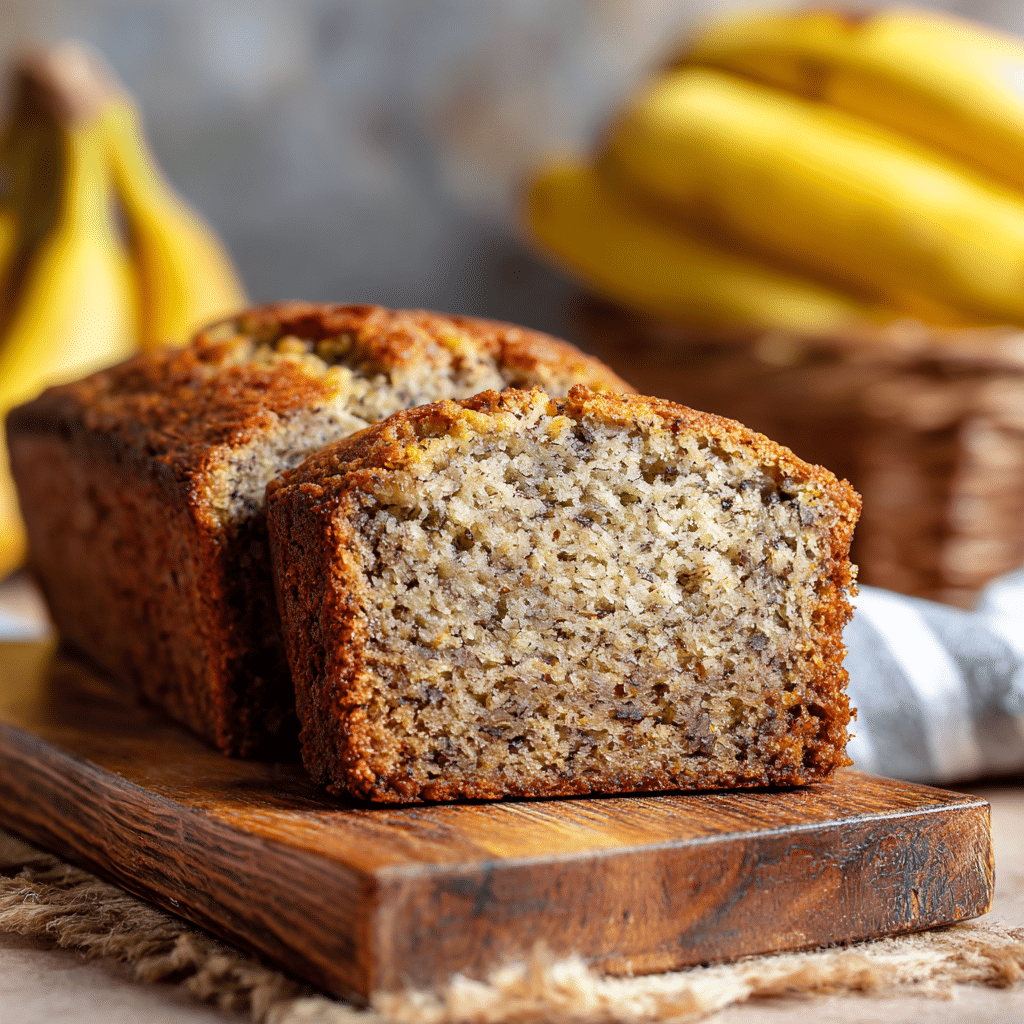
Gluten-free quick breads carry an unfortunate reputation for turning out either disappointingly dense or gritty and bone-dry by the morning after baking. Testing published in an Allrecipes Report revealed that among seven popular kitchen methods evaluated to maximize crumb tenderness, traditional fat increases alone failed to fix the structural dryness inherent to alternative grains. The culprit lies in how starches absorb liquids differently when wheat proteins are absent.
Standard gluten-free flour blends lean heavily on white rice flour, potato starch, and tapioca. These starches greedily drink up liquid during the initial bake, then release it rapidly as the loaf cools, leaving behind a brittle slice that crumbles under a butter knife. Solving this structural issue requires an intentional pairing of targeted acidity and protein-stabilized hydration that standard melted butter cannot deliver on its own.
📌 Key Takeaways:
- The Moisture Breakthrough: Folding whole-milk Greek yogurt into the batter prevents alternative starches from drying out, yielding a tender crumb texture that stays soft for days.
- The Structural Ratio: Blending a commercial 1-to-1 gluten-free baking flour containing xanthan gum with fine almond flour stops grit and creates an open, springy lift.
- The Ripeness Standard: Deeply speckled, heavily overripe bananas supply natural invert sugars that lock in moisture and cut down the need for heavy refined syrups.
Why Alternative Flours Steal Moisture From Quick Breads
Wheat flour builds a microscopic network of gluten that captures steam while retaining liquid fats inside tiny pockets throughout baking. Gluten-free flours behave like thirsty dry sponges without that natural protein lattice. White and brown rice flours, which form the base of most commercial packages, contain rough, jagged starch granules. Unless those granules are fully hydrated, they yield a sandy mouthfeel that bakers immediately recognize.
Adding more vegetable oil or melted butter seems like an easy fix, but excess liquid fat often sinks straight to the bottom of the pan. The result is an oily bottom layer topped by a dry, fragile upper crust. Rice and tapioca starches need water-based moisture bound to proteins rather than free-floating fats. Without balanced hydration, the starch retrogrades within 12 hours of cooling, crystallizing and pushing remaining moisture out of the crumb.
The Greek Yogurt Moisture Trick That Eliminates Gritty Crumbs
The most reliable solution for this structural flaw is the Greek yogurt moisture trick. Stirring 1/2 cup (120g) of plain whole-milk Greek yogurt directly into the mashed banana and wet ingredient mixture fundamentally changes the batter. Greek yogurt provides concentrated lactic acid, emulsified dairy fats, and dense milk proteins simultaneously.
The mild acid tenderizes the starch particles, softening the rice flour granules so they bake down smooth instead of grainy. Because the moisture in strained yogurt is held inside an emulsion of proteins and fat, it does not evaporate prematurely under high oven heat. The crumb stays silky and cohesive, holding its shape when sliced warm while resisting the rapid staling typical of gluten-free baking.
Dialing the Flours: The 1-to-1 Blend and Almond Flour Ratio
Relying exclusively on an all-purpose gluten-free starch blend often results in a loaf that feels rubbery or unpleasantly gummy in the center. Balancing the blend with finely ground blanched almond flour provides the necessary fat and protein structure. The recommended flour formulation calls for:
- 1 1/2 cups (210g) premium 1-to-1 gluten-free baking flour (must contain xanthan gum)
- 1/2 cup (50g) superfine blanched almond flour
This specific 3-to-1 ratio introduces natural nut oils that coat the starch particles, dampening the gummy tendencies of tapioca and potato starch. Xanthan gum acts as the binder, holding moisture and gas bubbles produced during leavening. If your base blend lacks xanthan gum, whisking in 1/2 teaspoon separately is essential to avoid a loaf that collapses as it cools.
| Ingredient Strategy | Structural Impact on Batter | Crumb Texture Result (Days 1, 3) |
|---|---|---|
| Standard 100% GF Rice-Starch Blend | High starch absorption; rapid moisture loss post-bake | Gritty on Day 1; dry and crumbly by Day 2 |
| Excess Melted Butter or Oil Alone | Fat separates from heavy starches; pools at pan base | Soggy bottom crust with a dry, fragile interior |
| Yogurt Emulsion + Almond Flour Ratio | Bound dairy fats and almond oils stabilize hydration | Silky, tender slice; retains moisture past Day 3 |

Balancing Leaveners and Sweeteners for Deep Caramelization
A successful rise requires combining both baking soda and powder in balanced proportions. The lactic acid in Greek yogurt activates 3/4 teaspoon of baking soda, releasing carbon dioxide rapidly in the first ten minutes of baking. Pairing this with 1 teaspoon of baking powder provides a secondary rise triggered by oven heat, creating an elevated dome without a sunken valley in the middle.
Sweetening with packed light brown sugar instead of white granulated sugar adds real benefits beyond caramel notes. Brown sugar contains natural molasses, which is naturally hygroscopic. It attracts and retains ambient moisture long after baking. Combining this with 2 teaspoons of pure vanilla extract balances the earthiness of alternative grains, accentuating the aroma of well-ripened fruit.
The Master Formula: Step-by-Step Loaf Execution
Achieving a uniform, tender crumb requires assembling ingredients at uniform temperatures. Cold eggs curdle melted fats and shock starches, resulting in an uneven bake.
Ingredients
- Bananas: 3 medium to large overripe bananas, heavily browned (about 1 1/3 cups mashed)
- Eggs: 2 large room temperature eggs
- Moisture Agent: 1/2 cup (120g) whole-milk plain Greek yogurt
- Fat: 1/3 cup (75g) unsalted butter, melted and cooled (or neutral avocado oil)
- Sugars: 2/3 cup (135g) packed light brown sugar
- Flavoring: 2 teaspoons pure vanilla extract
- Dry Base: 1 1/2 cups (210g) 1-to-1 gluten-free baking flour blend with xanthan gum
- Structure Enhancer: 1/2 cup (50g) blanched almond flour
- Leaveners: 3/4 teaspoon baking soda and 1 teaspoon baking powder
- Salt: 1/2 teaspoon fine sea salt
Preparation Method
- Preheat your oven to 350°F (175°C). Line an 8.5 x 4.5-inch metal loaf pan with parchment paper, leaving an overhang on both long sides.
- Mash the overripe bananas in a large mixing bowl until mostly smooth, leaving small pea-sized pieces for concentrated pockets of flavor.
- Whisk in the room temperature eggs, whole-milk Greek yogurt, melted butter, light brown sugar, and pure vanilla extract until completely glossy and cohesive.
- In a separate bowl, whisk together the 1-to-1 gluten-free baking flour, almond flour, baking soda, baking powder, and fine sea salt.
- Pour the dry blend into the wet mixture. Fold gently using a rubber spatula just until no dry flour streaks remain. Do not overmix. Let the batter rest on the counter for 10 minutes before baking; this resting window allows the rice starches to absorb liquid before hitting the heat.
- Spread the batter evenly into the prepared loaf pan, smoothing the top with your spatula.
- Transfer to the center rack. The required loaf pan baking time is typically 55 to 65 minutes. At the 40-minute mark, check the loaf; if the top crust is deeply browned, tent it loosely with aluminum foil to protect it while the dense center finishes setting.
- The loaf is done when a wooden skewer inserted into the center emerges clean or with a few moist crumbs, registering an internal temperature of 205°F to 208°F (96°C, 98°C) on an instant-read probe.
- Rest the loaf in the pan for 15 minutes, then use the parchment handles to transfer it onto a wire cooling rack. Cool completely before slicing.
Managing Substitutions: Going Fully Dairy-Free
Bakers managing dairy allergies alongside gluten sensitivities can still achieve the same structural tenderizing effect. A reliable dairy-free substitution for the Greek yogurt is an equal weight of plain unsweetened coconut cream or thick unsweetened almond-milk Greek-style yogurt mixed with 1/2 teaspoon of fresh lemon juice. The lemon juice mimics the lactic acid necessary to react with the baking soda and soften rice starches.
For the fat component, swap the melted butter with melted virgin coconut oil or mild avocado oil at a straight 1:1 ratio. Avoid using thin, watery commercial nut milks as a liquid replacement. Starch-heavy batters require thick, fat-emulsified liquids to keep their structure without turning gummy.
Frequently Asked Questions (FAQ)
Q1: Why did my gluten-free banana bread turn out gummy in the middle?
A1: An overly wet or gummy core usually stems from underbaking or cutting into the loaf before it cools. Gluten-free starches need the 45-minute post-bake cooling window on a wire rack to finish setting as steam escapes. If your oven runs hot, the outside browns before the center reaches the required 205°F (96°C) finish line. Tenting with foil during the final 20 minutes solves this balance.
Q2: Can I substitute oat flour for the almond flour?
A2: Yes, certified gluten-free oat flour works well at a 1:1 weight replacement (50g) for the almond flour. The resulting crumb texture will be slightly denser and chewier with a mild, oaty flavor profile, though it retains moisture similarly thanks to oat beta-glucan fibers.
Q3: How should I store this loaf to preserve its moisture past the second day?
A3: Keep the completely cooled loaf wrapped securely in parchment paper, then slip it inside an airtight storage container kept at room temperature. Avoid refrigerating quick breads, as cold temperatures accelerate starch retrogradation and dry out the interior. For longer keeping, freeze individual slices wrapped in parchment inside a freezer-grade zip bag for up to 3 months.
The Second-Day Flavor Evolution
Banana bread made with an emulsion of yogurt and almond flour actually reaches its peak flavor and texture roughly 24 hours after cooling. As the loaf rests overnight, moisture redistributes uniformly from the center out toward the crust. The natural sugars inside the banana continue to meld with the molasses from the light brown sugar, softening any remaining firmness in the crumb. What begins as a warm, comforting bake straight from the oven turns into a remarkably rich, tender slice the following morning, proving that ditching wheat never requires settling for a dry quick bread.
