The Tragic True Story Behind 'Love You Forever' That Most Parents Never Realized

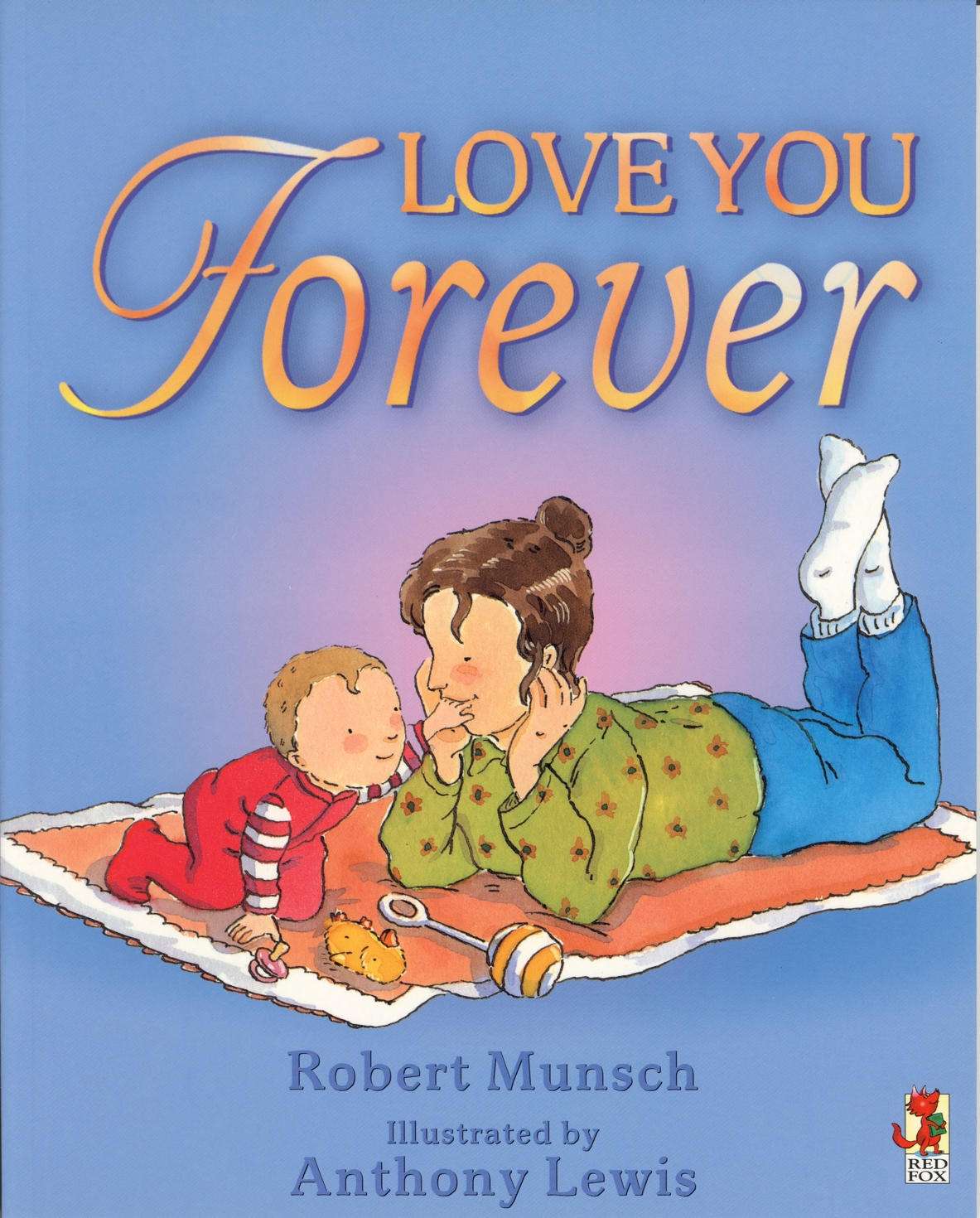
For nearly four decades, Robert Munsch’s Love You Forever has sat on millions of nursery nightstands, tucked between soft toys and board books. To generations of parents, the four-line lullaby, "I'll love you forever, I'll like you for always, as long as I'm living, my baby you'll be", is an emotional anchor whispered over sleeping toddlers. Yet behind that tender refrain lies a reality far more somber than most readers ever suspect. As revealed in a poignant redbookmag.com Report, the beloved text was never conceived as a sweet nursery bedtime story. It was an agonizing elegy, whispered silently into the dark after back-to-back family tragedies.
📌 Key Takeaways:
- The Real Origin: Robert Munsch wrote the four-line lullaby as a silent ritual of grief after he and his wife, Ann, lost two babies to stillbirth.
- The Publishing Gamble: Munsch's regular publisher initially rejected the manuscript because it broke the conventions of his comedic work; Canadian independent publisher Firefly Books stepped up to print it in 1986.
- The Cultural Divide: While the book has sold over 35 million copies worldwide, modern parenting forums frequently spar over its literal imagery, specifically the mother sneaking into her grown son's bedroom with a ladder.
The Private Elegy Born From Devastating Stillbirths
During the late 1970s and early 1980s, Canadian author Robert Munsch was rapidly building an international reputation for high-energy, slapstick children's stories like The Paper Bag Princess and Mud Puddle. Yet behind closed doors in Guelph, Ontario, he and his wife, Ann, were reeling from catastrophic private trauma. Within a short span, Ann delivered two stillborn babies. Medical specialists delivered the crushing prognosis that the couple would never be able to conceive biological children who could survive to term.
The psychological shock was devastating. Munsch later recounted that the four-line poem surfaced unbidden during that agonizing period. It was not written down on paper or shared with editors. Instead, it became a quiet, recurring inner song, a desperate affirmation of fatherhood repeated over children he would never get to hold, feed, or watch grow up.
"I made that up after my wife and I had two babies who were born dead," Munsch candidly explained on his official website. "The song was my song to my dead babies." For years, nobody else heard it. The words remained locked within his own mind, serving as a private sanctuary of parental grief and healing.
From Silent Grief Ritual to Spoken Storytelling
The transformation of that secret elegy into a published book took years. Munsch was a natural, physical storyteller who tested his narratives on live audiences at daycare centers, public libraries, and schools. One day, during a performance at a children's center, the memory of the song surfaced during a pause in his routine. He began speaking the narrative around the song out loud, improvising the journey of a mother rocking her child through each stage of development, from a diaper-destroying infant to an unruly teenager, and eventually to a grown man.
The response was immediate and electric. Parents in the back of the room wept openly. Teachers froze. The humorous, chaotic episodes of childhood that opened the tale gave way to a quiet, devastating truth about the passage of time and inevitable aging.
Turning that spoken routine into a print book, however, met immediate resistance. Munsch’s primary Canadian publisher, Annick Press, turned the manuscript down flat. The editors argued that the piece did not fit Munsch’s brand of riotous, funny storytelling. They considered it an adult piece masquerading as picture literature, too tear-inducing and strange for regular bookstore placement.
Munsch refused to shelve it. He took the manuscript to Firefly Books, a modest publishing house based in Richmond Hill, Ontario. Founder Lionel Koffler recognized something fundamentally raw in the text and committed to printing it in 1986, pairing Munsch with Toronto illustrator Sheila McGraw.
The Milestone Timeline: Loss, Print, and Global Recognition
The path Love You Forever took from private heartache to global literary staple defied standard publishing logic. Without a massive marketing budget, the picture book relied almost entirely on word-of-mouth recommendations among young mothers, pediatric nurses, and hospice workers.
| Timeframe | Key Event | Cultural & Commercial Impact |
|---|---|---|
| 1979, 1980 | Robert and Ann Munsch suffer two stillbirths | Munsch composes the lullaby entirely in his head as an unspoken eulogy for his deceased infants. |
| 1986 | Firefly Books publishes the book after Annick Press rejects it | Initial print runs sell out rapidly through word of mouth; Sheila McGraw's realistic art anchors the narrative. |
| 1994, 2001 | The title enters Publishers Weekly all-time bestsellers | Sales cross 15 million copies; the book becomes a staple baby shower gift and nursing home reading. |
| 2020, 2026 | Social media platforms reignite fierce debate over boundaries | Global sales exceed 35 million copies; readers contrast metaphorical grief against literal interpretations. |
The Polarizing Window Ladder: Why Modern Parents Debate the Story
Despite its beloved status, Love You Forever has sparked fierce debates across social media, Reddit, and parenting platforms like Motherly. As parenting philosophies shifted toward emotional boundaries and individual autonomy, modern readers began taking a closer, more literal look at Sheila McGraw’s illustrations.
The central point of friction is the sequence where the mother drives across town under cover of darkness, straps a ladder to her car roof, climbs into her adult son’s second-story bedroom window, and crawls across his carpet to rock him to sleep. On video sharing apps and parenting subreddits, critics frequently flag this sequence as bizarre, overbearing, or intrusive. Commentators ask: Why doesn't she knock? What about marital privacy?
Yet literary analysts and Munsch himself have pointed out that treating the ladder as a literal event misses the entire mechanics of children's literature. In folklore and picture books, emotional truths are frequently staged as absurd physical acts. The mother climbing the ladder is an externalization of an internal impulse: no matter where a child moves, how old they get, or what barriers separate them, a parent’s protective instinct remains desperate and boundaryless.
When viewed through the lens of Munsch’s stillborn babies, that desperate climb takes on an even more heartbreaking cast. It mirrors the impossible urge of a grieving parent willing to break the laws of physics, distance, and time just to hold a child who is out of reach.
Sheila McGraw’s Visual Realism and the Weight of Role Reversal
Sheila McGraw’s illustrations played an indispensable role in grounding Munsch's abstract words. Rather than using stylized, cartoonish figures common in mid-1980s picture books, McGraw worked with colored pencils to create tangible domestic scenes. The kitchen sinks are cluttered; the cat weaves through chair legs; the toddler's messy curls look recognizable.
This commitment to visual realism makes the book's final third profoundly striking. When the elderly mother rings her son and whispers, "You'd better come on over, because I'm very old and sick," the visual tone shifts. The son enters her bedroom, picks up his frail mother, and attempts to sing the lullaby, but her voice breaks down halfway through.
The son rocks her in his arms, completing the verse for her. McGraw’s drawing of a burly adult cradling his aged mother upends the traditional power dynamic of family life. It visualizes the universal, inevitable role reversal that adult children face as their parents decline. When the man returns home at the end of the evening, stands looking out into the cold night air, and then rocks his newborn daughter while repeating the song, the cycle resets.
The Catharsis of Parental Grief and Healing
Why does a thirty-page picture book designed for children reduce grown adults to tears on public transit? The answer lies in the emotional space Robert Munsch left between the lines. He never mentioned hospitals, infant mortality, or grief inside the text. By stripping the background of specific medical trauma, he allowed the lullaby to function as an open vessel for any form of deep, enduring love.
For parents who have experienced pregnancy loss, infant death, or the death of an elderly parent, the refrain provides words for feelings that ordinary speech cannot accommodate. Stillbirth remains one of the most isolating experiences a family can endure. In the late 1970s, hospital staff often whisked stillborn infants away immediately, discouraging mothers from looking at or mourning them. Munsch's song was an instinctive rejection of that silence.
Robert and Ann Munsch eventually built their family by adopting three children, Julie, Andrew, and Tyya, raising them in their bustling Ontario home. Yet the ghosts of those first two losses never vanished. By translating his private elegy into art, Munsch offered millions of families an unexpected mirror for their own unspoken devotion and grief.
Frequently Asked Questions (FAQ)
Q1: Why did Robert Munsch write Love You Forever?
A1: Munsch composed the book’s central lullaby as an unspoken memorial after he and his wife, Ann, lost two babies to stillbirth between 1979 and 1980. For years, he kept the song entirely in his head as a private way to grieve his deceased children before adapting it into a public story.
Q2: What are the exact words to the lullaby in the book?
A2: The four-line poem repeated throughout the story reads:
"I'll love you forever, / I'll like you for always, / As long as I'm living, / My baby you'll be."
Q3: Why did publishers initially reject the manuscript?
A3: Annick Press, Munsch's primary publisher at the time, turned down the book because it felt too sad and adult-focused compared to his slapstick comedies like The Paper Bag Princess. Firefly Books recognized its emotional resonance and published it in 1986.
Q4: Did Robert and Ann Munsch have children later on?
A4: Yes. Following medical diagnoses that they could not have biological children who survived childbirth, Robert and Ann adopted three children: Julie, Andrew, and Tyya, who frequently inspired Munsch's other popular children's stories.
The Living Legacy of a Grief Transformed
Nearly forty years after its initial printing, Love You Forever continues to occupy an exceptional place in contemporary literature. It belongs to that rare subset of children’s books that adult readers buy almost entirely for themselves. It sits on the nightstands of hospice patients, is quoted at memorial services, and is tucked into the luggage of eighteen-year-olds leaving home for college.
The debates surrounding its surreal imagery will likely continue as new generations of parents examine it through changing cultural lenses. Yet the book endures because its foundation rests on something unshakeable. Robert Munsch took one of the darkest, most isolating tragedies a human being can experience, the silent loss of an unborn child, and forged it into a shared language of unconditional love. What started as an unspoken song sung in the dark to two lost infants has become an eternal hymn for families around the world.
