The True Origin of the Chalk Toss: How LeBron Built an NBA Legend

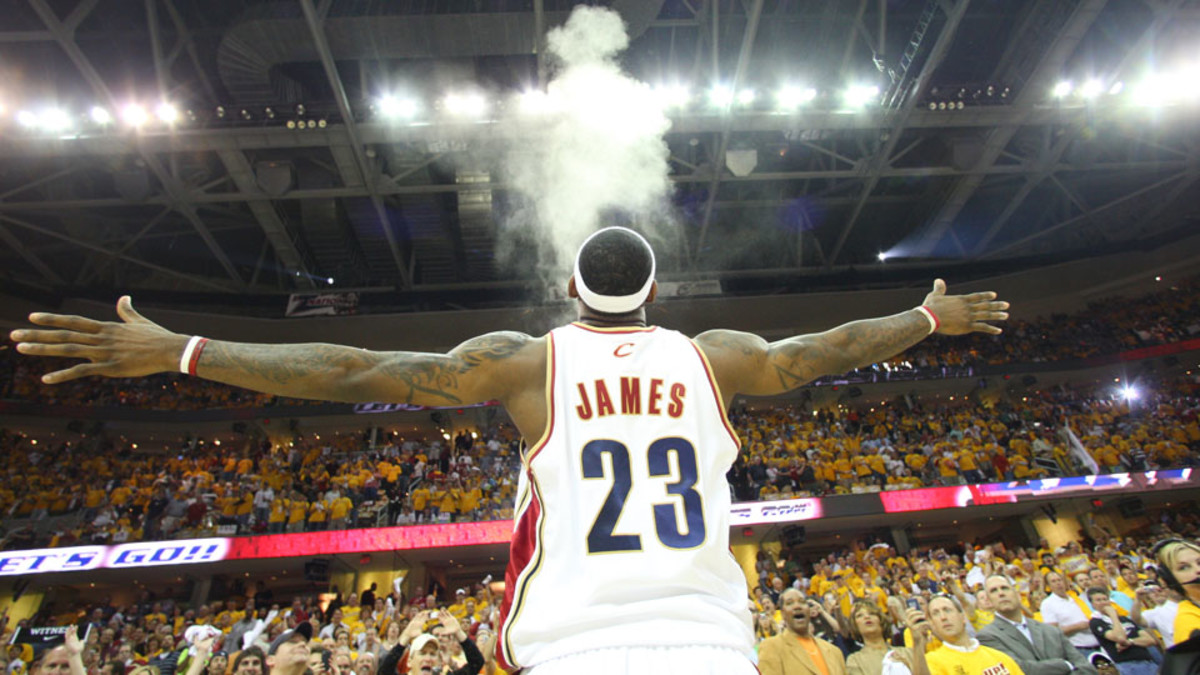
Few visual cues in modern athletics carry the instant recognition of a cloud of white powder catching the arena spotlights. Long before the opening tip, fans crowd the lower bowl, cameras raised toward the Cleveland Cavaliers scorer table or the Staples Center hardwood, waiting for King James to step forward. The ritual has transcended basketball entirely. Rising Philadelphia Union midfielder Cavan Sullivan recently made headlines after scoring for the Philadelphia Union, mimicking the theatrical release to honor the basketball icon, as tracked in a daily-sun.com Report. Now in his 23rd NBA season as the league's all-time scoring leader, LeBron James has turned what began as an improvised pregame habit into one of the most recognizable cultural signatures in professional sports.
📌 Key Takeaways:
- The Direct Inspiration: The ritual originated as an homage to Michael Jordan's 1980s sideline antics with broadcaster Johnny "Red" Kerr, but LeBron adapted the private joke into an outward, arena-wide show.
- The Material Reality: Despite the colloquial name "chalk," players actually use magnesium carbonate powder and scorer-table rosin bags mandated for moisture control and ball grip.
- Strategic Hiatuses: James retired the toss multiple times throughout his career, most notably during the early Miami Heat era and late Cleveland return, using its reappearance to signal reinvention and renewed focus.
The Scorer Table Spark and Michael Jordan's Influence
The roots of the chalk toss run directly through Chicago Stadium in the late 1980s. Michael Jordan did not launch powder into the sky to summon theatrical energy; he used it to torment a friend.
Starting during his early MVP campaigns, Jordan would walk over to the Bulls’ broadcast table before tip-off, coat his palms in talcum powder, and clap his hands directly in front of former Bulls coach and longtime color commentator Johnny "Red" Kerr. Kerr would throw his hands up, sneeze, or wear black suits dusted in white residue, turning the exchange into a beloved running gag for WGN viewers.
When LeBron James arrived in the NBA in 2003, he brought Jordan’s habit with him, but he stripped away the comedic restraint. Growing up in Akron, Ohio, James had studied Jordan's every broadcast gesture. Yet where Jordan kept the interaction confined to the broadcaster's lap, James turned toward the stands. He dipped both hands into the rosin tray, took a deep breath at midcourt, bent his knees, and threw the powder directly toward the rafters.
The contrast mirrored a generational shift. Jordan’s ritual was an inside joke shared with a courtside veteran. James recast the moment as an invitation for twenty thousand people to bear witness before the game even started.
From Utility to Spectacle: How 2003 Changed Pregame Theater
Basketball players have coated their palms in drying agents for decades. High-friction leather basketballs demand dry skin, especially for ball-handlers whose offensive drive depends on split-second control. In 2003, rookie LeBron James initially treated the scorer table like any other player, using the league-provided rosin bag to soak up palm sweat.
The transformation into theater happened gradually during his rookie winter in Cleveland. First came the pause. Instead of rubbing his hands together quickly and wiping them on his shorts, James began clapping once above the scorer table. Fans in the first three rows noticed the plume. Then he took five steps backward toward the court logo, tossed the white dust skyward with both arms outstretched, and threw his head back.
The arena reaction was instantaneous. By 2005, fans along the sideline began arriving forty minutes before tip-off specifically to catch the airborne powder. Nike turned the visual into a marketing cornerstone, splashing black-and-white billboards across downtown Cleveland featuring James mid-release under the tagline "We Are All Witnesses." What began as a standard moisture barrier had transformed into a psychological declaration of intent.
Evolution of the Ritual Across Four NBA Eras
The chalk toss did not remain static. James altered, paused, and resurrected the routine depending on his team, his public perception, and his shifting career priorities.
| Career Phase | Routine Execution | Arena & Cultural Impact |
|---|---|---|
| Cleveland (2003, 2010) | Full theatrical toss at home and away games; extended hold before release. | Became a primary trademark; fans tossed confetti packets inside the arena in sync. |
| Miami (2010, 2014) | Performed early on; temporarily abandoned during 2011 playoffs for a low-key routine. | Miami Heat chalk toss return occurred during the 2013 title run after fan voting on social platforms. |
| Cleveland Return (2014, 2018) | Reinstated on Opening Night 2014; crowd was given individual chalk bags to throw simultaneously. | Served as a symbol of regional homecoming and civic redemption. |
| Los Angeles (2018, 2026) | Intermittent; saved for marquee broadcasts, playoff games, and historic milestone nights. | Treated as an elder statesman’s signature; immortalized in video game intros and memorabilia. |
When James made his controversial move to the Miami Heat in the summer of 2010, the ritual took on an antagonistic edge in opposing arenas. By the spring of 2011, facing intense national scrutiny following regular-season setbacks, he quietly dropped the toss. He wanted to project businesslike austerity.
The silence did not last. Prior to the 2013 season, James polled his followers on Twitter, asking if he should bring the pregame routine back. The affirmative response was overwhelming. Its return signaled a relaxed, confident superstar who went on to secure back-to-back championships in South Florida.
Rosin Bags, League Rules, and Court Safety Mechanics
While television commentators routinely refer to the powder as chalk, the chemical composition matters significantly to NBA operations.
The substance sitting on the scorer table is not ordinary classroom chalk, which is composed of calcium carbonate or gypsum. It is magnesium carbonate, identical to the compound used by Olympic weightlifters and rock climbers, or crushed pine rosin. Its purpose is moisture absorption. By binding with sweat, it forms a tacky, high-grip layer that prevents the composite leather of an official game ball from slipping off sweaty fingers.
The routine creates logistical headaches for arena custodial crews. Under NBA guidelines governing court readiness, playing surfaces must remain free of foreign substances that compromise footwear traction.
Magnesium carbonate creates immediate friction on skin, but when a heavy cloud settles across polished maple floorboards, it acts like micro-ball bearings. Slipping on chalk residue poses serious groin, knee, and ankle risks during high-speed transitions.
Because of this, team equipment managers and arena floor sweepers follow strict protocols. The moment James completes his launch and jogs to his defensive position, floor attendants armed with dry micro-mops immediately sweep the immediate area in front of the scorer table. Referees routinely inspect the hardwood near the home bench before granting permission to inbound the ball.
The Psychology of Superstition Among Elite Athletes
Athletic superstitions rarely operate on logic; they operate on state regulation. High-performance sports psychologists categorize repetitive pregame routines as grounding mechanisms that lower heart rates and focus visual attention amidst intense external noise.
Signature NBA celebrations and pregame routines are everywhere:
- Stephen Curry runs an intricate tunnel-shot sequence ending in a sprint to the locker room.
- Kevin Garnett spent twelve seasons violently headbutting the padded basketball stanchion to induce adrenaline.
- Russell Westbrook developed exact, second-by-second warmup handshakes with every bench player.
For James, the chalk toss acts as a transition point between the chaotic buildup of arena introductions and the tactical execution of the game. Once the powder leaves his fingers, the spectacle ends and the work begins. Psychologically, tethering performance to a physical action creates an anchor. Over 1,500 regular-season and playoff games, repeating the exact same tactile feedback, the coarse grain of the rosin, the smell of the dust, the overhead arena flash, conditions the nervous system for peak exertion.
Global Footprint: Emulation Across Modern Sports
The lasting power of the ritual lies in how easily other athletes adopt it. Unlike a windmill dunk or a chasedown block, the chalk toss requires no elite vertical jump. It is pure theater, accessible to anyone with a bag of dust and a spotlight.
In Major League Baseball, outfielders have been caught dusting their batting gloves and raising both arms to the sky. In professional soccer, stars from European domestic leagues to North American pitches replicate the double-handed explosion during corner kicks or post-goal celebrations. The tribute by Cavan Sullivan in MLS underscores how deeply the gesture has permeated the imagination of athletes who were not even born when James first tossed powder into the air in 2003.
By anchoring his brand to a visual that cuts through language barriers, James accomplished what few commercial athletes manage: he built a trademark out of air, dust, and timing.
Frequently Asked Questions (FAQ)
Q1: Why did LeBron James start doing the chalk toss?
A1: LeBron began the routine in his 2003 rookie season with the Cleveland Cavaliers. He was inspired by Michael Jordan's pregame habit of clapping powder near broadcaster Johnny "Red" Kerr, but James adapted it into an outward, skyward celebration for the fans.
Q2: What powder is actually used at the NBA scorer table?
A2: The substance is not school chalk. It is primarily magnesium carbonate powder or crushed tree rosin, which athletes use to absorb sweat and improve hand grip on the basketball.
Q3: Did LeBron ever stop doing the chalk toss during his career?
A3: Yes. He temporarily abandoned the ritual during the 2011, 12 season with the Miami Heat to adopt a more focused, no-nonsense demeanor. He brought it back during the 2013 season after asking fans on social media, and has since performed it selectively during his Los Angeles Lakers tenure.
Q4: Do NBA rules penalize players for throwing powder?
A4: No rule explicitly bans the chalk toss, provided it does not delay the start of the game. However, arena crews must immediately wipe down the hardwood floor in front of the scorer table to eliminate slip hazards for players.
The Cultural Endurance of an NBA Icon
Sports rituals usually retire when their creators hang up their sneakers. Jordan’s prank on Johnny Kerr vanished the moment he left Chicago. Yet LeBron James' pregame habit has outgrown the individual who designed it.
The chalk toss remains a permanent fixture of basketball lore because it captures the essence of James' career: deliberate, larger-than-life, and executed under relentless public observation. Long after his 23rd season concludes and the record books close, the image of that cloud of white powder hanging suspended under the arena lights will stand as the opening chord of his reign.
