The True Story Behind 'Noot Noot': The Voice, the Legend, and the Mattel-Aardman Revival
The True Story Behind 'Noot Noot': The Voice, the Legend, and the Mattel-Aardman Revival
A round black beak stretches into an impossible trumpet, emitting a brassy, two-tone honk that echoes across icy polar plains and digital feeds alike. For nearly four decades, that signature call, rendered phonetically as "Noot Noot", has crossed linguistic borders without a single word of translated dialogue. When original voice artist Carlo Bonomi passed away at age 85, an outpouring documented by an NDTV Report confirmed just how deeply an absurd, improvised cry had lodged itself into global pop culture.
Far from fading into archival obscurity, the little clay penguin is experiencing an unprecedented second life. Contemporary digital culture transformed him from a gentle stop-motion icon into the patron saint of existential dread, while toy collectors fuel runs on blind-box figures. Now, an industry-shifting production partnership between global toy giant Mattel and British stop-motion master Aardman Animations is putting genuine Plasticine back under the studio lights, aiming to introduce classic physical craft to an audience raised on algorithmic video feeds.
📌 Key Takeaways:
- The Voice Behind the Honk: Legendary Italian voice clown Carlo Bonomi voiced every character single-handedly without a written script, drawing directly on Milanese street dialect and theatrical gibberish.
- Tactile Origins: German animator Otmar Gutmann created the series in Switzerland using pliable plasticine models shaped by hand, creating the iconic megaphone beak that computer graphics struggle to duplicate.
- The 2026 Resurgence: A verified co-production between Mattel and Aardman Animations pairs heritage stop-motion techniques with modern narrative scale, accompanied by runaway demand for designer blind-box figures.
How Carlo Bonomi Built an Entire Language in a Swiss Vocal Booth
The secret of the series was that nobody spoke a recognized language, yet every toddler on earth understood precisely what was happening. That feat came down to Carlo Bonomi. An Italian voice actor trained in traditional clowning and radio drama, Bonomi previously developed an expressive gibberish for Osvaldo Cavandoli's minimalist animated series La Linea. When German director Otmar Gutmann teamed up with Swiss studio Trickfilmstudio in 1986 to build a pilot about an Antarctic penguin family, they brought Bonomi into the booth with an unusual mandate: write nothing down.
Bonomi improvised the entire acoustic universe of the show on the spot. He provided the voices for Pingu, his sister Pinga, Mother, Father, and his mischievous seal pal Robby. The language, frequently dubbed "Pengimese" or "Pinguish", relied heavily on the rhythmic cadences of the Milanese dialect, blended with onomatopoeia, throat clicks, and theatrical bluster. The legendary "Noot Noot" was not an engineering cue or a synthesized studio trick. Bonomi pitched his vocal cords into a tight, resonant squeal that imitated an old brass car horn or a megaphone, syncing his breaths with the rubbery movements of the plasticine puppet.
By bypassing standard English or German, Gutmann and Bonomi stumbled into an international licensing phenomenon. The Swiss production required no localization budgets, no dubbing actors, and zero cultural adaptation. Broadcast networks in Japan, the United Kingdom, Kenya, and Brazil simply dropped the tapes into their schedules. Bonomi handled vocal duties across the initial four series until 2000, setting a standard for physical comedy where intonation, pitch, and comedic timing conveyed petulance, joy, and existential panic with raw acoustic clarity.
The Hand-Crafted Engineering of Otmar Gutmann’s Clay Antarctic
Before digital rendering smoothed out the imperfections of children's television, the production of the show was an exhausting physical discipline. Otmar Gutmann constructed his miniature South Pole inside a modest studio in Russikon, Switzerland. Temperatures inside the facility had to be constantly monitored; warm studio lamps turned the animators' cast of characters into melting sludge, while cold drafts rendered the clay too brittle to shape frame by frame.
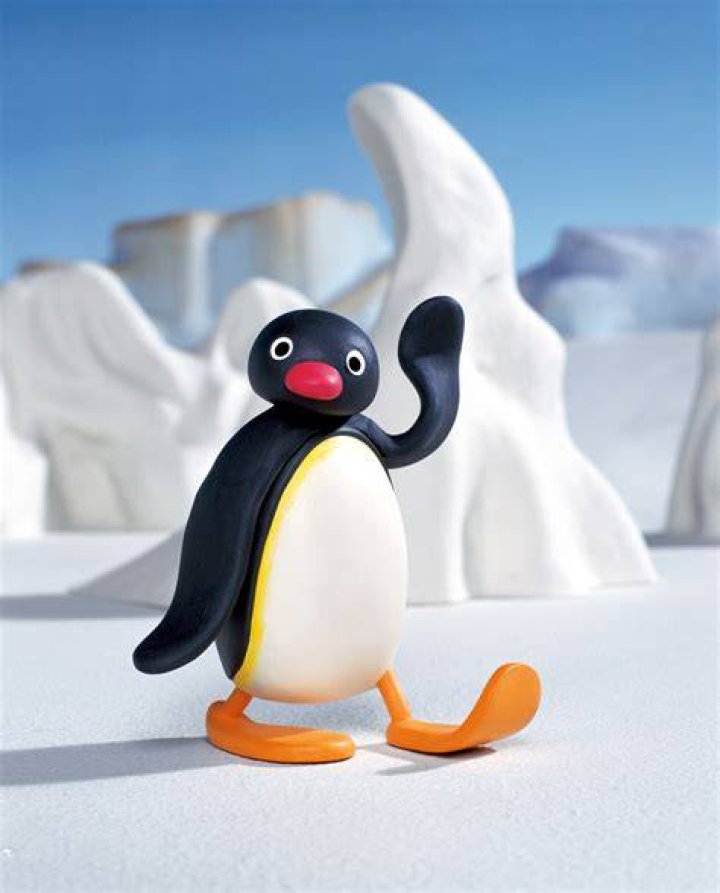
Animators worked with a special formulation of Plasticine that retained elasticity under hot lights. Rather than relying on rigid internal metal armatures common in modern puppet construction, the figures were shaped largely by hand between single-frame exposures. When Pingu threw a tantrum, the animators manually flattened his head, dragged his rubbery torso outward, or elongated his beak into the famous "Lacenoise megaphone mouth." This extreme squash-and-stretch style borrowed heavily from early theatrical cartoons, translated into stubborn three-dimensional clay.
The aesthetic was proudly tactile. Camera lenses routinely captured tiny ridges left by the animators' fingerprints on Pingu's black-and-white body. White wooden boards and sugar-like powder stood in for polar blizzards. This physical reality granted the world weight: when the penguin dragged his wooden sled or slipped across an ice pond, friction and gravity felt genuine because the physical materials actually obeyed physical laws. The labor was punishing, yielding roughly three to five seconds of completed footage per day, but it established a timeless, anti-digital visual identity that remains immediately distinguishable from clean, sterile CGI.
From Children’s Mascot to Existential Doom Meme: The Factual Timeline
The journey from European public broadcasting staple to viral symbol of cosmic terror reflects how internet humor repurposes analog nostalgia. In the early 2010s, short clips circulated on YouTube remixes, but the character’s second cultural explosion peaked when online creators transformed an innocent clip from the 1989 episode "Pingu Looks After the Egg" into a universal shorthand for creeping dread.
Synchronized to the ominous brass strains of Mozart's Lacrimosa or industrial dark-ambient track "Murders" by Miracle Musical, slow dramatic zoom-ins on Pingu's wide-eyed, honking face became known as the "Existential Pingu" or "Traumatized Noot Noot" meme. Over 1.4 billion impressions were logged under related tags across TikTok, Instagram, and Reddit between 2021 and 2024. The joke resonated because Bonomi's raw vocal performance, stripped of its whimsical original context, captured genuine psychological shock with uncanny precision.
| Era | Production / Cultural Milestone | Primary Medium & Tech |
|---|---|---|
| 1986, 2000 | Original Swiss Series: Otmar Gutmann directs; Carlo Bonomi voices all roles. Global syndication covers 100+ countries. | Traditional clay stop-motion, 16mm film, raw vocal improvisation. |
| 2003, 2006 | British Era: HIT Entertainment acquires rights; production moves to Hot Animation with new voice cast (Marc Silk, Marcello Magni). | Resin-headed stop-motion puppets, digital video capture. |
| 2017, 2019 | Japanese Revival: Pingu in the City debuts on NHK, moving the character from the Antarctic to an urban work environment. | 3D Computer Animation (CGI) emulating clay stop-motion frame rates. |
| 2021, 2023 | Viral Rebirth: The "Traumatized Pingu" meme sweeps short-form video platforms; Carlo Bonomi dies in Milan at age 85. | Algorithmic video memes, audio sampling, web culture synthesis. |
| 2024, 2026 | The Aardman-Mattel Reboot: Major studio partnership announced to revive stop-motion production alongside designer collectibles. | Hybrid tactile claymation, modern stage lighting, blind-box vinyl toys. |
The Aardman and Mattel Partnership: Returning to Tactile Roots
When toy conglomerate Mattel secured ownership of the franchise through its acquisition of HIT Entertainment, brand purists worried the tactile character would disappear into low-cost, algorithmically generated computer graphics. The 2017 Japanese series Pingu in the City demonstrated that CGI could imitate clay textures, but something essential went missing when algorithmic lighting replaced physical grease marks.
Industry insiders were surprised when Mattel Television Studios officially partnered with Bristol-based powerhouse Aardman Animations, the four-time Academy Award-winning studio behind Wallace & Gromit and Chicken Run. Developing an all-new stop-motion animated series, Aardman brings the production full circle back to genuine, physical puppet animation.
The creative directive behind the new series centers on preserving the tactile comedy that made the 1986 original iconic while upgrading the scale of the miniature sets. By utilizing Aardman’s stop-motion infrastructure, the production maintains real clay manipulation, physical lighting, and character-driven slapstick without relying on dialogue translations. Industry analysts view the move as a direct reaction against the glut of hyper-polished, synthetic digital children's content. Handcrafted animation stands out in streaming catalogs precisely because human hands touched every frame.
The Blind Box Phenomenon and Collector Culture in 2026
While studio animators set up lighting rigs in Bristol, a parallel economic boom has exploded across the designer toy market. Modern consumers are rediscovering the franchise not through vintage broadcast reruns, but through high-end collectibles. In March 2026, leading figure manufacturer Good Smile Company unveiled the "Pingu - Emotion Collection!" blind-box series, capturing the expressive, unhinged facial distortions made famous by Bonomi's vocal sessions and contemporary internet memes.
Blind-box retailing has shifted from an East Asian niche into a dominant worldwide merchandising model. The figures do not showcase the character standing passively; they immortalize specific micro-frames of animation: the flattened rage face, the melting body puddles, the suspicious sideways glare, and the fully extended trumpet beak mid-honk. Independent toy shops in London, New York, and Tokyo report consistent sell-outs of full master cases within hours of delivery.
This merchandise surge bridges two distinct demographics: nostalgic millennial parents who grew up with the BBC broadcast in the 1990s, and Gen Z desk workers who collect tangible artifacts of the memes that populate their group chats. The physical reality of the original clay character translates seamlessly into vinyl and resin, giving collectors an analog connection to a character born long before the smartphone era.
Frequently Asked Questions (FAQ)
Q1: What does "Noot Noot" actually translate to?
A1: It has no literal translation in any spoken human tongue. Carlo Bonomi improvised the sound using a vocal technique that imitated a small, loud rubber horn. The sound functions as an emotional punctuation mark, expressing defiance, excitement, triumph, or utter outrage depending on the vocal pitch and head posture.
Q2: Why did original creator Otmar Gutmann stop directing the show?
A2: Otmar Gutmann passed away suddenly in 1993 after completing the first series and early production runs. His Swiss studio team, alongside co-producers, preserved his strict frame-by-frame animating techniques and design notes to produce subsequent seasons through the late 1990s.
Q3: Will the new Aardman-Mattel television series feature spoken English dialogue?
A3: No. Production executives confirmed the upcoming project stays committed to the iconic non-verbal format. The characters will continue using expressive gibberish and acoustic sound effects, allowing the show to distribute internationally without regional language dubs.
What Lies Ahead for Clay Animation in 2026
In an entertainment ecosystem flooded with cheap, auto-generated digital video, the enduring power of a honking penguin made from pliable modeling clay offers an instructive lesson. Spectators crave the imperfections of human effort. When Carlo Bonomi stood in a small recording studio shouting gibberish into a microphone, he was not following a corporate focus group; he was practicing intuitive physical comedy that transcended national boundaries.
The ongoing partnership between Mattel and Aardman proves that traditional, labor-intensive art forms can hold their ground against synthetic media. By refusing to iron out the tactile quirks, the oddities of Pengimese, or the jagged snap of a clay trumpet beak, the creators of this Antarctic universe ensure that one absurd, brassy call will keep cutting through the noise for generations to come.
