The Visual Evolution of 'Dap Me Up': Breaking Down the Clips, Sounds, and Edits Dominating Feeds

A creator stretches an arm toward a webcam, pitching their voice into a gravelly shout: "Dap me up!" What started as a foundational ritual of Black American greeting culture has mutated across algorithmic feeds into an absurd digital punchline. From the classic Paul Rudd interview on Hot Ones detailed in early viral coverage by the Popsugar Report to surreal adult animations and wildlife clips, the dap up has become one of the most flexible visual templates on modern video platforms.
The gesture has generated billions of collective views across TikTok, YouTube Shorts, and Instagram Reels. Understanding how this gesture crossed into universal internet shorthand requires tracking its movement through animation studios, sound engineering trends, and the mechanics of short-form video algorithms.
📌 Key Takeaways:
- The Lineage: Rooted in African American Vernacular English (AAVE) and Vietnam War-era solidarity gestures, "dapping up" shifted from an in-person greeting to an aggressive comedy audio trend on Vine and TikTok.
- The Viral Catalyst: Explosive growth accelerated through surreal visual pairings, combining deep-fried audio clips with Adult Swim's Smiling Friends, wildlife footage, and mobile template edits.
- The Format Shift: Mobile editing apps turned the physical handshake into a multi-layered template for subverting expectations, moving from aggressive humor to surrealist parody.
From Military Solidarity to Algorithm: The Origins of the Dap
The phrase "dap me up" relies on decades of cultural history. The word "dap" emerged during the late 1960s among Black American soldiers serving in the Vietnam War. Faced with racial tensions overseas, troops developed the handshake as an acronym for "Dignity and Pride." It served as an unspoken survival code and a gesture of physical solidarity. Back home, it integrated deeply into African American Vernacular English (AAVE) and urban street culture, establishing bonds of mutual respect through rhythm, palm strikes, and finger clasps.
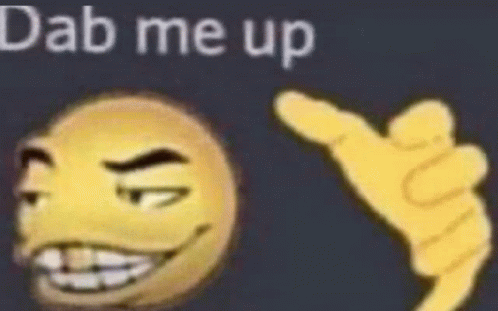
The transition to digital humor began on platforms like Vine and early YouTube. Creators exaggerated the sheer volume and physical force of the greeting. By the early 2020s, the phrase morphed into an aggressive internet dare. Online skits reframed the request not as a polite greeting, but as an inescapable demand. A creator would shove their palm directly into the camera lens, screeching distorted variations of "dap me up" to trigger abrupt comedic cuts. The phrase lost its conversational ease and became an audio jump scare.
Visual Proof: The Clips and Animations That Broke Feeds
Online video trends depend heavily on striking visual hooks. The dap format found traction by attaching itself to bizarre, hyper-specific animation and live-action footage that created visual dissonance.
One major surge occurred when creators began cutting the audio against Adult Swim's runaway animated hit Smiling Friends. In a widely circulated scene documented across animation communities, characters Charlie Dompler and Pim Pimling engage in an unexpectedly intense, high-stakes physical clasp. The rough, jagged animation style paired seamlessly with blown-out bass sounds, turning the cartoon interaction into a viral CapCut template overnight.
Simultaneously, unexpected footage from the animal kingdom began dominating algorithmic feeds. In mid-2024, wildlife footage of golden snub-nosed monkeys reached mainstream video platforms. A clip showing one monkey extending a blue-faced, fuzzy hand toward the camera was immediately overlaid with aggressive "dap me up" audio tracks. Viewers responded to the stark contrast between the animal's gentle, curious reach and the abrasive digital scream playing over the speakers. The monkey clip generated tens of millions of views within weeks, spawning thousands of spin-off memes that placed the primate in high-stakes friendship dilemmas.
+-------------------------------------------------------------+
+-------------------------------------------------------------+
|
v
[ 1. Distorted Voice Clip ] -> "Dap me up right now!"
|
v
[ 2. Kinetic Visual Hook ] -> Charlie & Pim (Smiling Friends)
Golden Snub-Nosed Monkey
Paul Rudd / Sean Evans Clasp
|
v
[ 3. CapCut Template Sync ] -> Bass Drop + Screen Shake + Freeze Frame
|
v
[ 4. Algorithm Dispersion ] -> TikTok FYP -> YouTube Shorts -> Reels
The Mechanics: Audio Filters, Beat Drops, and CapCut Edits
The visual punchline relies heavily on sonic engineering. The typical audio track behind these clips follows a strict formula: dry silence or calm ambient sound, followed by a sudden voice spike pushed beyond natural clipping thresholds.
Mobile editors on platforms like CapCut optimized the meme for micro-attention spans. Users pair the sudden vocal shout with automated visual effects:
- Rapid 120% snap-zoom focused on the extended hand.
- Camera Shake & Motion Blur: Frame-by-frame shudder timed precisely to the audio transient.
- Red and blue color-splitting to simulate impact shockwaves.
- Abrupt transition to black or a freeze frame right when the hands connect.
This sensory overload transformed the handshake from a social greeting into a kinetic punchline. The audio track itself became an autonomous template. Creators no longer needed original footage; they simply inserted their everyday pet videos, sports clips, or video game character interactions into the established sound mix.
Timeline of a Format: How the Handshake Evolved
The format shifted repeatedly between 2019 and 2026, cycling through different visual inspirations and meme formats.
| Time Period | Dominant Visual Anchor | Platform Driver |
|---|---|---|
| 2019, 2020 | Paul Rudd "Look at Us" Hot Ones interview crossover | Twitter / Early TikTok |
| 2021, 2022 | "She Broke, I'm Up" text parody formats and camera thrusts | TikTok Sound Boards |
| 2023, 2024 | Golden snub-nosed monkey outreach footage | Instagram Reels / Shorts |
| 2025, 2026 | Smiling Friends and surreal animation rotoscoping | CapCut Community Hubs |
By tracing this lineage, the transition becomes clear. The meme moved from documenting real human connection to isolating the physical gesture into an absurd, reusable visual gag.
The Cultural Friction of Commodifying AAVE
The memeification of "dap me up" also exposes an ongoing cultural tension on digital platforms: the systematic stripping of context from African American Vernacular English. When gestures and slang move into algorithmic ecosystems, their historical weight rarely survives the journey.
Sociolinguists and cultural critics frequently point out how digital platforms accelerate this cycle. An authentic cultural expression begins within a localized community, gains visibility through Black creators, and gets adopted by algorithmic curation systems. Once the audio separates from its human origin, it becomes a flattened sound bite for mainstream creators who may not know the origins of the word.
The greeting transformed from an intimate, respectful cultural handshake into a hyperactive audio cue used to score funny animal videos and gaming glitches. While this demonstrates how flexible internet culture can be, it highlights how quickly platform mechanics strip away the historical context of shared language.
Frequently Asked Questions (FAQ)
Q: Where does the term "dap" originally come from?
A: The term originated in the late 1960s among Black American soldiers during the Vietnam War as an acronym for "Dignity and Pride." It functioned as a physical pact of unity, safety, and mutual support before expanding into broader hip-hop and urban culture across the United States.
Q: Why did the golden snub-nosed monkey video go viral with this sound?
A: A nature documentary clip surfaced showing the primate calmly reaching its blue-and-orange arm directly toward a human hand. The animal's composed demeanor created an immediate comedic contrast with the loud, blown-out audio tracks popular on TikTok, turning the clip into an instant template.
Q: What role did Smiling Friends play in the meme's revival?
A: The Adult Swim animated series features fast, chaotic visual timing that matches modern sound edits. Fans isolated animated frames of characters aggressively clasping hands, matching them with high-distortion audio edits on CapCut to create a fresh wave of visual templates in late 2025.
The Future of Digital Handshakes
The "dap me up" format shows no signs of vanishing; instead, it continues to adapt. What keeps the meme alive across video platforms is its core structural simplicity: an extended hand, an escalating demand, and an immediate visual resolution. Whether rendered through classic television clips, wildlife documentaries, or surreal hand-drawn animation, the gesture gives video editors an instant tool to build tension and snap it in an instant.
Platform algorithms favor clear kinetic movement and immediate punchlines. As long as mobile editing tools make it easy to warp sound and motion, creators will keep finding fresh ways to reach through the screen, demanding that the viewer meet their palm.
