Two-Arm vs. Single-Arm Dumbbell Rows: Which Variation Really Builds a Bigger Back?
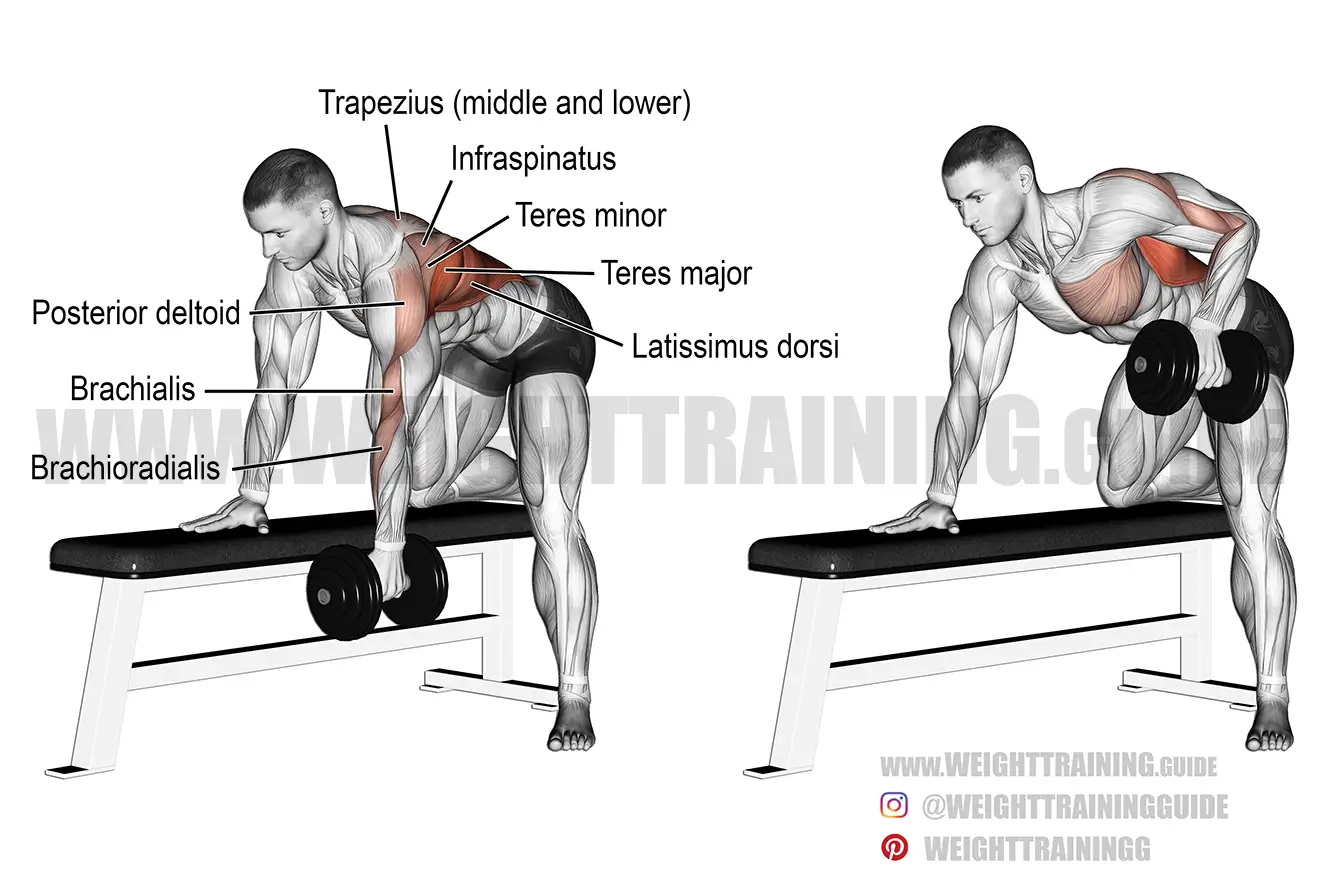
Walk into any collegiate strength facility or commercial gym, and you will spot two distinct camps training the posterior chain. On one side, lifters hinge over a flat bench, driving a heavy bell with one arm while bracing their off-hand on the vinyl. On the other, athletes stand free, locked into an unsupported hip hinge, pulling two heavy dumbbells simultaneously. While classic bodybuilding lore often treats these two movements as interchangeable variations of the bent-over dumbbell row, sports science tells a far more nuanced story.
The debate gained fresh traction following an analysis in a Men's Journal Report examining powerlifting adaptations and row biomechanics. While six-time Mr. Olympia Dorian Yates built historic back density by relying heavily on barbell pulls, modern exercise physiologists look closely at the mechanical cost of axial loading. Choosing between pulling one bell or two is not merely a matter of convenience. It dictates spinal shear, rotational torque, and the precise mechanical tension delivered across your upper back.
📌 Key Takeaways:
- Spinal Preservation: Single-arm supported rows slash lower back shear stress by over 50% compared to bilateral unsupported rows, allowing higher volume without axial fatigue.
- Targeted Hypertrophy: Unilateral rows allow a freer elbow drive path to isolate the latissimus dorsi, whereas two-arm rows demand intense hip hinge stability and spread load into the rhomboids and erectors.
- Loading Limits: Grip strength and straps dictate long-term lat development; relying solely on barehanded grip frequently stalls back overload several weeks prematurely.
The Biomechanical Divide Between Bilateral and Unilateral Rowing
The mechanical distinction between these movements begins at the base of support. In a standard two-arm bent-over row, your body must maintain an unsupported hip hinge throughout the set. Your hamstrings, glutes, and lumbar erectors fire continuously to resist the downward gravitational pull of the weights. This static muscular demand creates significant cumulative fatigue before the upper back reaches true mechanical failure.
By contrast, single-arm dumbbell row form introduces a third point of contact, typically a hand, knee, or both anchored to a bench. That external brace immediately transfers torso weight off the spinal column. The mechanical lever arm shifting against your lumbar spine shortens dramatically. Freed from the burden of keeping your torso from collapsing forward, your nervous system can channel maximum motor unit recruitment directly into upper body pulling musculature.
The unilateral setup also unleashes greater range of motion. During a bilateral row, the dumbbells must clear your knees, and the chest cannot rotate. Unilateral positioning allows a subtle, controlled degree of thoracic rotation. You achieve a deeper muscular stretch at full arm extension and a tighter terminal contraction at the top of the pull.
Scapular Retraction Mechanics and the Elbow Drive Path
Muscle recruitment during any horizontal pull hinges on joint trajectory. For lifters targeting latissimus dorsi hypertrophy, the elbow drive path must remain tight against the ribcage. When pulling unilateral dumbbells, you can trace an arcing path, pulling the weight back toward the hip pocket rather than straight up against gravity. This sweeping motion keeps tension pinned across the thoracic and lumbar fibers of the lats while minimizing unwanted biceps dominance.
When pulling two dumbbells simultaneously, your torso angle and stance naturally alter scapular retraction mechanics. With both arms working together, maintaining clearance around the thighs forces the elbows to flare outward at a 30-to-45-degree angle. This flare shifts the mechanical advantage upward into the rhomboids and middle trapezius.
If your primary goal is building mid-back thickness, the dense musculature framing the shoulder blades, the bilateral dumbbell row performs exceptionally well. However, if your program already includes heavy barbell deadlifts or Romanian deadlifts, taxing those same postural muscles with bilateral rows often leads to form breakdown, rounding of the thoracic spine, and diminished lat stimulation.
Lower Back Shear Stress and Genuine Hernia Risks
Unsupported bent-over positions impose severe demands on the anterior-posterior stabilization structures of the lumbar spine. Electromyography and orthopedic modeling reveal that holding an unsupported hip hinge while holding 70-pound dumbbells generates immense lower back shear stress. For lifters with pre-existing disc bulges or compromised spinal mechanics, this sustained forward lean creates an unfavorable risk profile.
A lesser-discussed hazard involves intra-abdominal pressure (IAP) management and hernia vulnerability. When performing heavy two-arm rows, athletes brace hard via the Valsalva maneuver to stabilize the spine against collapse. If a lifter combines maximal intra-abdominal pressure with high spinal flexion under fatigue, pressure against the inguinal rings and umbilical wall surges.
The single-arm row introduces core anti-rotation stability challenges instead of pure compressive strain. As the weight descends on one side, your internal and external obliques, along with the quadratus lumborum, must fire to stop the torso from twisting. Because one hand supports your bodyweight on a bench, peak intra-abdominal pressure requirements are far more manageable, substantially mitigating the risk of abdominal wall injury.

Structural Biomechanics and Fatigue Profiles Compared
Understanding the distinct physiological trade-offs between both row variations enables targeted, injury-free programming. The table below outlines how joint stress, muscle recruitment, and balance requirements diverge across a standard working block.
| Biomechanical Metric | Single-Arm Supported Row | Two-Arm Bent-Over Row |
|---|---|---|
| Lumbar Shear & Compression | Low to Moderate (External bench support) | High (Unsupported hip hinge posture) |
| Primary Hypertrophy Target | Latissimus dorsi (iliac and thoracic divisions) | Rhomboids, middle trapezius, spinal erectors |
| Limiting Fatigue Factor | Target muscle failure / Grip fatigue | Hamstring and lower back endurance |
| Core Muscle Demand | Rotational and lateral shear resistance | Bilateral bracing against anterior flexion |
| Effective Loading Range | 80, 150 lbs per dumbbell | 50, 90 lbs per dumbbell |
Resolving Unilateral Muscle Imbalance and Managing Grip Fatigue
Human bodies are asymmetrical by design. Structural dominance from everyday life often produces distinct disparities in pulling power and scapular mobility. When performing bilateral rows, the stronger side habitually overcompensates, pulling fractionally earlier and bearing more of the total workload. Over a multi-month training cycle, this subconscious compensation pattern reinforces unilateral muscle imbalance, leading to visible discrepancies in back symmetry and chronic shoulder tightness.
Unilateral training strips away this compensation mechanism. Testing each side independently forces the non-dominant lat to bear the entire load across its full contractile range.
However, heavy unilateral work runs directly into an anatomical roadblock: grip endurance. The forearm flexors are small muscles compared to the broad expanse of the back. As you approach progressive overload for back development, pulling dumbbells weighing 80 pounds or more, your hands will almost always give out before your lats do.
Relying entirely on raw grip strength often compromises hypertrophy. Using lifting straps or figure-eight hooks decouples lat recruitment from forearm fatigue. Straps allow you to lock your fingers loosely around the handle, treat your arms as simple cables, and focus purely on driving the elbow backward to achieve maximum muscular stimulation.
Structuring Rows for Systematic Back Hypertrophy
Deploying these variations effectively requires evaluating your overall training split. If your workout routine already includes heavy axial movements like squats, conventional deadlifts, or barbell overhead presses, adding heavy two-arm bent-over dumbbell rows puts excessive strain on your posterior chain. Your erectors and hamstrings will fatigue, your torso angle will rise toward upright posture, and your back development will plateau.
Under heavy axial programming, the single-arm supported row serves as the superior builder. It allows you to expose the lats to extreme mechanical tension without placing further demands on an already taxed lower back. Program single-arm rows for 3 to 4 working sets in the 8-to-12 repetition range, using straps to take grip failure out of the equation.
Reserve the two-arm bent-over row for training days with low spinal fatigue, such as dedicated upper-body push-pull sessions. Treat it as a comprehensive mid-back builder. Pull with a slight elbow flare to engage the middle traps and rear deltoids, keeping sets in the 10-to-15 repetition bracket where loads remain moderate and the hip hinge position stays stable.
Frequently Asked Questions (FAQ)
Does the single-arm row build wider lats than the two-arm variation?
Yes. The unilateral position allows you to pull the dumbbell in a slight arc back toward the hip pocket rather than straight upward. This specific path maintains tension across the lower lat fibers while eliminating thigh obstruction, maximizing the mechanical stretch necessary for muscle growth.
Is leaning on a bench during dumbbell rows considered cheating?
No. Bracing on a bench is an intentional mechanical strategy. By taking your lower back and hamstrings out of the equation, you prevent whole-body fatigue from ending your set early, ensuring your lats reach genuine failure instead of your postural muscles.
Should I use lifting straps on heavy single-arm dumbbell rows?
Yes, especially when using heavy loads for muscle growth. The muscles of the back are significantly stronger than the grip flexors in the forearm. Using straps prevents grip failure from prematurely cutting short your working sets, allowing full progressive overload on the targeted back musculature.
Selecting the Right Row for Your Training Blueprint
Building a wide, thick back requires matching mechanical intention to exercise execution. The two-arm bent-over dumbbell row remains a reliable, old-school developer of mid-back thickness and posterior chain resilience. It forces your core, glutes, and upper back to operate as a unified functional unit.
Yet for pure latissimus dorsi hypertrophy, reduced lower back shear stress, and long-term joint longevity, the single-arm supported dumbbell row is exceptionally tough to beat. By offering an external anchor, it bypasses the systemic fatigue limits of the hip hinge and lets you challenge the upper back with intense, isolated tension. Rather than viewing the two movements as competitors, align them with your physical needs: pick the single-arm row to safely overload your lats, and use the bilateral row when you need functional mid-back thickness and postural grit.
