Visual Silhouette Guide: Flattering Black Necklines and Cuts for Fuller Busts
Black clothing has long been marketed as a universal slimming shortcut. Yet for anyone dressing a fuller bust, throwing on an oversized black garment often produces the opposite effect, creating a tented, shapeless block that obscures natural waistlines and adds visual bulk. High-profile red carpet appearances from figures like Sydney Sweeney and practical consumer breakthroughs spotlighted in a recent buzzfeed.com Report have shifted the conversation from concealing curves to sculpting them. Precision cutting, internal construction, and intentional open necklines transform dark monochrome fabrics into an architectural frame.
Achieving balanced proportions in head-to-toe black requires understanding line, fabric weight, and foundation garments. The goal is never to hide larger cup sizes, but to guide the eye across balanced proportions without fabric pulling, gapping, or flattening.
📌 Quick Summary:
- Core Principle: Solid black absorbs light, meaning silhouette lines and open negative space around the collarbone matter far more than color alone.
- The Tailoring Shift: Hollywood stylists prioritize structural bodice design, supportive underwire, and waist anchoring over loose, tented cuts.
- Foundation Requirement: Proper large cup bra support changes dress hangs completely, lifting tissue off the ribcage to reveal the natural torso line.
Why Solid Black Demands Precision Framing on Fuller Busts
Dark shades absorb shadows, which flattens three-dimensional depth. When a woman with a large bust wears a high-necked, unconstructed black jersey top, the fabric drops straight down from the apex of the chest past the stomach. The optical result is a monolithic column. What was meant to minimize instead broadens the entire upper body.
To counter this optical flattening, stylists working with clients across the D to JJ cup range rely on strategic negative space. Revealing the décolletage, clavicle, and neck breaks up the heavy visual expanse of dark fabric. By exposing skin between the chin and the bust line, the chest reads as an integrated feature of an hourglass silhouette rather than a single uninterrupted mass.
Personal accounts documented by outlets like Salon have long captured the emotional weight and wardrobe frustrations experienced by well-endowed women dealing with fast-fashion cuts designed for B-cup fit models. Ready-to-wear shirts frequently gap at the buttons, while shift dresses ignore the waist entirely. The antidote lies in intentional cut lines that follow the contours of the body.
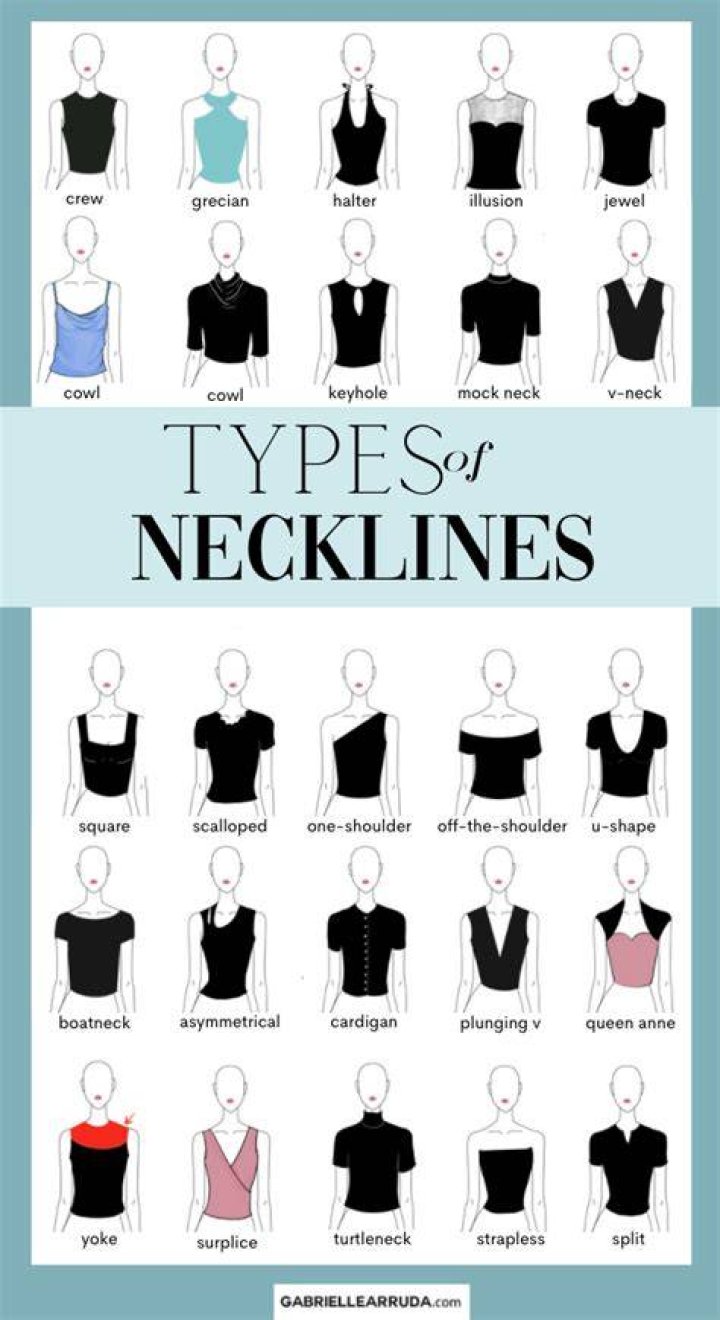
Neckline Geometries: What Balances and What Flattens
The cut across the chest determines how fabric falls over the torso. Different necklines serve distinct geometric purposes when working with larger cup sizes in dark color palettes.
V-neck cuts remain the industry benchmark for fuller bust styling. A vertical or angled drop creates a sharp diagonal line that draws the eye inward and downward, cutting the chest width in half visually. Stylists caution that depth matters: a V-neck that ends just above the cleavage provides day-to-day balance, while a deeper plunge works best when secured with garment tape and reinforced by structured interior wings.
Square neck tops provide horizontal architectural structure. Popularized in period costuming and modern tailoring, a wide square neckline broadens the shoulders and frames the collarbones, directly counterbalancing a heavy bustline. This cut is especially flattering on broader ribcages because the angular corners create clean contrast against soft curves.
Sweetheart neckline cuts follow the natural swell of the bust while carving out space at the sternum. When built into a structured little black dress, a sweetheart cut prevents the "shelf" effect, allowing each cup area to sit properly without uniboob compression. Meanwhile, high crewnecks and tight turtlenecks require heavy fabric tension or an open blazer over top to avoid exaggerating chest volume.
Foundations First: The Engineering Behind Dark Monochromatic Dressing
No black blazer or wrap dress sits cleanly without adequate understructure. A common issue highlighted in fittings is tissue displacement: soft bras push breast tissue downward and outward toward the armpits, widening the torso and shortening the apparent length of the waist.
Large cup bra support requires rigid side slings, high center gores, and sturdy wide-set underwires that encapsulate rather than compress. When breast tissue is lifted and centered, approximately 2 to 4 inches of torso length are visually restored between the underbust and the hip bone. That clearance enables monochromatic tailoring to sit flush against the ribs.
| Silhouette Cut | Structural Mechanics | Bust Styling Impact |
|---|---|---|
| Deep V-Neck Jacket | Single-button anchor below the bust line; padded shoulders | Breaks horizontal chest mass; restores waist definition |
| Square Neck Bodysuit | High-elastane interlining; wide bra-friendly strap placement | Broadens shoulders; lifts focus upward to clavicle |
| Classic Wrap Dress | Bias-cut matte jersey or silk crepe with self-tie waist anchor | Eliminates chest tenting; defines natural hourglass proportions |
| Corseted Little Black Dress | Internal vertical boning; molded cups; sweetheart rim | Transfers bust weight to the hips; eliminates shoulder strain |
For formal black ensembles, celebrity dressing strategies detailed by fashion publications frequently use built-in bustiers. Rather than relying on fragile spaghetti straps to hold the dress up, structural bodice design anchors the garment at the waist and hip bones. Flexible internal boning prevents the fabric from collapsing under the weight of a fuller bust, ensuring clean lines throughout an evening.
Tailoring Hacks: From Wrap Dresses to Tuxedo Suiting
A common styling error is purchasing garments in larger sizes to accommodate the chest, then leaving the excess fabric around the waist, sleeves, and shoulders untouched. Tailoring a black garment down to fit your narrowest points is far more effective than trying to squeeze into a smaller cut.
Wrap dress silhouettes remain popular for good reason: the overlapping fronts flex to accommodate fluctuating cup sizes while cinching the smallest part of the waist. When selecting a black wrap dress, opt for medium-weight fabrics like matte jersey, ponte knit, or wool crepe. Lightweight rayon clings unpredictably, while stiff brocades gap at the crossover. A small interior snap or discreet modesty stitch installed by a tailor eliminates the need for constant adjusting.
Monochromatic tailoring in suits offers another sharp solution. Double-breasted black jackets can sometimes add unwanted bulk across the front. Single-button blazers with low-stance lapels provide a long, unbroken vertical line that glides over the bust. Leaving the jacket unbuttoned over a fitted black square-neck camisole creates two vertical panels, visually narrowing the midsection.
Fabric texture also plays a major role. High-gloss fabrics like vinyl, liquid satin, and patent leather reflect light off every curvature, exaggerating volume. Matte fabrics absorb light evenly, producing a sleek, streamlined appearance. Layering a matte wool blazer over a ribbed silk tank introduces rich dimension without adding physical bulk.
Frequently Asked Questions (FAQ)
Q1: Why do black turtlenecks often make larger busts look bigger?
A1: A high, solid black collar creates an unbroken field of dark fabric from jawline to waist. Because dark surfaces absorb shadow, the eye cannot register where the chest ends and the torso begins, making the entire upper half read as one large plane. To fix this, layer a long pendant necklace, open lapels, or a V-neck cardigan over the turtleneck.
Q2: How do you prevent gaping shirts when styling a black button-down?
A2: Always fit the shirt to your bust measurement first, ignoring the loose waist and arms. Then take the garment to an alterations tailor to add back darts and take in the side seams. Alternatively, sew the front placket shut across the bust line and pull the shirt on over your head, or install hidden clear snap fasteners between the buttons.
Q3: What should someone look for in a supportive black bra for low-cut dresses?
A3: Choose a plunge style featuring a narrow center gore that sits completely flat against your breastbone. Look for multi-part cut-and-sewn cups rather than seamless molded foam, as seamed cups project the tissue forward and upward rather than spreading it wide under your arms.
Building a Cohesive Dark-Tone Wardrobe
Mastering dark-toned styling with a larger bust comes down to balance rather than concealment. By combining structured foundation garments, intentional necklines, and waist-conscious tailoring, black garments transform from shapeless coverings into sharp, sculpted ensembles.
Prioritize open collarbones over high, closed crew cuts, select matte textiles that glide without catching, and anchor fluid wraps with firm belts or darts. When fabric is shaped to honor the natural frame rather than fight it, monochromatic dressing delivers effortless, sophisticated impact every time.
