What Does OTP Mean in Text Messaging? The Ultimate Guide to Codes and Slang
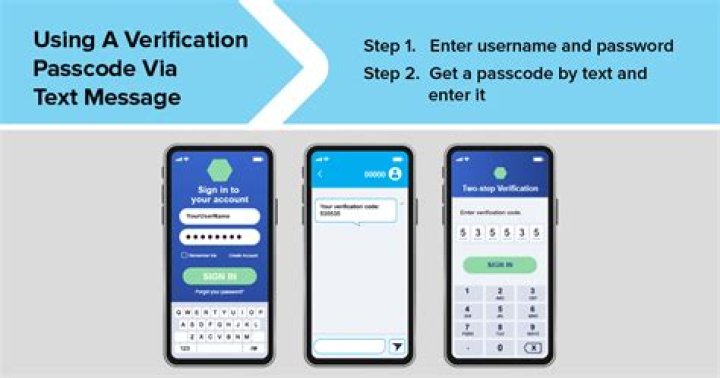
A six-digit alert pings your phone right as you try to access your online payroll dashboard. Seconds later, a friend texts you a screenshot of two television characters alongside the phrase "my ultimate OTP." Both messages rely on the exact same three letters, yet they live in entirely different universes.
Text abbreviations routinely pull double duty, creating confusion across age groups and digital platforms. According to a recent analysis highlighted in a Monroe Evening News Report, searches for ambiguous chat acronyms surged dramatically as mobile users encounter overlapping workplace security jargon and internet slang. Depending on whether you are securing a bank transfer or scrolling through social feeds, "OTP" stands for either a critical cybersecurity tool or a deeply personal pop-culture obsession.
📌 Key Takeaways:
- Core Meanings: OTP primarily stands for "One-Time Password" in account security and "One True Pairing" in fandom conversations, with a third occasional meaning of "On The Phone."
- Security Role: As an SMS verification code, an OTP serves as temporary two-factor authentication to verify your identity during logins or transactions.
- Fraud Risk: Legitimate service providers never call or text asking you to read back an OTP; unsolicited codes frequently signal targeted credential stuffing or social engineering attacks.
The Dual Life of OTP: Cybersecurity Safeguard vs. Pop-Culture Shorthand
Context dictates everything in modern messaging. If the message originates from an automated shortcode, typically a five- or six-digit phone number used by banks, software companies, and healthcare providers, OTP almost certainly means One-Time Password. This numeric string acts as a disposable key. It proves you have physical possession of the device tied to your profile.
On peer-to-peer platforms like iMessage, WhatsApp, TikTok, or Discord, the acronym shifts gears. Fandom communities use OTP to mean One True Pairing. It denotes an idealized fictional or celebrity relationship that a fan passionately supports. If someone says, "Percy and Annabeth are my absolute OTP," they are expressing emotional investment in that romantic pairing above all rivals.
A third, less frequent definition surfaces in quick workplace or casual chats: On The Phone. A colleague might reply, "Can't talk, OTP with a client," signaling they are busy on a voice call. This usage has declined alongside traditional phone calls, leaving security codes and fandom culture as the two dominant meanings.
One-Time Passwords: How Authentication Codes Protect Your Accounts
In information security, an OTP is a dynamic string of numbers or alphanumeric characters generated for a single login attempt or transaction. Unlike static passwords that remain unchanged for months, an OTP expires within 30 to 300 seconds. Once used, or once its timer lapses, the code becomes completely useless.
[User Login Attempt] ──► [Auth Server Generates Code] ──► [SMS Gateway Delivers OTP]
│
[Account Access Granted] ◄── [Server Verifies Code] ◄── [User Submits 6-Digit String]
Organizations deploy these SMS verification codes as an entry-level layer of two-factor authentication (2FA). When you enter your primary username and password, the system triggers an automated SMS containing an identity verification code. This mechanism ensures that an attacker who steals your static credentials from a data leak cannot access your account without also intercepting your mobile device.
Major technology firms have increasingly shifted toward time-based software authenticators (like Google Authenticator or hardware security keys) due to telecom-level vulnerabilities. Even so, SMS-delivered OTPs remain the most widely used secondary checkpoint globally, handling billions of consumer authentications each week across financial, retail, and government portals.
Fandom and Shipping: Deciphering 'One True Pairing' Across Social Media
Outside the IT department, OTP has fueled online creative communities for more than two decades. Originating in early bulletin boards and fan-fiction archives like LiveJournal and FanFiction.net, the phrase emerged from "shipping", the act of supporting a hypothetical or canonical romance between characters.
An OTP represents a fan’s ultimate relationship preference. Within fictional universes containing multiple love triangles, claiming an OTP establishes your allegiance. Fandom culture has built an entire dialect around this foundation:
- A platonic "one true pairing," celebrating a deep, non-romantic friendship between two characters.
- A pairing someone actively dislikes or refuses to read about in fan fiction.
- A trio where three characters are supported as a polyamorous or collective unit rather than a simple pair.
When digital communities migrate between platforms, from Tumblr in the 2010s to TikTok, Threads, and X in 2026, these abbreviations travel with them. Seeing "My OTP finally kissed in episode 4" has nothing to do with digital security; it reflects narrative investment.
Decoding the Context: A Side-by-Side Breakdown of Every OTP Meaning
Understanding which definition applies requires checking the sender, the channel, and the message structure. The table below outlines how to distinguish between these terms instantly.
| Definition | Primary Context | Typical Sender | Example Text Message |
|---|---|---|---|
| One-Time Password | Account security, 2FA, banking transactions | Automated corporate shortcodes (e.g., 22395) | "Your Chase OTP is 482910. Valid for 5 minutes. Do not share." |
| One True Pairing | Pop culture, television, anime, book communities | Friends, online followers, fandom forums | "If the writers break up my OTP next season, I am dropping this show." |
| On The Phone | Casual status updates, workday availability | Colleagues, family members, direct contacts | "Currently OTP with insurance, will call you right back." |
Cybersecurity Fraud and Verification Scams: Handling Unsolicited Codes
While fandom discussions carry low stakes, cybersecurity OTPs require strict vigilance. In recent years, cybersecurity fraud syndicates have weaponized consumer confusion through automated "OTP bots" and targeted social engineering schemes.
The attack vector usually unfolds in three stages:
- Credential Compromise: Fraudsters purchase leaked passwords from historical data breaches on dark web marketplaces.
- Triggering the Code: The attacker attempts to log into your account using your credentials. The service blocks them with a 2FA prompt and immediately fires a genuine verification code to your personal phone.
- The Social Engineering Interception: Seconds later, the fraudster calls or texts you pretending to be a representative from your bank's fraud division. They claim an unauthorized transaction is underway and demand you read back the "cancellation code" sent to your device. Handing over that code grants them full account takeover.
Federal agencies and telecommunications monitors warn that legitimate financial institutions, healthcare networks, and cloud providers will never contact a customer via voice or SMS to ask for an OTP. Receiving an authentication code out of nowhere means an adversary already knows your password. In that scenario, never relay the code. Instead, open a fresh browser session, navigate directly to the official platform, and change your account credentials immediately.
Frequently Asked Questions (FAQ)
Q1: Why did I receive an OTP text if I didn't try to log into any account?
A1: An unsolicited OTP usually indicates that someone else entered your username and password, prompting the system to generate a security challenge. It can also happen if another user mistyped their own phone number during registration. Treat unsolicited codes as a security warning: do not share the code with anyone, and update the password on that targeted service immediately.
Q2: Is an SMS One-Time Password completely safe from hackers?
A2: While SMS OTPs are vastly safer than relying on a password alone, they have documented vulnerabilities. Sophisticated cybercriminals can bypass SMS codes through SIM-swapping attacks (tricking your mobile carrier into assigning your phone number to their SIM card) or real-time phishing proxies. For high-value accounts, security professionals recommend using hardware keys (like YubiKeys) or dedicated authenticator applications.
Q3: How can I tell if someone is using 'OTP' for fandom or security in a chat?
A3: Look at the surrounding subject matter and formatting. Security OTPs are sent by automated business numbers and feature a string of numbers accompanied by expiration warnings. Fandom OTPs appear in peer conversations discussing books, movies, series, or video games, almost always referring to a dynamic between two people.
Navigating Text Shorthand and Account Security in 2026
Mobile communication will continue to compress complex ideas into short acronyms. While cultural shorthand like "One True Pairing" highlights how communities build shared language around storytelling, the technical "One-Time Password" serves a far more defensive role in protecting your personal identity.
Treating incoming messages with context awareness prevents both embarrassing misinterpretations in group chats and dangerous compromises across digital banking portals. When an abbreviation arrives on your screen, letting the sender and the stakes guide your reaction remains the simplest way to stay secure and culturally fluent.
