What Does PR Mean in Affiliate Marketing? The Complete Creator & Brand Guide
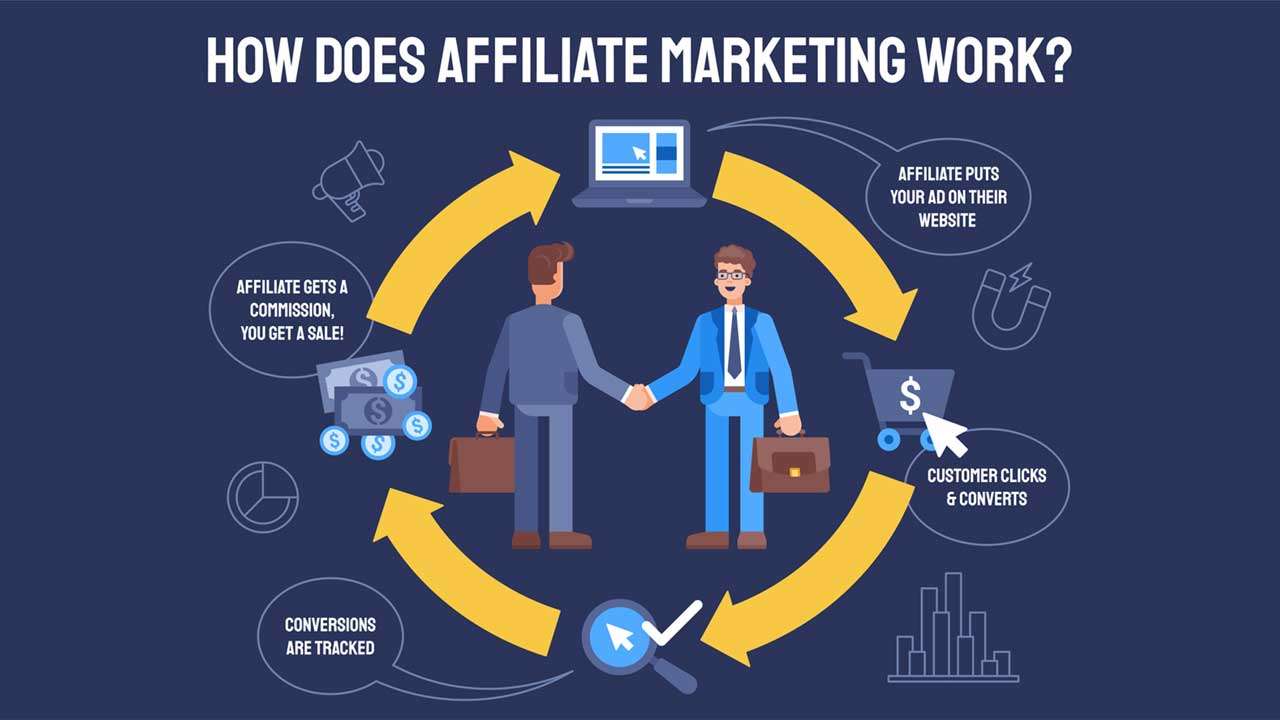
Creators frequently open their inboxes to a familiar pitch: "We would love to send you our latest PR package." Five years ago, that message meant unconditional free merchandise sent by a public relations agency hoping for spontaneous coverage. In 2026, the arrival of a package marks the starting line of a performance marketing funnel. E-commerce merchants now treat gifting as a measurable acquisition channel, binding product discovery directly to conversion metrics.
This operational shift connects brand awareness with direct sales. According to data compiled in an analysis by Shopify, merchants running social commerce integrations increasingly treat product seeding as an automated bridge toward full affiliate activation. Understanding what "PR" actually entails determines whether a creator earns viable income or works for complimentary inventory.
📌 Key Takeaways:
- Core Definition: In performance marketing, "PR" refers to gifted physical inventory sent to creators to drive unpaid organic reviews while assigning an affiliate tracking link or discount code.
- The Economic Shift: Pure public relations outreach has converged with creator partnerships, turning product seedings into test runs for long-term brand ambassador programs.
- Compliance Reality: The FTC classifies free merchandise tied to affiliate commission links as commercial endorsements, requiring unambiguous disclosure regardless of whether upfront cash was exchanged.
Defining PR in the Affiliate Ecosystem: From Free Boxes to Revenue Share
Traditional public relations teams distributed sample inventory to magazine editors, broadcast journalists, and prominent industry figures. The goal was earned media value: an article mention, a photograph, or an unprompted recommendation. No commercial contracts dictated the outcome, and no tracking cookies followed the audience.
Digital commerce changed that equation. In modern creator partnerships, PR refers to the practice of providing complimentary items alongside an affiliate tracking link or personal discount code. Brands classify the physical product as a gifting cost under marketing overhead, but they track the resulting posts through performance marketing software. The creator receives an initial product to evaluate, test, and feature. When their followers click the accompanying link or apply the code at checkout, the creator earns an agreed-upon affiliate commission on gross sales.
This hybrid approach removes the wall between editorial publicity and conversion-driven selling. Micro-creators use PR packages to supply their production pipeline with fresh inventory to review without spending personal capital. Concurrently, retail brands bypass expensive guaranteed sponsorship fees, testing a creator's audience engagement before committing five-figure retainer budgets.
The Mechanics of PR Seeding and TikTok Shop Sample Requests
PR seeding operates as a pipeline rather than an isolated gift. Growth teams identify accounts within specific niches, such as minimalist skincare, mechanical keyboards, or endurance sports, and dispatch targeted product batches. Instead of a single PR manager mailing parcels by hand, automated fulfillment systems handle bulk creator seeding.
The rise of social storefronts accelerated this pipeline. On platforms featuring native checkout, such as TikTok Shop affiliate networks, the dynamic is codified into system software. Merchants set qualification thresholds based on follower counts, active engagement rates, and content categories. Creators browse product showcases, tap an interface button to request a free sample, and the merchant approves or denies the shipment based on historical sales velocity.
These samples come attached to specific platform algorithms. If a creator receives a sample through an open collaboration directory, system alerts encourage posting within 10 to 14 days of confirmed package delivery. While independent brands outside integrated platforms cannot legally force an uncontracted review, social marketplace terms frequently restrict future sample eligibility for accounts that fail to produce content. What began as traditional gifting has turned into an automated barter system: physical goods delivered in exchange for short-form production slots.
Comparing Modern Creator Compensation Models
To navigate brand outreach effectively, creators and marketing managers must distinguish between purely earned PR, transactional affiliate relationships, and the hybrid models dominating contemporary creator programs.
| Model Structure | Product & Payment Terms | Content Obligation | Tracking Mechanism |
|---|---|---|---|
| Traditional PR Gifting | Free product only ($0 cash payout) | Zero contractual requirement to post | General brand mentions, PR media monitoring |
| Standard Affiliate Program | Self-purchased product; 8%, 15% commission | Discretionary based on creator strategy | Cookies, referral links, discount codes |
| Performance PR Hybrid | Free PR package + 10%, 25% commission tier | Soft expectation, reinforced by future seeding eligibility | Tracked bio links, custom codes, SKU attribution |
| Brand Ambassador Contract | Monthly retainer ($500, $5,000+) plus affiliate rev-share | Strict deliverables (e.g., 2 videos, 4 stories per month) | Dedicated UTM parameters, contract KPI reports |
Pitch Templates: How Creators Secure PR Lists and Affiliate Backing
Brands reject vague emails asking for "free PR." Effective outreach treats product requests as business pitches, articulating how testing the brand's catalogue directly serves the brand's bottom line. Below are two field-tested templates structured around direct conversion points.
Scenario 1: Cold Pitch for Emerging Creators (Under 20,000 Followers)
Subject: Pitch: [Brand Name] feature for [Specific Demographic/Topic]
Hi [PR/Partnership Manager Name],
I run [Account Handle], where I publish deep-dive breakdowns on [Niche Topic] for [Audience Size] active followers, primarily based in [Target Region]. My content maintains a consistent [Engagement %]% engagement rate, with recent videos on [Related Topic] averaging [Average Views] views.
I've followed [Brand Name]'s launch of the [Specific Product Name] and would like to test it for an upcoming comparison video focused on [Specific Problem Solved].
Could we coordinate adding my shipping details to your PR list? If the product fits my community's standards, I would also welcome setting up an affiliate link through your platform so we can track initial audience interest directly.
Best regards,
[Your Name] | [Direct Link to Portfolio/Media Kit]
Scenario 2: Converting Organic PR Inquiries into High-Margin Affiliate Deals
Subject: Re: Sending you the new [Product Line]
Hi [Sender Name],
Thank you for reaching out. The new [Product Line] looks well-matched to what my audience requests when I cover [Content Vertical].
I am happy to accept the package at the address below. Because my production schedule prioritizes items tied to active partnerships, do you currently offer an affiliate commission structure (standard 15%, 20%) for your PR partners?
Pairing a custom tracking link alongside the product delivery will let us measure real-time attribution if I share an organic review with my community.
Shipping Address: [Full Mailing Details]
Phone: [Contact Number]
Best,
[Your Name]
PR Package Etiquette and FTC Sponsored Content Disclosure Rules
Accepting a PR box does not obligate an endorsement unless a formal contract was executed prior to shipment. A brand cannot require a glowing post in exchange for an unsolicited tube of lip balm or an unrequested pair of running shoes. Creators retain editorial control: if a seeded product underperforms, an honest review, or silence, is entirely defensible.
Regulatory oversight remains rigid. Under the revised Federal Trade Commission (FTC) guidelines codified in 16 CFR Part 255, commercial intent dictates legal liability. If a creator posts about an item received as a free PR package, that connection must be stated openly. Ambiguous hashtags like #collab, #sp, or buried text hidden behind "more" buttons violate regulatory baselines.
When an affiliate link or commission-bearing discount code accompanies the post, the disclosure requirements escalate. Because the creator holds a financial interest in every generated checkout, standard labels such as #ad or #paidlink must appear visibly before the user clicks. Video formats demand spoken or on-screen textual disclosures within the first few seconds of footage. Claiming that an item was "just sent as PR" does not shield a creator from regulatory fines if clicking their bio link produces a financial commission on back-end merchant systems.
Negotiating the Jump: Converting Gifted Products Into Paid Retainers
Free product does not cover studio lighting or editing software. While gifted collaborations provide essential catalog access for entry-level accounts, relying on free boxes creates a low-revenue treadmill. Sustainable digital businesses use PR packages as market validation to negotiate fixed compensation.
The transition begins with attribution data. When a creator shares an organic review of a seeded item via an affiliate link, they must capture performance metrics: click-through rates, add-to-cart ratios, total conversion volume, and gross merchandise value (GMV). A creator who generates $4,500 in retail revenue on a 15% commission baseline ($675 earned) holds verifiable proof of commercial value.
Armed with these conversion figures, pitch the partnership manager directly. Rather than accepting the next seasonal PR box passively, initiate a contract renegotiation:
"Our initial test with the seeded summer line produced 210 link clicks and generated $4,500 in tracked sales at a 4.6% conversion rate. For the upcoming launch, I propose moving from our informal PR affiliate link to a formal brand ambassador program tier: a $1,200 monthly base retainer to guarantee two dedicated vertical video integrations, retaining our 15% performance commission rate."
This repositioning aligns incentives. The brand secures guaranteed, professionally produced video inventory and locks in a proven sales channel. The creator secures reliable baseline revenue while maintaining affiliate upside on high-performing content.
Frequently Asked Questions (FAQ)
Q1: What does PR mean when a brand offers it to an influencer?
A1: When a brand offers "PR," they are offering to ship free products from their inventory without paying an upfront creative fee. The brand hopes the recipient will showcase the items to their audience organically, often supported by an affiliate link or promotional code.
Q2: Is a PR package the same as a paid sponsorship?
A2: No. A paid sponsorship includes an executed contract where the creator guarantees specific deliverables in exchange for a flat fee or guaranteed budget. A PR package involves complimentary goods with no contractual deliverable guarantees, though it often includes commission incentives via performance tracking links.
Q3: Do creators pay taxes on free PR packages?
A3: Tax authorities, including the IRS, treat gifted items received in commercial contexts as non-cash compensation based on their fair market value. While minor unsolicited samples frequently fall under reporting thresholds, high-value electronics, luxury apparel, and ongoing gifting programs are taxable business income.
Q4: Can a creator sell items received from PR lists?
A4: While ownership of unsolicited product transfers to the recipient upon delivery, liquidating PR merchandise on resale platforms can damage commercial relationships. Brands monitor resale boards; discovering seeded items listed online usually results in immediate removal from future seeding campaigns.
The Strategic Reality of Creator Commerce in 2026
The traditional wall separating public relations from direct-response marketing has dissolved. Modern social commerce platforms have established an ecosystem where physical gifts serve as algorithmic hooks for measurable transactions. For brands, seeding operates as a low-risk channel to recruit a performance-driven salesforce. For creators, PR packages offer an accessible testing ground to demonstrate sales velocity.
Long-term sustainability requires managing PR with commercial intent. Creators who treat gifted products as arbitrary presents risk remaining unpaid distribution nodes for retail brands. Those who analyze their conversion data, master commercial disclosure rules, and leverage performance metrics will consistently convert complimentary packages into durable, multi-tier brand partnerships.
