What Does Sodomy Mean? A Timeline of the Allegations and Legal Actions
The arrest of 15-year-old Kroy Jagger "KJ" Biermann in late August 2026 pushed a centuries-old legal term back into the public spotlight. When news broke that the teenage son of reality television star Kim Zolciak and former Atlanta Falcons player Kroy Biermann was booked on serious felony allegations, public searches for Georgia's penal definitions spiked. The severity of the charges, paired with the teen being held without bond in an adult detention facility, prompted widespread questions about how modern penal codes define such conduct and why juvenile protections did not immediately apply.
According to initial reporting from local affiliates and national outlets, the charges stem from an alleged altercation in a sports facility dressing area. As detailed in a Page Six Report, the teen's legal counsel stressed that the sudden detention in an adult jail has been deeply destabilizing for the high schooler. Sorting through the matter requires examining statutory language, the line separating misdemeanor contact from felony sex crimes, and the specific state laws governing teenagers accused of violent offenses.
📌 Key Takeaways:
- The Statutory Definition: Under Georgia law (O.C.G.A. § 16-6-2), sodomy is defined specifically as contact between the sex organs of one person and the mouth or anus of another. It becomes "aggravated" when committed by force or without consent.
- The Mandatory Jurisdiction Rule: Because aggravated sodomy falls under Georgia’s legislative list of violent felonies known as the "Seven Deadly Sins," state law mandates that juveniles aged 13 to 17 are charged directly as adults.
- The Case Status: Following an alleged incident inside a recreational changing facility, 15-year-old KJ Biermann was arrested, booked on aggravated sodomy and sexual battery, and initially held without bond pending formal grand jury indictment and jurisdictional hearings.
The Statutory Definition of Sodomy Under Georgia Law
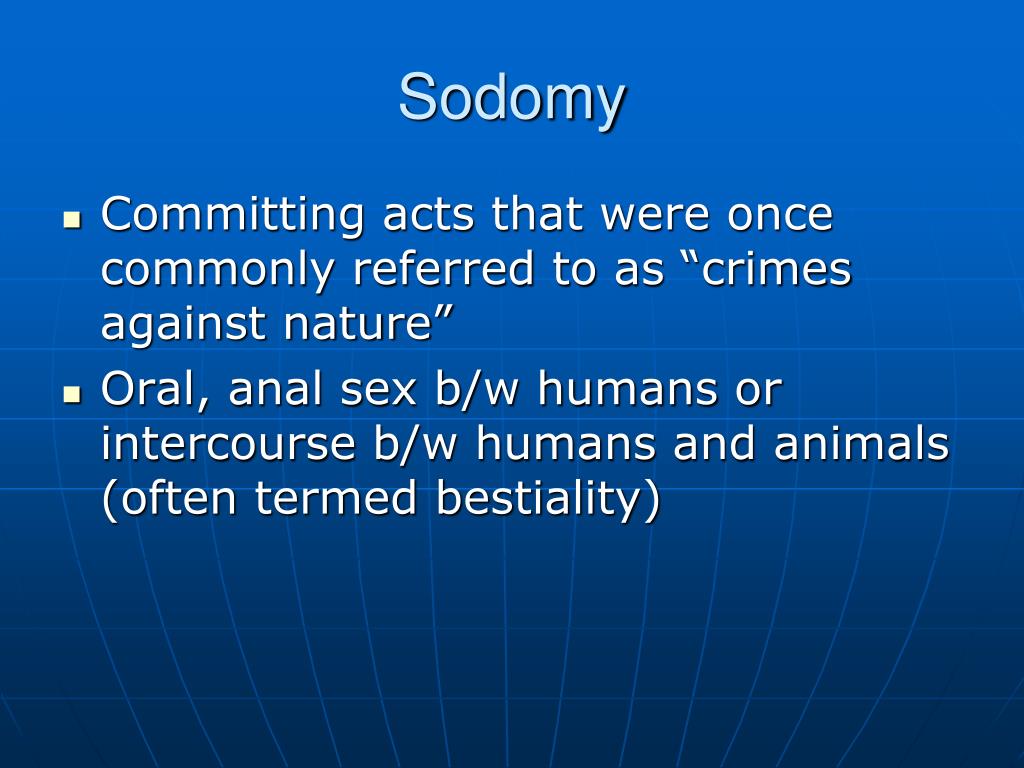
The term sodomy carries centuries of religious and common-law baggage. Historically, statutes across the United States used archaic phrasing like "crimes against nature" to criminalize non-procreative intimacy, even between consenting adults. The legal landscape changed fundamentally in 2003 when the U.S. Supreme Court decided Lawrence v. Texas, ruling that state laws criminalizing consensual, private adult sodomy violated the Fourteenth Amendment's Due Process Clause.
Modern penal codes stripped consensual adult behavior out of their criminal statutes, refocusing the definition strictly on non-consensual acts. Under Georgia Code § 16-6-2, sodomy occurs when a person performs or submits to any sexual act involving the sex organs of one person and the mouth or anus of another. Consent remains the decisive legal dividing line.
When the act involves force or occurs against the victim's will, the offense is elevated to an aggravated sodomy charge. The critical legal element in any aggravated prosecution is the utter lack of consent. Unlike simple misdemeanor assault, aggravated sodomy is classified as an aggressive, violent felony sex offense. Physical bruises or explicit weapon usage are not strictly required to prove lack of consent; evidence demonstrating physical intimidation, verbal coercion, substantial distress, or physical resistance can satisfy the statutory threshold during prosecution.
The Changing Room Allegations and Police Investigation
The charges against KJ Biermann center on an incident reported inside a private sports changing area in suburban Atlanta. According to incident reports obtained by outlets including TMZ and FOX 5 Atlanta, the confrontation occurred on private athletic grounds between minors. The victim reported non-consensual physical handling and forced sexual contact occurring behind closed doors, prompting an immediate call to local law enforcement.
Detectives from the local jurisdiction interviewed witnesses present near the dressing room facility and collected physical and electronic evidence, including surrounding security camera logs. While details of the physical evidence remain sealed to protect the identity of the minor complainant, detectives determined probable cause existed to issue arrest warrants for two separate charges: sexual battery under Georgia statute (O.C.G.A. § 16-6-22.1) and felony aggravated sodomy.
The sexual battery charge addresses intentional, non-consensual physical contact with intimate parts of another individual. By pairing this with aggravated sodomy, prosecutors signaled that investigators uncovered evidence of both unwanted grope-style physical contact and forced oral or anal contact. The dual charges created immediate procedural consequences when police executed the arrest warrant on August 21, 2026.
Chronological Timeline of the Allegations and Judicial Proceedings
The proceedings moved rapidly through the Georgia criminal court docket once local authorities processed the initial police report. Because the charges involve both violent felonies and high-profile parties, each step on the docket has drawn public scrutiny.
| Date / Timeframe | Procedural Event | Legal & Practical Impact |
|---|---|---|
| Mid-August 2026 | Changing room incident reported to police | Investigative unit initiates witness interviews, collects facility access records, and interviews the minor victim. |
| August 21, 2026 | Arrest and booking of KJ Biermann | Charged with felony aggravated sodomy and misdemeanor sexual battery; transferred to regional detention. |
| August 24, 26, 2026 | Initial appearance and bail review | Defendant held without bond; standard magistrate court lacks authority to grant release on statutory "deadly sins." |
| September 2026 | Defense file motions for juvenile transfer | Defense attorney requests psychological evaluations and moves to remand the matter to juvenile court jurisdiction. |
| Late 2026 (Pending) | Grand jury presentment and formal indictment | State must formally present allegations to a grand jury to secure a true bill before criminal trial scheduling. |

Why a 15-Year-Old Faces Adult Jurisdiction in Georgia
The most legally perplexing aspect for many observers was how a 15-year-old child could be processed in adult criminal court. The answer lies in Georgia Senate Bill 440, originally enacted in 1994, which established the state's mandatory statutory jurisdictional framework.
Under Georgia Code § 15-11-560, the superior court has exclusive original jurisdiction over any juvenile aged 13 to 17 who is alleged to have committed one of seven specific violent felonies. These offenses, commonly cited as the "Seven Deadly Sins", include:
- Murder
- Voluntary manslaughter
- Rape
- Aggravated sexual battery
- Aggravated child molestation
- Armed robbery with a firearm
- Aggravated sodomy
Because the arresting officers swore out a warrant containing aggravated sodomy, the juvenile court had no legal power to take the case at intake. The law strips intake discretion from family court judges automatically.
This statutory carve-out also explains why the teenager was initially held without bond. In Georgia, lower magistrate courts that handle initial weekend appearances possess zero legal authority to set bail on capital crimes or the Seven Deadly Sins. Only an elected Superior Court Judge possesses the jurisdiction to grant bond for an aggravated sodomy count. To secure release, the defense must file a formal petition and prove at a contested hearing that the teen presents no risk of fleeing, poses no danger to the community, and will not intimidate witnesses or tamper with physical evidence.
Defense Strategy, Detention Conditions, and Family Strife
Representation for the teen fell quickly into the hands of experienced Georgia criminal defense counsel. The defense immediately aimed its public and procedural messaging at two fronts: moving the teenager into protective custody and challenging the underlying evidence.
Defense counsel emphasized that housing an adolescent in a county jail facility exposes the youth to severe mental strain and physical vulnerability. Even though federal regulations like the Prison Rape Elimination Act (PREA) require sight-and-sound separation between juvenile inmates and adults in general detention, such isolation often means the minor is placed in restrictive solitary housing for up to 23 hours a day. The attorney described the detention period as "so traumatizing" for the 15-year-old, arguing that isolation undermines the defendant's emotional capacity to aid in his own legal defense.
Simultaneously, the arrest landed directly in the middle of a messy divorce between Kim Zolciak and Kroy Biermann. The parents, who spent years showcasing their lives on Bravo's The Real Housewives of Atlanta and Don't Be Tardy, have spent the past two years locked in contested financial and custody disputes across Fulton County courts. The criminal allegations against their teenage son added immense pressure to this family dynamic.
The defense is pursuing a statutory transfer hearing. Under Georgia law, a Superior Court judge has the authority to remand a case back down to juvenile court if the defense can prove that mitigating factors exist, that adult rehabilitation is inappropriate, and that the child would benefit substantially from the juvenile court system's restorative focus.
Statutory Penalties and Sentencing Exposure
The distinction between juvenile and adult jurisdiction in this case is critical. If prosecuted, convicted, and sentenced within the juvenile system, an individual's detention is limited by statute, focusing on rehabilitation and capped until the age of 21.
By contrast, an adult conviction under Georgia's penal code carries severe statutory minimums:
- Classified as a violent felony under O.C.G.A. § 16-6-2. A conviction carries a mandatory minimum penalty of 25 years of imprisonment, followed by lifetime probation, or life in prison without parole depending on criminal history and judicial discretion. The state does not permit traditional early parole before serving the minimum statutory term for this tier of offense.
- Under O.C.G.A. § 16-6-22.1, standard sexual battery is prosecuted as a misdemeanor of a high and aggravated nature, carrying up to 12 months in jail and fines up to $5,000.
- An adult conviction for aggravated sodomy requires lifetime registration on the Georgia and national sex offender registries, which restricts where the individual can live, work, and travel.
Given the severity of these adult mandatory minimums, the defense's paramount objective before any trial preparation is securing a transfer back down to juvenile court or negotiating a plea arrangement to lesser, non-mandatory charges.
Frequently Asked Questions
Q1: What is the main legal difference between sodomy and aggravated sodomy?
Under state statutes such as Georgia Code § 16-6-2, standard sodomy involves oral or anal sexual contact. Aggravated sodomy requires prosecutors to prove that the sexual act was committed with force or without the other person's consent. The presence or absence of mutual consent is the critical legal difference.
Q2: Why was a 15-year-old sent to adult jail instead of juvenile hall?
Georgia's Senate Bill 440 mandates that any child aged 13 to 17 accused of one of the state's "Seven Deadly Sins", which includes aggravated sodomy, must be charged and booked directly into the adult superior court system. While federal law requires them to be separated by sight and sound from adult inmates, they remain within the jurisdiction of the adult county detention system unless a judge approves a transfer back to juvenile court.
Q3: Can the charges against KJ Biermann still be transferred to juvenile court?
Yes. Defense attorneys can file a motion for a transfer hearing (reverse waiver) in the Superior Court. If the presiding judge finds that the minor's history, psychological state, and the specific facts of the allegation justify rehabilitation rather than adult penal incarceration, the Superior Court judge can legally remand the indictment to the juvenile court system.
The Path Toward Trial in Fulton County
The criminal proceedings against KJ Biermann represent a clash between strict state statutes and the realities of modern juvenile justice. Over the coming months, the case will pivot away from initial public reaction and toward closed evidentiary hearings in Superior Court.
Prosecutors face the challenge of proving that the changing room altercation met the statutory definition of an aggravated felony rather than an undisciplined, reckless physical fight between adolescents. Meanwhile, defense attorneys will continue fighting for bail and pushing to move the matter out of public view into confidential juvenile proceedings. The outcome will depend on the physical evidence, the credibility of witness statements from the dressing area, and whether a Georgia Superior Court judge decides that a 15-year-old should be judged by the harsh penal rules of the adult world.
