What Ed Gein's Real Voice Sounded Like: Why Charlie Hunnam's Partner Begged Him to Stop

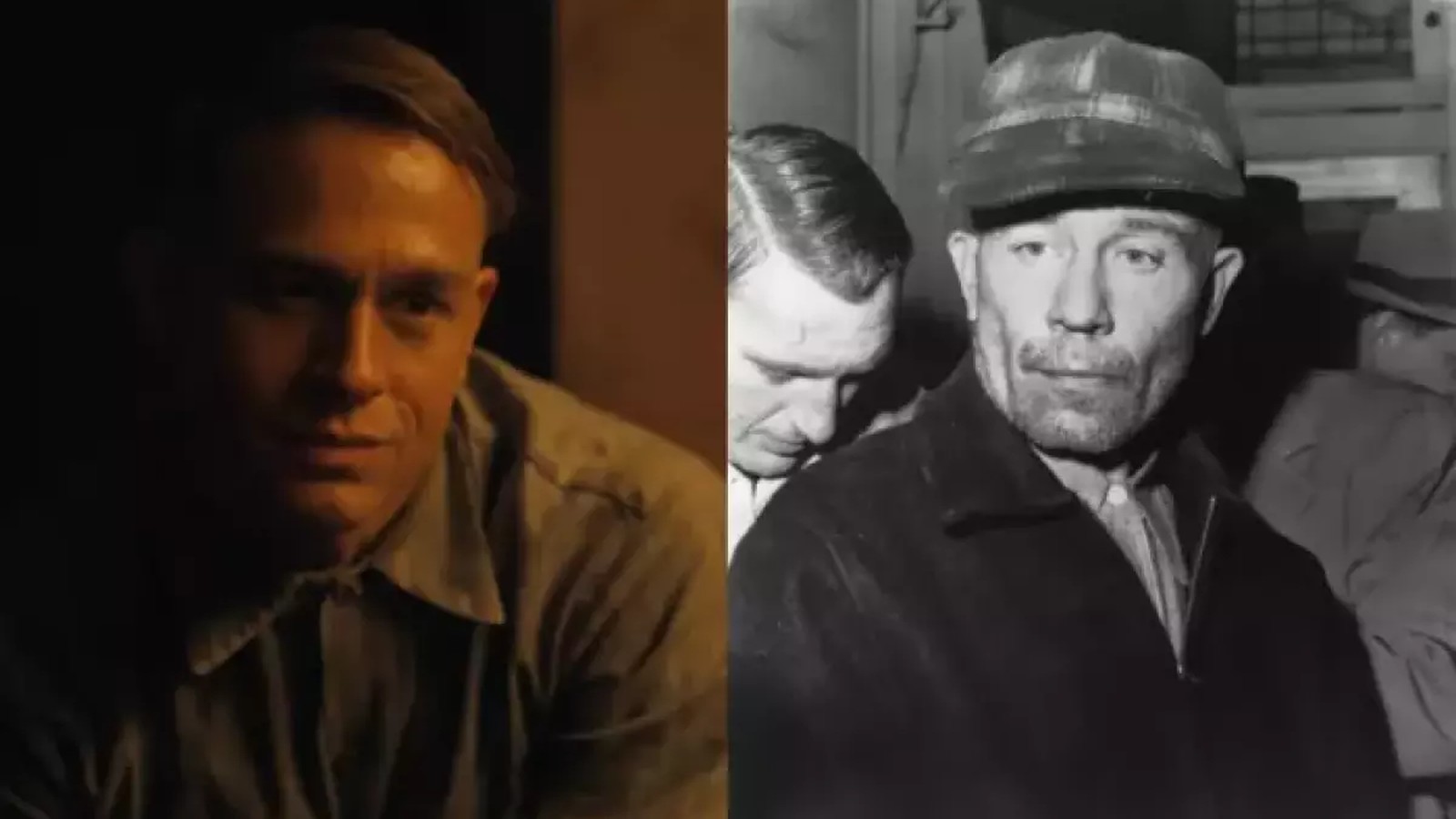
When Charlie Hunnam stepped onto the red carpet at the Critics Choice Awards 2026, reporters expected typical Hollywood small talk about his upcoming lead role in Ryan Murphy's Monster Season 3 on Netflix. Instead, the British actor revealed an uncomfortable domestic friction caused by his deep immersion into the role of the infamous Plainfield murderer. Hunnam confessed that his longtime partner, jewelry designer Morgana McNelis, had to issue an outright ultimatum in their home: drop the voice, or leave the room. As detailed by an Entertainment Weekly Report covering the awards ceremony, McNelis pleaded with Hunnam to stop speaking like the Midwestern butcher around their household because the cadence felt so profoundly disturbing.
📌 Key Takeaways:
- The Domestic Ban: Charlie Hunnam confirmed his partner demanded he cease speaking in Ed Gein's voice at home after the actor adopted the killer's speech patterns around the clock.
- The Actual Voice: Contrary to theatrical cinematic monsters, historical recordings prove Ed Gein possessed an unusually high-pitched, timid, and sing-song Midwestern cadence.
- The Method Trap: Capturing Gein's linguistic isolation required mastering a fading 1950s rural dialect, creating psychological friction on the set of Murphy's third anthology chapter.
The Red Carpet Disclosure That Exposed Charlie Hunnam's Process
Hunnam spent months studying archival materials to reconstruct the vocal footprint of Edward Theodore Gein. Unlike previous cinematic iterations that relied on gravelly baritones or raving theatricality, the reality of Gein was far stranger. The killer did not sound terrifying in an overt, aggressive sense. He sounded meek, neighborly, and fragile.
During the January 2026 awards circuit, Hunnam explained that living inside that vocal register began warping the domestic atmosphere. The actor practiced the dialect while cooking dinner, running errands, and conversing casually over breakfast. The high-register, passive-aggressive lilt rattled his partner enough that she barred the voice from non-working hours. What McNelis reacted to was not loud intimidation. It was the skin-crawling mismatch between a gentle, folksy tone and the unspeakable reality of the Plainfield farmstead.
Deconstructing the Plainfield Cadence: High Pitch, Hesitation, and Rural Isolation
Pop culture spent six decades conflating Ed Gein with his fictional progeny: Norman Bates in Psycho, Leatherface in The Texas Chain Saw Massacre, and Buffalo Bill in The Silence of the Lambs. Those depictions led audiences to expect either a trembling, neurotic stammer or a menacing, guttural growl. Neither matches the historical record.
In truth, the real voice of the Plainfield ghoul was defined by a soft, piping tenor. Gein spoke with an almost feminine lightness, heavily coated in a mid-century Wisconsin regional dialect deeply shaped by German and Scandinavian farming communities. His voice featured drawn-out diphthongs, rounded vowels, and a rhythmic, sing-song cadence. Sentences frequently ended with rising intonations, as if every declaration were a polite question seeking validation.
Linguists and forensic psychologists who have examined Gein’s speech identify several distinct phonological traits:
- The Timid Pitch Floor: His voice hovered at a higher vocal frequency than most adult men of his era, rarely dropping into a resonant chest voice even under extreme stress.
- Incessant Self-Correction: Gein habitually walked back his own assertions, employing phrases like "Well, maybe" and "I wouldn't rightly say" to avoid taking definitive stances.
- The Nervous Chuckle: In between descriptions of exhumations, Gein routinely punctuated his words with brief, sheepish giggles that listeners often found far more chilling than overt hostility.
- Submissive Politeness: He addressed authority figures with extreme deference, answering questions with polite farmhand humility.
Archival Audio vs. Hollywood Caricatures: The Recorded Evidence
Public knowledge of Gein's authentic voice stems directly from the police recordings made following his arrest on November 16, 1957. After the decapitated body of hardware store owner Bernice Worden was discovered in Gein’s shed, investigators spent hours grilling the reclusive bachelor at the Waushara County courthouse.
The resulting ed gein interrogation audio preserves a remarkable dynamic. Sheriff Art Schley and state investigators confronted Gein with graphic evidence of graverobbing and anatomical preservation. Gein responded not with defiance, but with a polite, weary confusion that bordered on an apology for causing so much trouble.
| Acoustic Dimension | Historical Reality (1957 Tapes) | Pop Culture Tropes (1960, 2020) | Hunnam's 2026 Interpretation |
|---|---|---|---|
| Pitch & Register | High, reedy, breathy head voice; rarely dropped below middle C. | Deep baritone rasp, guttural snarls, or theatrical stammering. | Historically tuned thin tenor, strictly avoiding gravelly affectations. |
| Regional Accent | Central Wisconsin farm dialect; heavy Scandinavian and Germanic vowel shifts. | Generic non-regional American or exaggerated Southern Gothic drawl. | Accurately mapped 1950s rural upper-Midwestern dialect. |
| Emotional Temperament | Pliant, timid, apologetic, punctuated by nervous self-conscious giggles. | Overtly manic, unhinged, violent, or intensely menacing. | Unsettling domestic passivity with sudden flat affect. |
| Speech Rhythm | Halting and hesitant; long contemplative pauses between short statements. | Rapid, erratic, or monologue-heavy theatrical delivery. | Deliberate rural slow-pacing; uncomfortable prolonged silences. |
Interrogation Tapes and the Psychology Behind Gein's Mild Tone
When listening to the plainfield murders confessions, the disconnect between action and affect is astonishing. Gein discusses digging up corpses in local cemeteries with the casual, self-effacing demeanor of an amateur mechanic explaining a broken tractor carburetor.
Psychologists evaluated Gein at Central State Hospital for the Criminally Insane immediately following his 1957 arraignment. Their diagnostic notes heavily mirrored the auditory qualities captured on tape. Raised under the domineering thumb of his deeply religious mother, Augusta Gein, Ed learned that submissive, soft-spoken deference was his only shield against wrath. His vocal patterns developed as an appeasement strategy. That linguistic armor persisted into adulthood.
When Gein confessed to shooting Mary Hogan in 1954 or dragging Bernice Worden from her store, his voice never broke into rage. He described being in a daze, murmuring answers like a scolded child admitting to tracking mud across the kitchen floor. It is precisely this cognitive dissonance, a voice of childlike subservience paired with nightmarish atrocities, that makes the authentic recordings so difficult to stomach.
Method Immersion and the Perils of Domesticating a Monster
Adopting such an idiosyncratic cadence requires vocal cord control that actors rarely find easy to shed at the end of a shoot day. For Hunnam, who grew up in Newcastle upon Tyne in North East England, mastering a 1950s rural Wisconsin accent demanded thousands of hours of repetition. He worked closely with dialect coaches to reposition his tongue, flatten his vowels, and relocate his vocal resonance from his chest into his nasal passages.
Actors who practice method acting ed gein styles quickly run into a specific psychological hurdle. The voice cannot simply be turned on like a switch without adopting the accompanying posture: round-shouldered, eyes cast toward the carpet, fingers fidgeting. When Hunnam brought those habits back to his Los Angeles home, the vocal inflection invaded regular domestic interactions. Asking for a cup of coffee or discussing dinner plans while using Gein's high-pitched, sheepish Midwestern drawl naturally proved unbearable for his partner.
Hunnam complied with McNelis’s boundary. He agreed to leave the Plainfield dialect strictly within the soundstages and rehearsal trailers of Netflix’s production. The boundary spared his household from an acoustic presence that has unnerved everyone who has heard it since 1957.
Frequently Asked Questions (FAQ)
Q1: Are there real audio recordings of Ed Gein speaking?
A: Yes. Authentic audio recordings exist from Gein's official police interrogations conducted in November 1957 by Waushara County law enforcement, as well as subsequent evaluations by state psychiatrists at Central State Hospital.
Q2: Did Ed Gein speak with an obvious Wisconsin accent?
A: Yes. Having lived his entire life in rural La Crosse and Plainfield, Gein spoke with a heavy central Wisconsin dialect marked by Germanic and Scandinavian vowel inflections, rising terminal intonations, and distinctive rural Midwestern phrasing.
Q3: Why was Charlie Hunnam's partner so bothered by the voice?
A: The vocal cadence of Ed Gein was uncomfortably high-pitched, hesitant, and deceptively polite. When carried into casual domestic life, the eerie contrast between that gentle farmhand cadence and Gein's historical crimes proved deeply unsettling to live with.
The Lasting Resonance of the Plainfield Accent
Hollywood spent decades treating Ed Gein as an archetype of monstrous rage. Screen adaptations draped his crimes in heavy shadows, monstrous voices, and thunderous theatricality. Yet the true terror preserved in historical archives sits at the opposite extreme.
The real horror of Ed Gein lies in how ordinary, how polite, and how remarkably gentle he sounded while cataloging horrors. today modern true-crime storytelling values gritty realism over pulp drama, Charlie Hunnam's pursuit of vocal authenticity forces audiences to confront that reality. A monster does not always sound like a beast. Sometimes, he sounds like the quiet, high-voiced bachelor next door who never forgot his manners.
