What Happens Inside the Microwave: The Giant Sour Patch Kids Melting Experiment
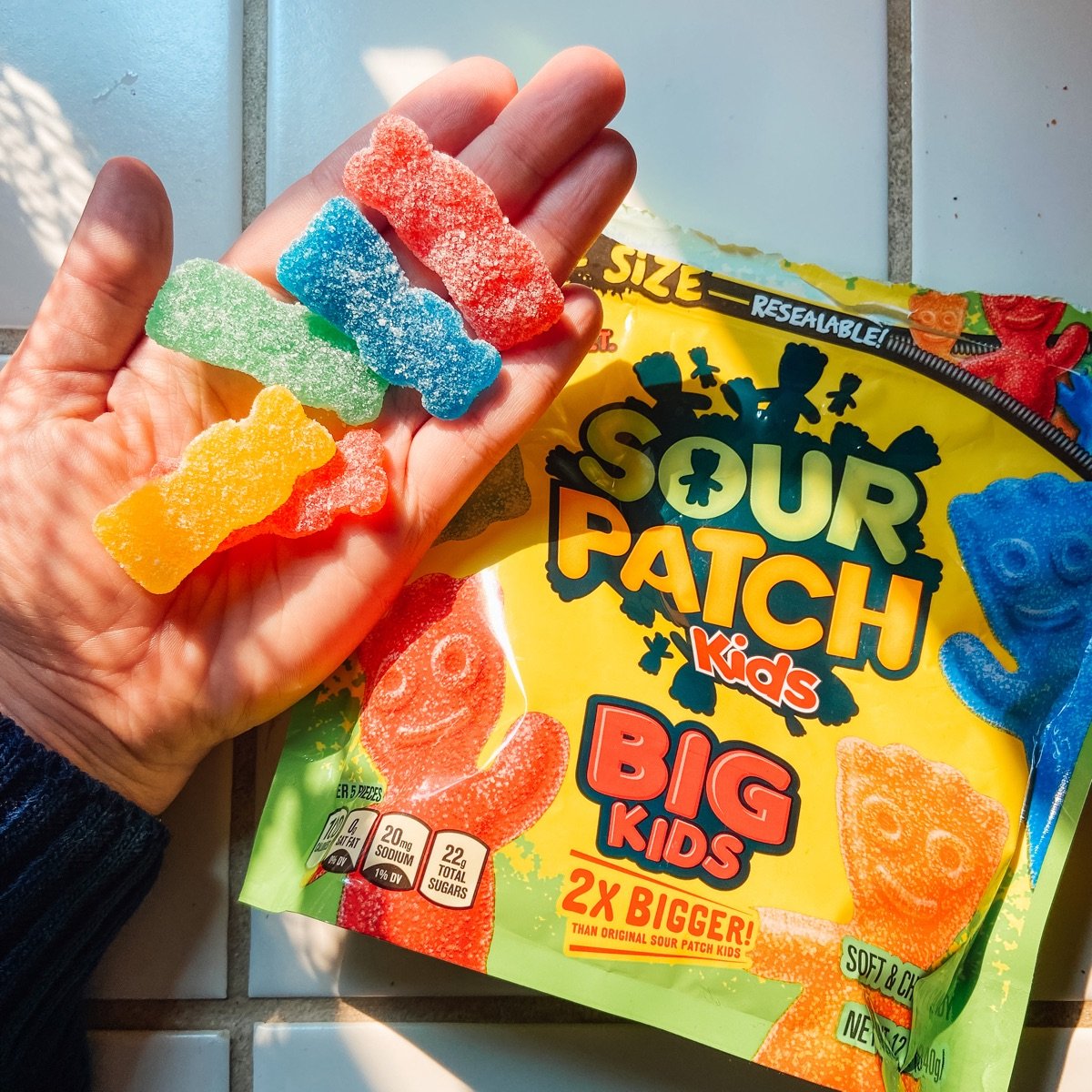
Viral video feeds routinely showcase amateur confectioners dumping family-sized bags of candy into glass bowls, intent on fusing hundreds of small treats into a single gargantuan centerpiece. The idea owes much to decades of internet novelty stunts, stretching from early web parodies cataloged on the Wikipedia (en) Report to contemporary kitchen creators chasing extreme visuals. Viewers see bright colors liquefy under heating elements, expecting the syrup to pour cleanly into a silicone mold and emerge as a pristine, oversized gummy. The physical reality inside the appliance tells a far more chaotic story.
Microwaving Sour Patch Kids does not produce a docile, pourable liquid that resets into a pliable giant candy. Instead, it unleashes a volatile chain reaction governed by high-density sugars, organic acids, and modified food starches. Within seconds, a neat pyramid of neon characters degrades into an angry, frothing volcanic slurry that threatens both kitchen glassware and human skin.
📌 Key Takeaways:
- The Formulation Barrier: Sour Patch Kids rely on modified cornstarch rather than animal gelatin, causing them to scorch and boil instead of undergoing a clean, reversible liquefaction.
- The Heat Spike: Microwave radiation targets the free moisture in corn syrup, driving internal temperatures past 300°F (149°C) in under two minutes and presenting extreme sugar burn hazards.
- The Structural Failure: Cooling the molten mass drives rapid moisture evaporation and starch degradation, resulting in a brittle, tooth-shattering brick rather than a chewy novelty candy.
The Viral Urge to Build Confectionery Giants
Every few months, food creators revisit the giant gummy bear experiment. The playbook looks straightforward: melt small candies, pour the syrup into a large mold, chill overnight, and reveal an oversized replica. With traditional gelatin-based bears, this process functions tolerably well because gelatin melts around 95°F to 100°F (35°C to 38°C) and resolidifies as it cools.
Trouble begins when people apply this logic to sour candies. Sour Patch Kids carry an entirely different chemical architecture. Their exterior presents an abrasive crust of granulated sugar blended with tartaric and citric acids. Their interior relies on a dense starch gel matrix. When placed in an active microwave, these ingredients do not soften uniformly. The electromagnetic field excites polar water molecules within the high-fructose corn syrup, causing uneven localized heating that quickly spirals out of control.
What Really Happens When Sour Sugar Meets Microwave Radiation
At the twenty-second mark, the exterior crystals absorb moisture bleeding out from the candy core. The sour sugar coating reaction begins almost immediately. Citric acid and tartaric acid rapidly dissolve into the surface moisture, lowering the localized pH of the outer syrup. Under escalating heat, this hyper-acidic fluid accelerates the inversion of surrounding sucrose molecules, breaking them down into glucose and fructose.
[0:00 - Solid State] --> [0:20 - Acidic Dissolution] --> [0:45 - Starch Boiling] --> [1:15+ - Scorched Lava]
Starch gel intact Outer sour coating melts Corn syrup hits 240°F+ Thermal breakdown; smoke
Crystalline exterior Sucrose inversion begins Violent bubbling matrix Irreversible caramelization
By forty-five seconds, the candies lose their anthropomorphic shapes, collapsing into a violent, neon-colored puddle. Steam escapes in sharp bursts, inflating massive, sticky sugar bubbles that expand toward the top of the bowl. The tart aroma transforms from fruity to pungent as airborne acid vapor mixes with superheated corn syrup. Without constant vigilance, the syrup quickly passes the soft-ball confectionery phase, heading straight toward hard-crack temperatures and scorched caramelization.
Gelatin Versus Starch: Why Sour Candies Don't Melt Like Gummy Bears
The fundamental reason this experiment fails lies in the contrast between gelatin thermal breakdown and starch gelatinization. Animal gelatin forms a thermo-reversible network of peptide chains. When heated, these triple-helix chains uncoil; when cooled, they partially reform their elastic lattice.
Sour Patch Kids contain no gelatin. Their chewy structure comes from modified cornstarch cooked with sugar and corn syrup until the starch granules swell and form an irreversible paste. Heating this structure inside a microwave candy experiment does not restore fluidity to the starch. It ruptures the remaining swollen granules, driving water out of the suspension.
| Candy Matrix | Base Gelling Agent | Phase Change Behavior | Remolding Success Rate |
|---|---|---|---|
| Standard Gummy Bear | Porcine/Bovine Gelatin | Liquefies at 95°F, 104°F; resets uniformly upon chilling | High (preserves chewiness if not boiled) |
| Sour Patch Kids | Modified Cornstarch | Boils, dehydrates, and scorches; no reversible liquid state | Extremely Low (sets as brittle or rock-hard slab) |
| Pectin Slices / Jellies | Fruit Pectin (High Methoxyl) | Requires specific acid-sugar balance; burns before true remelting | Zero (matrix degrades completely under direct heat) |
When the boiled starch-and-sugar mixture finally cools inside a silicone mold, retrogradation takes over. The starch molecules align rigidly, while the dehydrated corn syrup crystallizes into an unyielding glassy state. Instead of biting into a giant, flexible candy, you get a hard, sticky brick capable of chipping dental work.

The Severe Risk of Molten Candy Sugar Burns
The most neglected aspect of viral microwave food science is personal safety. Water boils at 212°F (100°C) and disperses as vapor. Dense sugar solutions behave much like culinary napalm. The corn syrup overheating risk is immediate because concentrated syrups can reach molten candy temperatures exceeding 310°F (154°C) while remaining dense and viscous.
When boiling sugar splashes onto human skin, it does not wipe away. It sticks, transferring intense heat directly into deep dermal tissue before cooling can occur. Emergency room physicians regularly treat severe second- and third-degree scalds caused by people handling microwaved candy bowls without silicone heat pads or protective gear. If an overheated glass vessel experiences thermal shock upon removal, it can shatter, showering the user in superheated, acidic sugar sludge.
How to Clean Scorched Sugar Residue Without Ruining Cookware
Once the experiment inevitably goes sideways, the immediate problem shifts to cleanup. When molten candy cools, it adheres to glass, ceramic, and metal with epoxy-like tenacity. Scrubbing it cold with abrasive pads only scratches the bowl and ruins sponges.
The correct method relies on simple solvent dynamics. Sugar dissolves readily in warm water, regardless of whether it has crystallized or scorched.
Fill the candy-crusted bowl with tap water, place it back in the microwave, and run it for three to four minutes until the water comes to a rolling boil. Let the vessel rest inside the closed microwave for ten minutes. The hot water and trapped steam rehydrate the baked-on corn syrup, releasing the crust from the bowl walls. Empty the liquid into the sink with running hot water, then wash away the remaining residue with ordinary dish detergent.
Frequently Asked Questions (FAQ)
Can you melt Sour Patch Kids in a double boiler instead of a microwave?
A double boiler provides far more temperature control than a microwave, preventing hot spots and keeping the mass below 212°F (100°C). Even then, the modified cornstarch inside the candy will not melt into a pourable liquid; it forms a thick, sticky paste that resists smooth remolding.
Why did my melted candy turn dark brown and smell like vinegar?
The dark color indicates sugar caramelization and scorching caused by prolonged heat. The sharp vinegar-like smell occurs because the citric and tartaric acids in the sour coating degrade under extreme heat, releasing volatile organic acid vapors into the air.
Is there any way to make a functional giant sour gummy at home?
Yes, but not by remelting commercial candy. The reliable approach involves making a gelatin base from scratch using unflavored gelatin, water, fruit flavoring, and sugar syrup. Once the giant gummy cures and sets in its mold, you brush the exterior with a damp cloth and roll it in a blend of granulated sugar and citric acid.
The Physical Limits of Kitchen Confectionery
Commercial confectioners spend years calibrating temperature ramps, moisture percentages, and starch retrogradation rates. Candies like Sour Patch Kids are industrial products engineered for shelf stability, chewy resistance, and sharp surface acidity. Their formulation relies on precise manufacturing conditions where starch slurry is deposited into custom starch molds and dried under controlled humidity for over 24 hours.
Attempting to collapse that multi-stage manufacturing sequence into a two-minute microwave blast ignores fundamental confectionery science. The result is rarely the towering, vibrant gummy showcased in social media thumbnails. More often, it yields a boiling bowl of sour lava, a ruined microwave plate, and a stubborn slab of inedible candy glass. Understanding the chemistry behind modified starches and sugar crystallization saves both cookware and fingertips, proving that some commercial treats are best enjoyed exactly as they come out of the bag.
