Wheelie Life on Scratch: How School Gamers Made the Stunt Hit Playable Anywhere

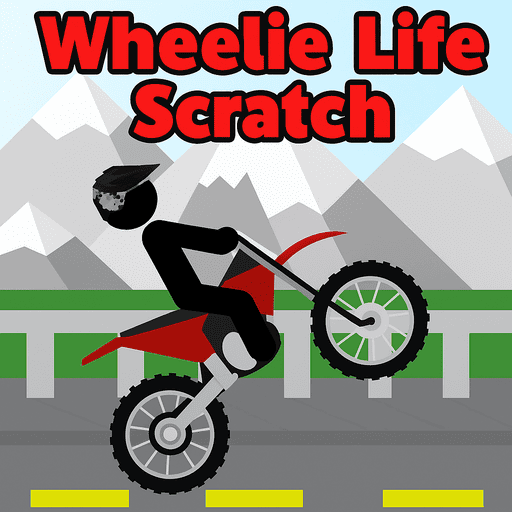
Walk into almost any middle or high school computer lab during free period, and you will see the same scene playing out across rows of managed Chromebooks. A low-poly dirt bike balances precariously on its rear wheel, engine screaming through muted laptop speakers, while a teenager taps the arrow keys with surgeon-like precision. This is not an official release from mobile game studio akiramak. It is an illicit, crowd-engineered port running inside the MIT Scratch engine, where student programmers have reverse-engineered one of mobile gaming’s most obsessive physics hits into a browser sensation that bypasses virtually every district firewall in the country.
The migration began as a desperate workaround to classroom content filters. As school network administrators clamped down on proxy sites and dedicated web game portals, a trend mirrored across public sector oversight boards tracking institutional internet abuse, as detailed in recent municipal findings by the sanjoseinside.com Report, students found a reliable safe haven. MIT’s creative coding platform carries universal educational whitelist clearance. By transforming an educational sandbox into a high-octane motorcycle simulation, these young creators turned block-based visual scripting into the ultimate playground distribution network.
📌 Key Takeaways:
- The Phenomenon: Independent teenage programmers successfully ported the physics, art assets, and controls of mobile hit Wheelie Life 2 into the educational MIT Scratch coding environment.
- The Network Loophole: Because school IT departments classify Scratch as a core STEM learning tool, these motorcycle stunt projects easily slip past institutional web filters that block traditional gaming portals.
- The Technical Leap: Developers conquered Scratch's native 30-frame-per-second lock by routing builds through TurboWarp, achieving responsive 60 FPS stunt balance and realistic chassis deflection.
The Chromebook Underground and the MIT Loophole
School-issued laptops are notoriously locked down. District administrators rely on services like GoGuardian, Securly, and Lightspeed Systems to cut off access to Steam, itch.io, Discord, and popular unblocked browser games. These filters maintain massive blacklists of domains tagged under "Games," "Entertainment," or "P2P."
Scratch (scratch.mit.edu) cannot be blacklisted without breaking daily computer science curricula. Launched in 2007 by the MIT Media Lab’s Lifelong Kindergarten group, the site is recognized globally as basic educational infrastructure. When student coders realized that Scratch’s project player could execute complex vector animations and mathematics locally in any Chromium browser tab, the platform transformed into an open-source arcade.
The target of this porting wave was Wheelie Life and its sequel, Wheelie Life 2. The mobile originals gained tens of millions of downloads on Android and iOS thanks to an unforgiving physics engine that simulates the exact throttle modulation, rear brake feathering, and clutch control required to maintain an endless wheelie. Replicating that specific tactile sensation without touchscreen accelerometers became an obsession for a loose confederation of teenage coders.
Reverse-Engineering Motorcycle Stunt Physics in Block Code
Porting a three-dimensional Unity mobile title into a two-dimensional, block-based platform presented extreme technical hurdles. The original mobile title uses complex rigid-body calculations, spring-damper suspension modeling, and tire friction curves. Scratch provides none of these built-in systems; it offers only basic Cartesian coordinates, simple timers, and broadcast messages.
To recreate authentic motorcycle stunt physics, indie Scratch developers had to program custom vector math from scratch. They established multi-joint sprite hierarchies where the rear wheel acts as a fixed rotational pivot while the frame, engine block, and front forks rotate along calculated angular trajectories.
Throttle inputs apply incremental rotational torque around the rear axle. Pulling too hard sends the front wheel past the 90-degree balance threshold, triggering a scrape on the rear fender or an outright crash. Developers mapped the controls to standard keyboard stunt controls: the up arrow handles throttle, the down arrow engages the rear brake to snap the bike forward, and the left/right keys modulate rider body lean. The result is an exacting recreation of freestyle moto balance that punishes clumsy fingers just as brutally as the mobile original.
TurboWarp and the Push for Framerate Optimization
The standard Scratch web player runs on a JavaScript interpreter capped at 30 frames per second. For a stunt simulator requiring split-second micro-adjustments to keep a bike on balance point, 30 FPS produces noticeable input lag. A single missed frame often causes the rear fender to strike the asphalt before the player can tap the brake.
Community developers solved this limitation by turning to TurboWarp, an open-source client that compiles Scratch projects directly into optimized JavaScript. TurboWarp bypasses the native interpreter, unlocking silky 60 FPS playback, high-definition stage rendering, and enhanced memory allocation.
| Engine Environment | Target Framerate | Physics Polling Rate | Input Latency |
|---|---|---|---|
| Official Mobile (Unity) | 60, 120 FPS | 50 Hz FixedUpdate | ~8, 16 ms |
| Native MIT Scratch 3.0 | 30 FPS (Hard Cap) | 30 Hz Tick Rate | ~33, 45 ms |
| TurboWarp Compiled Port | 60 FPS (Interpolated) | 60 Hz Tick Rate | ~12, 18 ms |
This framerate optimization made the browser ports feel nearly identical to their mobile counterpart. Players running the game on sub-$200 school hardware can initiate a wheelie at 40 miles per hour, tap the spacebar to stand on the seat, and drag their hand along the pavement without stutter or missed key-presses.
Bike Customization and Feature Creep
What started as a barebones physics demonstration quickly evolved into full-fledged mobile-to-web remakes. The original Wheelie Life 2 earned praise for deep aesthetic tweaks, allowing users to swap exhausts, paint rims, adjust tire pressures, and add custom headlamps. Scratch remakes rapidly adopted these features.
Using Scratch's costume system and cloned UI sprites, developers built complete garage menus. Players can change frame liveries, switch between two-stroke dirt bikes and heavy four-stroke supermotos, and equip aftermarket performance pipes that alter the bike's digital exhaust pitch. Some creators introduced saved-data strings using Scratch's cloud variable architecture, allowing students to paste an encrypted string of letters into a text box to load their custom builds between different school computers.
The Grey Area of Educational Fair Use
The explosion of Wheelie Life clones highlights an uneasy tension between original intellectual property and open-source remix culture. akiramak owns the trademarks, engine design, and asset signatures of the mobile franchise. Yet the Scratch ports do not generate direct ad revenue, nor do they sell microtransactions. They exist purely as public, shared hobby projects on an academic server.
MIT's community guidelines actively encourage remixing. Any user can click "See Inside" on a published project, study the physics scripting, modify the acceleration variables, and publish their own version with unique bike liveries. This open-source pipeline turned the Wheelie Life port into a collaborative workshop. When one creator cracked the math for realistic tire deformation during high-angle landings, dozens of other projects adopted the code within forty-eight hours.
Network administrators remain in a difficult spot. Blocking Scratch outright damages computer science education programs. Trying to filter specific project URLs creates an endless game of whack-a-mole, as students re-upload projects under innocent names like "Physics Pendulum Simulation 4" or share raw HTML5 packages that run locally from flash drives.
Frequently Asked Questions (FAQ)
Q1: Is playing Wheelie Life on Scratch safe and malware-free?
Yes. Scratch projects run inside a sandboxed JavaScript environment within your web browser. They cannot execute malicious background files, download unauthorized software, or access local files on your computer.
Q2: Why does the bike wobble or tip over instantly when I hit the gas?
Scratch ports simulate authentic balance physics. Holding down the up arrow applies continuous torque, which will flip the motorcycle backward immediately. You must rapidly feather the throttle key and press the down arrow (rear brake) to maintain a steady balance angle.
Q3: How do I get 60 FPS performance on an old school laptop?
Copy the URL of the Scratch project, navigate to TurboWarp.org, and paste the link into the search field. TurboWarp compiles the visual scripts directly into native web code, doubling the frame rate from 30 FPS to 60 FPS and eliminating lag.
The Lasting Legacy of Scratch's Bootleg Arcade
The migration of Wheelie Life to classroom browsers demonstrates the resourcefulness of a generation raised under aggressive digital surveillance. Faced with locked device profiles and aggressive internet filters, young players chose to build their own backdoor through the very platform designed to teach them how to think logically.
In dissecting mobile binaries, translating vector math into scratch blocks, and optimizing compilation engines to hit 60 frames per second, these students mastered practical game programming far beyond typical middle-school computer science benchmarks. The pixelated dirt bike balancing across a Chromebook screen is more than a way to pass twenty minutes of free study time; it is a working clinic in computational geometry, system optimization, and the irresistible draw of the open web.
