When a Virtual Heroine Walked Paris Runways: Inside Lightning’s Surreal Louis Vuitton Deal
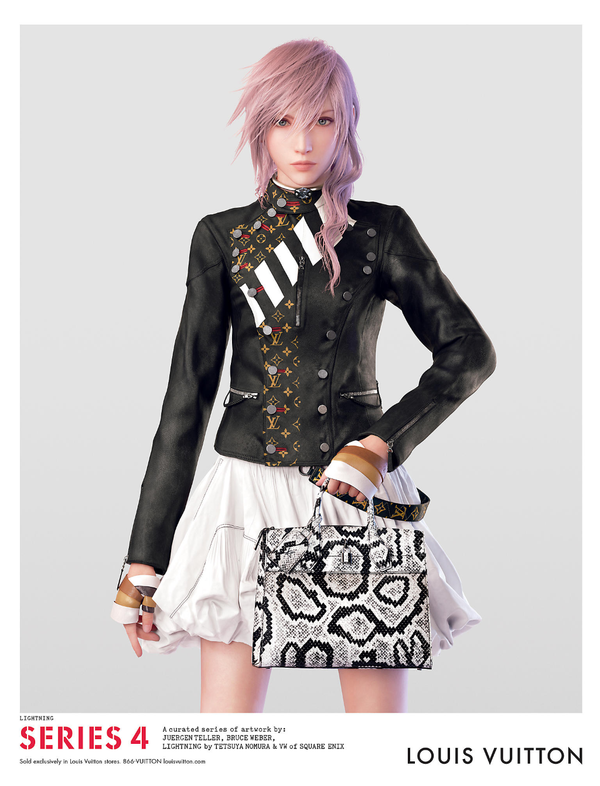
In January 2016, traditional runway purists recoiled while gaming culture watched in disbelief. Nicolas Ghesquière, artistic director of Louis Vuitton, bypassed the era's reigning runway supermodels to announce the face of the brand's Spring-Summer 2016 "Series 4" global advertising push: Lightning Farron, the stoic pink-haired protagonist of Square Enix's Final Fantasy XIII. Dressed in laser-cut leather, micro-embroidered silk vests, and clutching the maison's iconic Petite Malle bag, the digital soldier appeared across billboards in Paris, Tokyo, London, and New York.
According to the official Square Enix Press Hub Report documenting the launch, the collaboration paired the Japanese developer's proprietary Visual Works CGI studio directly with Louis Vuitton's Parisian atelier. A decade later, as fashion houses grapple with synthetic media, generative render engines, and virtual brand ambassadors, this audacious marketing gambit remains the definitive turning point where high fashion stopped treating video games as children's toys and recognized interactive heroines as apex cultural icons.
📌 Key Takeaways:
- The Unprecedented Deal: Square Enix partnered with French luxury house Louis Vuitton to cast Final Fantasy XIII protagonist Lightning as the premier digital brand ambassador for its global Spring-Summer 2016 Series 4 campaign.
- The Creative Drive: Artistic Director Nicolas Ghesquière pursued character designer Tetsuya Nomura and Visual Works to merge Japanese sci-fi cybernetics with French haute couture, outmaneuvering traditional celebrity endorsements.
- The Production Standard: Instead of slapping 2D prints onto 3D skeletons, Visual Works digitally rendered physical Louis Vuitton garments down to millimeter-accurate leather grain, stitching tension, and fabric drape.
- The Lasting Cultural Shift: What began as a polarizing gamble paved the path for high-fashion integrations across League of Legends, Fortnite, and Unreal Engine runway shows throughout the 2020s.
Nicolas Ghesquière’s Sci-Fi Obsession Meets Tetsuya Nomura’s Aesthetic
Nicolas Ghesquière did not choose Lightning on a whim. The French designer had long harbored a fixation on cybernetics, anime, and post-apocalyptic narrative structure. His debut collections for Louis Vuitton openly referenced science-fiction classics like Neon Genesis Evangelion and Akira. When conceptualizing the Spring-Summer 2016 collection, Ghesquière envisioned clothes for a nomadic warrior operating in an interconnected, borderless world. Flesh-and-bone models could only communicate half of that equation.
Square Enix's legendary character designer Tetsuya Nomura served as the gatekeeper. Nomura originally designed Lightning (Claire Farron) for the 2009 release of Final Fantasy XIII as an uncompromising, combat-hardened soldier. She was athletic, guarded, and deliberately devoid of the exaggerated coquettishness common in commercial gaming heroines. Ghesquière saw in Lightning the precise physical poise required to wear architectural outerwear: rigid shoulders, decisive footwork, and total command over her physical space.
The collaboration bypasses ordinary licensing. Square Enix didn't simply sell an image rights package. Visual Works, Square Enix’s elite internal CGI cinematic division, handled the rendering directly alongside Nomura. They translated real-world French tailoring patterns into high-density polygon meshes. Digital fabric responded to digital gravity with mathematical fidelity.
Why Louis Vuitton Picked a Video Game Soldier Over a Supermodel
Luxury marketing in the mid-2010s had hit a creative wall. Fashion houses were trapped in a bidding war for Hollywood starlets and Instagram influencers whose personal controversies routinely threatened corporate reputations. A virtual protagonist eliminated human liability while offering something infinitely rarer: an uncompromised artistic canvas.
Lightning represented an aesthetic paradox that traditional fashion houses rarely achieved. She possessed global name recognition across key Asian growth markets, specifically Japan, South Korea, and China, while simultaneously carrying avant-garde credibility among Western subcultures. Luxury sales in East Asia were expanding rapidly by early 2016, and Square Enix's visual pedigree carried immense social currency among affluent millennial consumers.
The Series 4 campaign also featured flesh-and-blood models, including actor Jaden Smith and runway regulars Sora Choi and Jean Campbell. Yet Lightning dominated the global media cycle. Billboards along the Champs-Élysées and Hong Kong's Canton Road featured a CGI runway heroine somersaulting in mid-air, clutching a monogrammed trunk clutch. She demonstrated that garments designed on cutting tables in Paris could exist dynamically within fantasy worlds without surrendering their exclusivity.
A Decade of Virtual Runway Evolution: 2012 to 2026
The journey from niche gaming art to Parisian high fashion did not happen overnight. Fashion critics often forget that Lightning’s Louis Vuitton moment was preceded by a smaller, experimental project, which later set off an industry-wide scramble to digitize luxury apparel.
| Era & Milestone | Collaborators | Technical Execution | Industry Fallout |
|---|---|---|---|
| 2012: The Editorial Prototype | Prada × Arena Homme+ × Square Enix | Static 2D CGI renders printed in editorial print magazine pages. | Demonstrated that gaming characters could carry menswear silhouettes without looking campy. |
| 2016: The Series 4 Breakthrough | Louis Vuitton × Square Enix (Visual Works) | Dynamic 3D character modeling, real cloth physics simulations, and retail video displays. | Established virtual avatars as commercially viable global brand faces for luxury houses. |
| 2019, 2021: The Metaverse Gold Rush | Balenciaga × Fortnite; Gucci × Roblox; Louis Vuitton × League of Legends | Low-poly in-game microtransaction skins paired with real-world capsule merch. | Diluted luxury exclusivity due to opportunistic digital cash grabs and pixelated assets. |
| 2024, 2026: Post-Hype Hyperrealism | Haute Couture Maisons × Unreal Engine 5 | Real-time ray tracing, neural material scans, and physical garment digital twins. | Direct evolution of the 2016 Visual Works pipeline, treating 3D digital cloth as fine tailoring. |
How Visual Works Brought Parisian Haute Couture into 3D Render Engines
Translating tangible luxury garments into digital assets required an agonizing level of technical precision. Fashion houses obsess over hand-feel, structural grain, and subtle fabric imperfections. In 2016, real-time engines like Unreal Engine 4 were not yet equipped to handle photorealistic sub-surface scattering on complex silks or textured calfskin at close range.
Visual Works approached the task using cinema-grade offline renderers. Louis Vuitton sent physical garments and high-resolution material swatches from Paris to Square Enix headquarters in Shinjuku, Tokyo. The development team scanned the weave structures, recorded how directional studio lighting reflected off micro-sequins, and mathematically matched the weight of heavy metal zippers.
The result was striking. In the promotional video reels, Lightning brandishes a silver-trimmed leather jacket, spinning with the acrobatic flair of a l'Cie warrior. As she lands, the natural crease of the leather around her elbows wrinkles cleanly, and the metal hardware clinks with weight. It felt authentic because it avoided the sterile smoothness that plagues modern generative AI imagery.
Cynicism, Prestige, and the In-Character Fashion Interview
Not everyone celebrated the campaign. Conservative fashion journalists initially dismissed the campaign as an expensive stunt designed to pander to teenage boys. Critics argued that luxury goods rely on unattainable human aspirationalism, which a fictional character could never deliver. Meanwhile, cynical gamers accused Square Enix of commercializing their favorite warrior for corporate European elites.
Then came the interview. In an infamous promotional piece orchestrated for The Telegraph, Square Enix writers penned responses in Lightning's actual voice, treating her as a living artist reflecting on her styling journey:
"My clothes were always just gear to keep me alive; 'dressing up' was a concept I’d never had," Lightning's character stated in the feature. "Perhaps this change means I have room for something new... Louis Vuitton is a new adventure, a new fantasy from which I will draw strength."
The surreal, tongue-in-cheek seriousness of the interview won over the fashion press. Instead of pretending Lightning was a real person, the creative teams leaned into the meta-narrative. Lightning became an icon precisely because she didn't care about Paris runway politics. That aloof defiance matched Louis Vuitton's historical identity far better than an over-eager reality star ever could.
Frequently Asked Questions (FAQ)
Q1: Why did Louis Vuitton choose Lightning instead of other Final Fantasy characters like Tifa or Aerith?
A1: Nicolas Ghesquière selected Lightning specifically because of her modern, sharp silhouette and soldier persona. While characters like Tifa Lockhart and Aerith Gainsborough carry immense popularity, their designs lean heavily into classic fantasy or combat streetwear. Lightning’s athletic build, cool composure, and futuristic aesthetic naturally complemented Ghesquière's sci-fi tailored collection.
Q2: Did Square Enix make money directly from garment sales?
A2: The collaboration operated as a joint global promotional and licensing agreement. Square Enix received high-prestige international brand exposure across prime retail real estate and licensing royalties, while Louis Vuitton leveraged the Final Fantasy intellectual property to reach younger, tech-affluent demographics across Asia and the West.
Q3: Was this Lightning's first appearance in a real-world fashion campaign?
A3: No. In 2012, characters from Final Fantasy XIII-2, including Lightning, Noel, and Snow, were featured wearing Prada’s Spring/Summer 2012 menswear collection in the men’s fashion magazine Arena Homme+. However, the Louis Vuitton campaign was far larger, serving as an official global advertising campaign on international billboards, store displays, and digital media.
The Enduring Legacy of Gaming’s Most Audacious High-Fashion Crossover
Looking back from 2026, the Louis Vuitton Series 4 campaign stands out not because it was bizarre, but because it was prophetic. During the intervening decade, the boundary separating digital identity from tangible self-expression has collapsed. Millions of consumers now purchase digital designer skins, while fashion designers prototype full collections inside game engines before threading a single needle.
Most luxury metaverse initiatives between 2021 and 2023 failed because they were hasty, low-fidelity cash-ins aimed at speculative crypto trends. They lacked artistic intention. In contrast, the collaboration between Nicolas Ghesquière, Tetsuya Nomura, and Visual Works worked because both sides respected the other's craft. The French couturiers treated the digital polygon sculptors as master artisans, and the Japanese game developers treated French tailoring as high art.
Lightning did not conquer Paris by conforming to luxury conventions. She conquered it by standing motionless in high-heeled boots, clutching a monogrammed trunk, and refusing to smile for the camera.
