Where Did 'Morning Starshine, the Earth Says Hello' Really Come From? The Surprising Origin

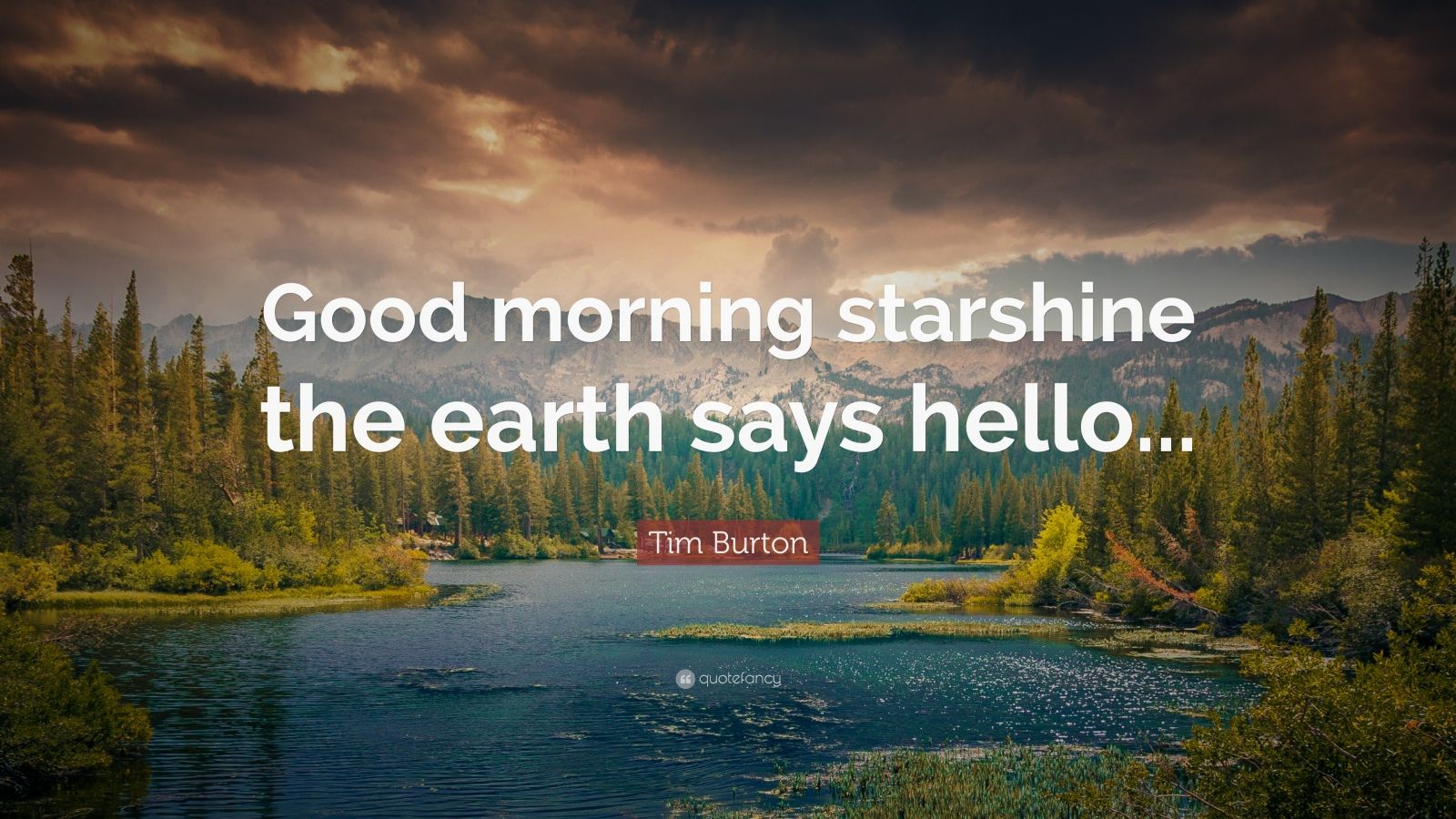
Every morning across social platforms, thousands of messages, memes, and cheerful text greetings circulate with a sing-song phrase: "Good morning starshine, the Earth says hello." Millions of millennials and Gen Z moviegoers instantly associate the greeting with Johnny Depp's pale, top-hatted eccentric in Tim Burton's 2005 Roald Dahl adaptation, Charlie and the Chocolate Factory. When Wonka welcomes the contest winners at the factory gates, the greeting sounds like a feverish, off-the-cuff piece of Wonka eccentricity. Yet the phrase did not originate in Tim Burton's writers' room, nor did Roald Dahl ever pen those words in his 1964 children's novel. As chronicled in coverage of offbeat cultural touchstones by The Badger Herald Report, vintage musical hooks often slip into modern vernacular through unexpected backdoors.
The line actually dates back nearly four decades prior to Burton's film, born out of the counterculture revolution of late-1960s Broadway before scaling the international pop charts. Tracing the trajectory of this ubiquitous greeting reveals how Broadway radicalism, sunshine-pop radio, and Hollywood cinema combined to build an enduring piece of modern slang.
📌 Key Takeaways:
- The True Origin: The line originated in the 1967 Broadway musical Hair, written by lyricists James Rado and Gerome Ragni with music by Galt MacDermot.
- The Pop Crossover: American singer Oliver (William Oliver Swofford) turned "Good Morning Starshine" into an international million-selling single in 1969, peaking at No. 3 on the Billboard Hot 100.
- The Wonka Renaissance: Screenwriter John August and actor Johnny Depp inserted the line into the 2005 film Charlie and the Chocolate Factory to emphasize Wonka's arrested development and isolation from everyday reality.
- Digital Longevity: By 2026, the phrase operates concurrently as a nostalgic cinema quote, an ironic reaction meme, and one of the web's most popular cute good morning greetings.
The Counterculture Roots of the 1967 Musical "Hair"
To find the opening lines of this lyric, one has to look past Hollywood soundstages to the Joseph Papp Public Theater in New York City's East Village. In October 1967, Hair: The American Tribal Love-Rock Musical premiered off-Broadway, breaking traditional theatrical conventions with its anti-Vietnam War themes, celebratory depiction of hippie culture, and frank treatment of sexuality and race. Lyricists James Rado and Gerome Ragni wanted songs that sounded like spontaneous street poetry rather than polished Tin Pan Alley showtunes.
In the second act of Hair, the character Sheila leads the tribe in "Good Morning Starshine." Composer Galt MacDermot set Ragni and Rado's cosmic lyrics to an infectious, major-key groove. The opening chorus laid down the greeting that would echo for generations:
"Good morning starshine, the Earth says hello.
You twinkle above us, we twinkle below."
The song leaned directly into Aquarian mysticism, pairing celestial greetings with joyous nonsense syllables ("Glibby gloop gloopy nibby nabby noopy la la lo lo"). Far from being a children's rhyme, it served as an anthem of emotional resilience and universal harmony amidst the social turmoil of the late 1960s.
How Oliver Turned a Broadway Anthem into a 1969 Chart Sensation
While Hair was a runaway Broadway success, theatrical cast recordings rarely dominated commercial Top 40 AM radio. Enter William Oliver Swofford, a North Carolina pop singer known professionally by his middle name, Oliver. Producer Bob Crewe, the mastermind behind hits by The Four Seasons, recognized the latent commercial power of "Good Morning Starshine" and arranged a light, orchestral sunshine-pop rendition for Oliver's debut album.
Released in the summer of 1969, Oliver's version stripped away the gritty theatrical context and amplified the breezy, pastoral cheerfulness of the melody. The timing was ideal. American listeners craving optimism alongside the Apollo 11 Moon landing found an instant favorite. Oliver's cover shot up the charts:
- It climbed to No. 3 on the US Billboard Hot 100 in July 1969.
- It held the No. 1 spot on the Billboard Adult Contemporary chart for two consecutive weeks.
- It crossed borders, securing top-ten placements in Canada, the United Kingdom, and Australia.
Oliver's radio dominance ingrained the chorus into the collective memory of the baby boom generation. Even people who had never set foot inside a Broadway theater could recite the greeting on command.
Johnny Depp and the 2005 Rebirth in "Charlie and the Chocolate Factory"
For more than three decades, the phrase remained a fondly remembered 1960s pop relic. Then came director Tim Burton's 2005 Roald Dahl adaptation, Charlie and the Chocolate Factory. Tasked with reimagining Willy Wonka, a role made iconic by Gene Wilder in 1971, Johnny Depp and screenwriter John August sought to portray the chocolatier not as a warm trickster, but as a socially stunted recluse who learned human interaction from television and old vinyl records.
When the gates finally open on the snowy morning of February 1, the golden ticket winners gather around the factory entrance. After a bizarre animatronic puppet show bursts into flames, Wonka appears beside the children. Awkward, sporting enormous dark sunglasses, a porcelain grin, and an unnerving pitch, Depp delivers the line:
"Good morning, starshine! The Earth says hello!"
The greeting is delivered with crisp, hollow enthusiasm. When none of the children or parents respond in kind, the awkward silence underscores Wonka's profound social disconnection. Dahl's original book contained no such dialogue; Wonka in the 1964 text merely says, "Welcome, my little friends, welcome to the factory!" Burton and August deliberately chose the line because it captured the exact brand of dated, sun-dappled television-variety-show phrasing an isolated man might study in an empty mansion.
Chronology: The Journey of a Pop Culture Catchphrase
The transformation of "Good morning starshine" from an anti-establishment stage lyric into a modern meme required multiple reinventions across music, theater, and blockbuster cinema.
| Year | Medium / Artist | Role & Context | Primary Audience Reach |
|---|---|---|---|
| 1967, 1968 | Broadway Musical (Hair) | Written by Ragni, Rado, and MacDermot as a counterculture anthem. | Off-Broadway and Broadway theatergoers; cast album buyers. |
| 1969 | Pop Single (Oliver) | Easy-listening arrangement; hit No. 3 on the Billboard Hot 100. | Mainstream international radio; millions of singles sold globally. |
| 1979 | Feature Film (Miloš Forman's Hair) | Screen adaptation performed by Beverly D'Angelo and the ensemble. | Cinema audiences and subsequent home-video viewers. |
| 2005 | Feature Film (Tim Burton's Charlie) | Spoken by Johnny Depp as Willy Wonka's opening entrance line. | Over $475 million in global box office; wide broadcast replay. |
| 2015, 2026 | Digital Media & Messaging Apps | Adopted as cute morning texts, audio snippets, and short-form video hooks. | Billions of cross-platform views on TikTok, Instagram, and Reddit. |
Why the Line Became the Internet's Favorite Morning Text
The cultural persistence of the phrase owes much to its dual personality. Unlike standard morning pleasantries, "Good morning starshine, the Earth says hello" works on two distinct registers depending on who receives it.
On one side sits wholesome affection. Digital relationship guides, such as lifestyle lists highlighting creative texts to send a partner, routinely categorize the line alongside playful morning greetings. It feels cosmic, poetic, and slightly whimsical. Sending it implies that the recipient is a celestial body and the sender represents the planet below.
On the other side sits campy irony. For those who grew up watching Depp's Wonka, the phrase carries an unmistakable undercurrent of deadpan absurdity. Online creators on TikTok and YouTube routinely splice the clip into morning routines when someone wakes up completely exhausted, hungover, or unprepared for work. The stark contrast between Wonka's manic, razor-sharp smile and the grim reality of a Monday morning commute provides effortless comedic value.
Common Misconceptions About the Phrase
Due to the massive reach of the 2005 film, several urban legends have developed around the greeting:
- Myth 1: Roald Dahl wrote it. Dahl never used the line in any of his books. The dialogue was introduced specifically for the 2005 cinematic adaptation to modernize Wonka's musical references.
- Myth 2: Johnny Depp improvised the line on set. While Depp made several unscripted adjustments to Wonka's physical demeanor, John August's shooting draft specifically included retro-pop non-sequiturs to reflect Wonka's mid-century aesthetic.
- Myth 3: Gene Wilder said it first. Mel Stuart's 1971 classic Willy Wonka & the Chocolate Factory leans heavily on classical poetry and literary quotes, including Arthur O'Shaughnessy's "Ode" ("We are the music makers..."). Wilder never uttered the "starshine" line.
Frequently Asked Questions (FAQ)
Q1: What is the original song "Good Morning Starshine" about?
A1: The song from the musical Hair is an ode to peace, universal connection, and countercultural harmony. It uses cosmic and astrological imagery to celebrate being alive amidst chaotic times.
Q2: Why did Willy Wonka say "Good morning starshine" in the 2005 film?
A2: Screenwriter John August and Johnny Depp used the line to highlight Wonka's extreme social awkwardness. He uses cheerful, dated pop-culture catchphrases to hide his discomfort around people.
Q3: Did the 1971 Willy Wonka film include this line?
A3: No. Gene Wilder's Willy Wonka quoted classical poets like William Shakespeare, John Keats, and Arthur O'Shaughnessy, but did not quote 1960s pop songs like Hair.
Q4: Who originally sang the pop hit version of "Good Morning Starshine"?
A4: William Oliver Swofford, known mononymously as Oliver, recorded the famous 1969 cover that reached No. 3 on the Billboard Hot 100.
The Staying Power of a Cosmic Greeting
Phrases that survive multiple cultural shifts rarely do so by accident. "Good morning starshine, the Earth says hello" manages to bridge three distinct cultural moments: the anti-war idealism of the 1960s counterculture, the eccentric theatricality of early-2000s cinema, and the meme-heavy vernacular of modern social feeds.
Whether delivered with genuine warmth to a loved one or spoken with the icy detachment of an eccentric candy tycoon, the phrase remains uniquely memorable. It began as an off-Broadway plea for peace, transformed into an AM radio staple, found new life in an eccentric cinematic adaptation, and remains firmly planted in the everyday language of the digital age.
