Why Albina Press Remains Portland's Most Underrated Coffee Legacy Institution

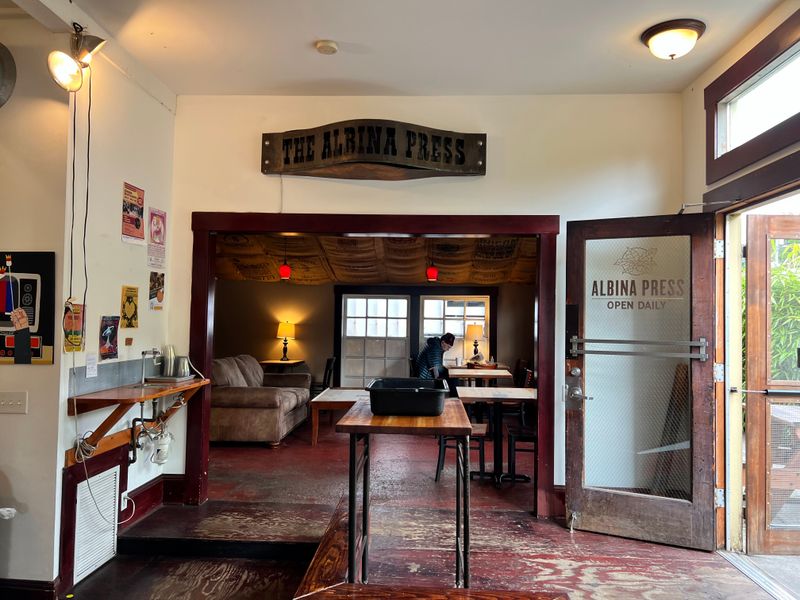
Step onto North Albina Avenue on a rainy Tuesday morning, and the steady hiss of steam wands cuts through the quiet residential rhythm. Inside Albina Press, the vintage timber counters, weathered floorboards, and absence of sterile minimalist design feel entirely deliberate. While multinational acquisitions and splashy VC-backed expansions reshaped the Pacific Northwest's cafe geography over the past two decades, this North Portland specialty espresso bar stood its ground. Its survival is particularly striking against the backdrop of municipal shifts; as documented in the City of Portland, Oregon (.gov) Report detailing historic displacement settlements, North Portland has spent years reconciling commercial gentrification with community repair.
Through every wave of neighborhood transformation, Albina Press preserved a distinct ethos. Founded in 2004 by Kevin Fuller, the shop acted as a crucible for early competitive barista culture while deliberately rejecting the cold, aloof service that often followed it.
📌 Quick Summary:
- Origins & Influence: Founded in 2004 on North Albina Avenue, the cafe served as the launchpad for world-renowned barista competitors and latte art pioneers while championing early third-wave coffee.
- Civic Context: Operating within a neighborhood shaped by historic displacement and recent restorative investments, the shop retained its identity as a grounded community living room rather than a transient tourist hub.
- The Enduring Model: By prioritizing extraction science, relationship roasting, and approachable counter hospitality, Albina Press outlasted the corporate buyout cycle that swallowed many Stumptown-era peers.
The Counter Culture Born on North Albina Avenue in 2004
When Kevin Fuller opened the doors at 4637 North Albina Avenue in October 2004, specialty coffee had just begun defining its modern identity. Stumptown Coffee Roasters was gaining national steam across the river, but neighborhood corners in North Portland still leaned toward casual drip counters or utilitarian espresso carts. Fuller saw an opportunity to unite obsessive extraction standards with an unpretentious, living-room atmosphere.
The room was outfitted with secondhand velvet couches, mismatching hardwood tables, and large street-facing windows that pulled in the flat grey Oregon light. It smelled of dark wood, toasted grain, and fresh espresso. Instead of hiding behind an imposing, wall-height machine, baristas stood front and center, pulling shots on an open counter. Fuller made sure customers felt welcome to ask questions or simply sit in silence with a paperback. That balance set the tone for North Portland cafe culture, showing that technical precision did not require a museum-like silence.
Surviving the Waves: How Kevin Fuller Protected Neighborhood Roots
Over the next twenty years, coffee culture cycled through rapid, high-capital shifts. Roasters took private equity cash, redesigned shops with white subway tile and brass fixtures, and migrated toward automated pour-over towers. Many operations expanded aggressively across state lines, only to shutter under crushing real estate debt when market preferences corrected.
Fuller steered Albina Press in the opposite direction. Although he expanded with a secondary location on Southeast Hawthorne Boulevard, he resisted the urge to scale nationally or dilute the brand into airport kiosks and grocery-store RTD cans. He kept the focus locked on the physical space: maintaining long-standing accounts with local coffee roasters, retaining senior baristas, and treating the daily rush as a communal anchor. Even through shifting economic cycles and pandemic-era disruptions, regular patrons returned because the counter experience felt familiar, human, and grounded.
The Competition Crucible That Launched Portland's Barista Elite
Albina Press was more than a cozy haunt; it operated as an elite training ground. During the mid-2000s, competitive coffee emerged as a serious culinary discipline, and Albina Press sat right at the epicenter of the movement. The cafe became famous for housing baristas who dominated regional and national competitions, pushing the envelope on microfoam texturing and single-origin dial-ins.
Billy Wilson, who later founded the multi-roaster institution BARISTA in the Pearl District, cut his competitive teeth behind the Albina Press bar. Alongside fellow pioneers, Wilson introduced latte art techniques and meticulous distribution methods that were radically ahead of their time. The shop became known across the specialty coffee community as a school where technique met speed under high morning volume.
| Era | Industry Landscape | Albina Press Focus |
|---|---|---|
| 2004, 2008 | Early third-wave boom; emergence of regional barista competitions. | Incubating championship talent; mastering latte art and microfoam consistency. |
| 2009, 2016 | Rapid venture funding and multi-roaster expansion throughout Portland. | Preserving local counter hospitality; opening Hawthorne location; rejecting private equity buyouts. |
| 2017, 2022 | Automation, flash orders, and minimalist boutique styling. | Maintaining tactile manual espresso craft; stabilizing neighborhood service during disruptions. |
| 2023, 2026 | Hyper-niche processing methods and algorithmic cafe chains. | Honoring foundational craft; retaining multi-generational community regulars. |
Coffee, Capital, and the Shifting Ground of Historic Albina
A truthful discussion of Albina Press requires examining its physical address. The historic Albina neighborhood holds deep civic history as the cultural heart of Portland's Black community, which faced decades of discriminatory redlining, freeway displacement, and institutional disinvestment. By the late 1990s and early 2000s, commercial investment began transforming North Albina and North Mississippi Avenues.
Commercial establishments opening along these corridors became visible markers of rapid demographic change. In recent years, local awareness and municipal efforts have directly confronted these inequities. Initiatives like the historic $400 million investment from Phil and Penny Knight via the 1803 Fund and the city's formal settlements regarding legacy displacement aim to preserve Black generational wealth and cultural heritage in Lower Albina.
For legacy businesses along North Albina Avenue, staying rooted means acknowledging this context. Albina Press has sustained itself not as an insular boutique, but as a shared space that opens its seats to neighbors across generations, trade workers, artists, and long-time community organizers.
Technical Craft Meets Low-Pretense Hospitality
A recurring failure of mid-2000s specialty cafes was an intimidating culture of gatekeeping. Drinkers who asked for caramel syrup or requested extra milk were routinely met with eye-rolls from staff. Albina Press took a different path. While their baristas calibrated grinders multiple times each morning, dialed in water temperatures, and measured extractions by the gram, they greeted guests with genuine warmth.
The menu highlights that duality. You can order a single-origin espresso pulled with exacting TDS measurements, or you can order a large vanilla latte and sit on a sofa for two hours without feeling hurried. The milk texturing remains silky and sweet, poured with crisp rosettas that match competition standards, yet delivered across the counter with a quiet smile. That absence of pretension protected the shop against changing fads; coffee lovers can rely on the quality without enduring a lecture on tasting notes.
Frequently Asked Questions (FAQ)
What roast style and coffee does Albina Press serve?
Albina Press has traditionally partnered with established Pacific Northwest roasters, long featuring coffees from roasters like Coava and other regional specialists. The flavor profile highlights balanced sweetness and clean acidity rather than overly dark roasts or excessively sour experimental lots.
Are there multiple Albina Press locations in Portland?
While the original flagship remains on North Albina Avenue in the Humboldt neighborhood, Albina Press also operates a beloved location in Southeast Portland on Hawthorne Boulevard (5012 SE Hawthorne Blvd), offering the same classic timber aesthetics and craft espresso.
Why is Albina Press so influential in competitive barista history?
In the mid-2000s, competitive baristas working at the shop, notably Billy Wilson, refined high-level latte art, tamp ergonomics, and dialed-in shot mechanics. Their success in the Northwest Regional and United States Barista Championships put the shop on the international specialty coffee map.
The Enduring Value of Low-Pretense Third Wave Craft
Portland's coffee landscape will always breed experimental concepts, whether through co-fermented beans, automated kiosk kiosks, or high-concept tasting rooms. Yet places like Albina Press carry an enduring importance that trends cannot manufacture. They remind coffee drinkers that an espresso bar is, at its core, a civic space. By anchoring technical craft to daily hospitality and respecting the physical neighborhood around it, Albina Press remains an irreplaceable piece of Oregon's living coffee history.
