Why Art Kits Are Replacing Screen Time: The Creative Boom Taking Over 2026

Living room coffee tables look fundamentally different in 2026. Tablets sit unlit on charging stands while households unpack pre-measured cakes of terracotta clay, gouache palettes, and linocut blocks. A sharp consumer migration away from passive scrolling has fueled an unexpected renaissance in tactile hobbies. According to the latest Fortune Business Insights Report, the global craft materials market is riding a prolonged growth curve projected through 2034, driven by families and working professionals seeking refuge from digital fatigue.
The movement represents a decisive pushback against infinite algorithms. Parents want authentic screen-free activities that captivate young minds without algorithmic loops, while young adults are turning to mindful crafting to decompress after workdays dominated by artificial intelligence and video calls. The art of kits, packaged, self-contained creative projects containing exact rations of high-grade components, has solved the historical friction of creative work: the intimidation of the blank page and the chore of shopping for loose supplies.
📌 Key Takeaways:
- The Behavioral Pivot: Consumers in 2026 are trading digital feeds for physical making, turning boxed craft sets into an antidote to screen-induced burnout.
- The Friction Solution: Modern DIY craft kits strip away the intimidation of raw art supply aisles by delivering pre-measured, zero-waste components paired with modular step-by-step guides.
- Pedagogical Backing: Early childhood educators and reporting from Parents magazine show that teacher-approved art supplies accelerate motor skills, bilateral coordination, and sensory play far better than virtual substitutes.
The Digital Burnout Driving the Tactile Turn
Screen exhaustion reached a critical threshold by early 2025. Between virtual classrooms, remote office setups, and endless short-form video feeds, physical interaction with real materials plummeted. The consequences showed up in pediatric hand-strength metrics and widespread adult anxiety. When fingers spend eight hours a day tapping polished gorilla glass, the brain craves resistance, weight, and texture.
Tactile learning bridges that sensory deficit. Squeezing kneaded erasers, shaping damp ceramic stoneware, and dragging an ink roller across a linoleum tile engage fine motor pathways that flat screens bypass entirely. For children, this hands-on engagement builds bilateral coordination and spatial awareness. For adults, the repetitive physical cadences of cross-stitching or paint mixing offer a verified pathway toward cognitive grounding, cutting through chronic distraction without a battery in sight.
Curated Friction: Why Boxed Sets Defeat the Blank Canvas
Buying art supplies used to be an overwhelming chore. A beginner interested in watercolor had to choose between cold-press or hot-press paper, student-grade or professional pigments, sable hair or synthetic brushes, and masking fluid. The sheer cost and complexity produced choice paralysis. Most prospective hobbyists walked out of supply stores empty-handed or bought mismatched tools that yielded messy, discouraging results.
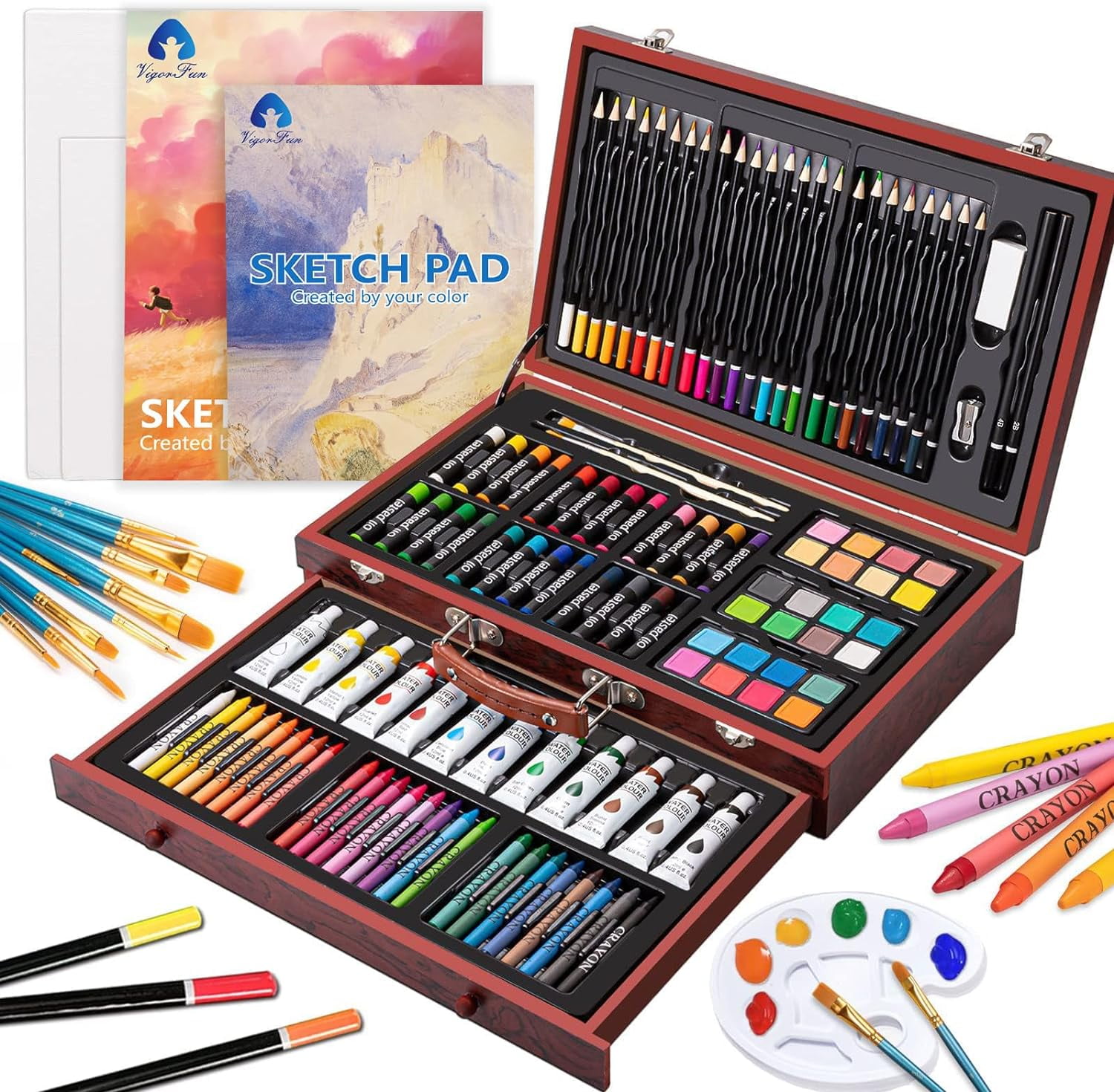
The modern generation of DIY craft kits completely circumvents this barrier. Companies curate exact pigments, weighted paper stocks, and ergonomic tools balanced for specific beginner art projects. By restricting the scope to a single contained objective, the kit removes decision fatigue. An amateur painter can open a cardboard package at 7:00 PM and hold a finished, framed miniature botanical study by 8:30 PM. That compressed feedback loop supplies immediate gratification, building creative confidence without the traditional frustration curve.
| Medium / Format | Cost Profile | Attention Span Engagement | Preparation & Cleanup Time |
|---|---|---|---|
| Interactive Mobile Apps | $0, $15 / month | Short, fragmented (3, 8 minutes) | Instant start / zero cleanup |
| Bulk Art Supplies (Uncurated) | $80, $160 upfront | Variable; high early drop-off | 30, 45 minutes setup & organization |
| All-in-One Art Kits (Kids & Adults) | $25, $55 per project | Sustained deep focus (45, 120 minutes) | Under 5 minutes with pre-portioned parts |
Teacher-Approved Standards in the Living Room
The children's market has seen the most dramatic evolution. Parents are no longer satisfied with flimsy plastic activity sets that break within twenty minutes. Educational journalism from Parents magazine highlighted a marked shift toward teacher-approved art supplies, showcasing kits that replicate the rigor of elementary school studios. Educators emphasize high-pigment density paints, genuine watercolor paper that does not buckle under light moisture, and ergonomic tools designed for developing hand grips.
This academic vetting gives parents confidence that the activity serves actual creative development rather than merely killing time. When children engage in sensory play through tactile mediums, such as manipulating beeswax modeling clay or weaving yarn on miniature wooden looms, they encounter physical problem-solving that digital software cannot simulate. If paper gets too wet, it tears. If clay dries out, it cracks. These direct material reactions teach patience, material respect, and emotional resilience when an attempt does not go as planned.
Mindful Crafting and the Adult Subscription Model
While childhood enrichment drives the morning market, adult decompression commands the evening hours. The rise of monthly art subscription boxes has normalized crafting for demographics who previously never considered themselves artists. Monthly deliveries arrive containing everything needed to cast terrazzo coasters, weave wall hangings, or bind hardback journals with waxed linen thread.
The driving force behind this adult surge is mindful crafting. The repetitive, focused actions required by handcrafts induce a psychological state similar to meditation. An accountant who stares at spreadsheets all day finds genuine mental restoration in carving wood or blending pastels for ninety uninterrupted minutes. The hands remain occupied with physical tasks, making it impossible to check email notifications or switch browser tabs. The finished object provides tangible proof of time spent away from the network.
Evaluating the Tradeoffs: Packaging Waste Versus Lasting Value
The convenience of boxed sets brings legitimate criticisms that consumers and manufacturers must reckon with. Individual packaging for each pre-measured vial of paint or glaze generates physical waste. Cheap plastic containers, single-use brushes, and excessive shipping materials run counter to the organic ethos that many craft companies project. Sustainable brands are responding by switching to water-soluble packing peanuts, glass jars, and recycled cardboard organizers.
There is also the question of creative independence. Following a rigid step-by-step instruction booklet ensures that a beginner finishes with an attractive decorative item, but it can occasionally stifle open-ended experimentation. The ideal kit serves as a launchpad rather than a permanent track. Once a user masters the fundamentals of brush tension, clay wedges, or blade angles inside a structured project, the next developmental step requires stepping out of the box and purchasing raw, open-ended materials to create original designs from scratch.
Frequently Asked Questions (FAQ)
Q1: Are art kits worth the premium price compared to buying loose supplies in bulk?
For beginners, yes. Sourcing individual tubes of paint, brushes, grounds, and fixatives routinely costs between $80 and $150 at retail art shops. Art kits eliminate material waste by providing exact portions, along with curated tools matched to the specific medium, making the initial entry point far more economical.
Q2: What should parents look for to avoid low-quality art kits for kids?
Check for non-toxic certifications like ASTM D-4236, real wood or metal tools rather than flimsy stamped plastics, and heavyweight paper stocks (at least 140 lb or 300 gsm for water media). Premium kits emphasize process-based exploration and tactile learning over rigid paint-by-number templates.
Q3: How do beginner art subscription boxes handle varying skill levels?
Most established services incorporate tiered instruction, providing foundational video guides alongside advanced challenges for subscribers who want to expand beyond the baseline design. As skills progress, users can customize their delivery preferences toward specialized media like printmaking, ceramic hand-building, or fiber arts.
The Future of Tactile Making in an Algorithmic World
The nationwide embrace of craft kits signals a deeper cultural rebalancing. As artificial intelligence automates digital image creation and synthetic screens dominate domestic attention, the value of physical human making has climbed sharply. Holding a physical brush, smelling raw linseed oil, and shaping wet clay offer irreplaceable sensory anchors that remind individuals of their agency in the real world.
The craft materials market will continue to refine how creativity is delivered to doorsteps. Sustainable packaging, educator-tested materials, and thoughtful project design have transformed boxed crafts from fleeting novelties into indispensable household staples. In a culture saturated with virtual signals, the art of physical creation remains one of the few true sanctuaries for genuine focus.
