Why Brands Are Rethinking TikTok Ads Manager: The Hidden Cost of Last-Click Attribution
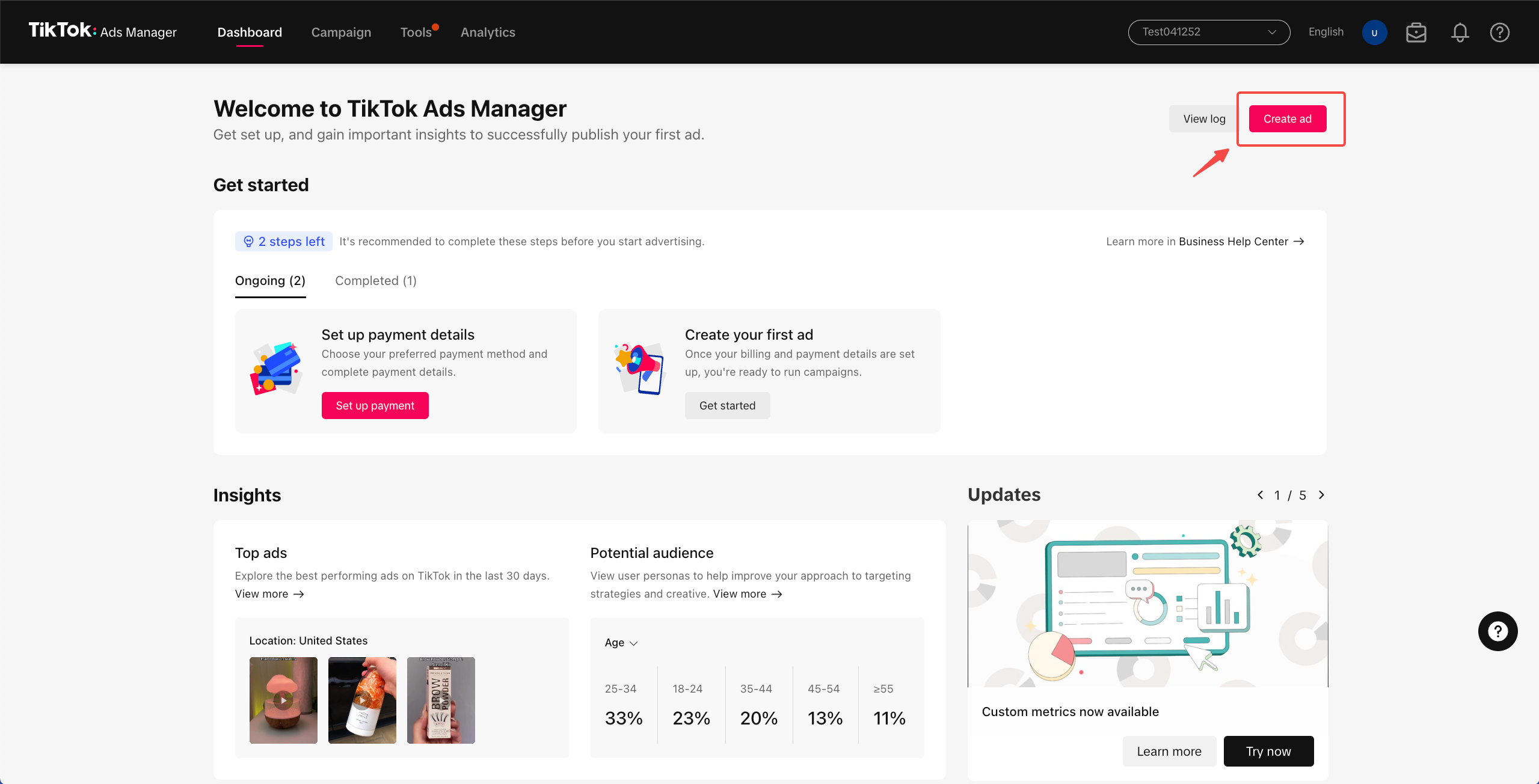
For two years, growth marketing leads treated the numbers inside TikTok Ads Manager with quiet skepticism. Dashboards reported soaring engagement, yet chief financial officers stared at flat bank deposits. By early 2026, the gap between platform metrics and corporate ledgers became impossible to ignore. As documented in a recent PPC Land Report, ByteDance introduced its Attribution Portfolio to dismantle the industry's reliance on last-click attribution, attempting to capture the fractured path between seeing a viral clip and buying a product days later.
The update arrived at a tense moment. Media buyers across e-commerce, consumer tech, and direct-to-consumer retail face mounting pressure to prove incremental return on ad spend (ROAS). Many discover that their paid social performance looks stellar within TikTok's reporting suite while their overall blended customer acquisition cost (CPA) creeps steadily upward.
📌 Key Takeaways:
- The Measurement Rift: Relying on standard last-click models undervalues TikTok by up to 42%, yet loose view-through windows can inflate reported sales by double digits.
- The Attribution Portfolio: ByteDance's multi-model framework lets marketers cross-examine self-reported platform numbers against independent post-purchase surveys and lift studies.
- Budget Allocation Reality: Automated campaign budget optimization burns capital quickly when fed incomplete pixel events, making dual-signal server tracking mandatory in 2026.
The Breaking Point of Last-Click Measurement on Short-Form Video
Last-click measurement was built for search engines. An internet user typed a query, clicked a text ad, and purchased immediately. Short-form video defies that linear sequence. A shopper scrolls past a beauty demonstration on TikTok during lunch, closes the application, and buys the item through an organic search query on a desktop browser three nights later.
When brands evaluate campaigns exclusively through a last-click lens, TikTok Ads Manager looks inefficient. The click never registered. Google Search or direct navigation claims total credit, while the video creative that sparked the demand receives none. In response, media buyers historically switched to aggressive view-through conversions, counting purchases if a user merely saw an ad within seven days.
That pivot created an opposite, equally dangerous distortion. Platform dashboards began overclaiming sales that would have happened organically. Direct-to-consumer brands saw TikTok take credit for repeat subscriptions from existing customers who had merely scrolled past a video without pausing. The resulting confusion forced performance directors to question whether their ad spend was driving incremental revenue or simply claiming credit for established brand equity.
Inside ByteDance's Attribution Portfolio
ByteDance launched the Attribution Portfolio to resolve this measurement friction. The tool allows advertisers to view campaign performance across several distinct operational models simultaneously, instead of locking campaigns into a single default setting. Media buyers can now compare a strict 1-day click view directly against an expanded 7-day click and 1-day view window within a unified workspace.
The core objective is showing where short-form discovery feeds the broader sales funnel. For years, performance marketers debated whether view-through metrics represented real influence or statistical noise. The platform's updated tools attempt to quantify that influence by tracking cross-device actions through identity graphs, tying app engagement to downstream web events.
Industry trade reporting from Social Media Examiner tracks a parallel shift across competitor channels. As platforms update their ad suites, buying teams no longer evaluate TikTok in isolation. They treat it as an upper-and-mid-funnel engine that feeds conversion engines elsewhere, comparing its efficiency against paid search and audio channels like Spotify Ads Manager, which published its own self-serve targeting and cost updates earlier this year.
Paid Social Performance and Measurement Models (2024, 2026)
The transition toward multi-touch attribution has altered how growth teams evaluate paid media. The table below details how performance metrics vary based on the attribution lens applied within TikTok Ads Manager.
| Attribution Model | Reported ROAS Range | Platform Credit Bias | Primary Operational Risk |
|---|---|---|---|
| Strict Last-Click (1-Day) | 0.8x, 1.4x | Severe Under-reporting | Premature pausing of scalable top-of-funnel creative |
| Standard 7-Day Click / 1-Day View | 2.2x, 3.8x | Moderate Over-reporting | Inflated pipeline figures that do not match merchant bank deposits |
| Attribution Portfolio (Blended Multi-Touch) | 1.6x, 2.4x | Balanced Signal Distribution | Requires advanced third-party data validation to configure properly |
| Marketing Mix Modeling (MMM) Calibrated | 1.4x, 2.1x | Channel-Agnostic Reality | High engineering overhead and delayed operational feedback loops |
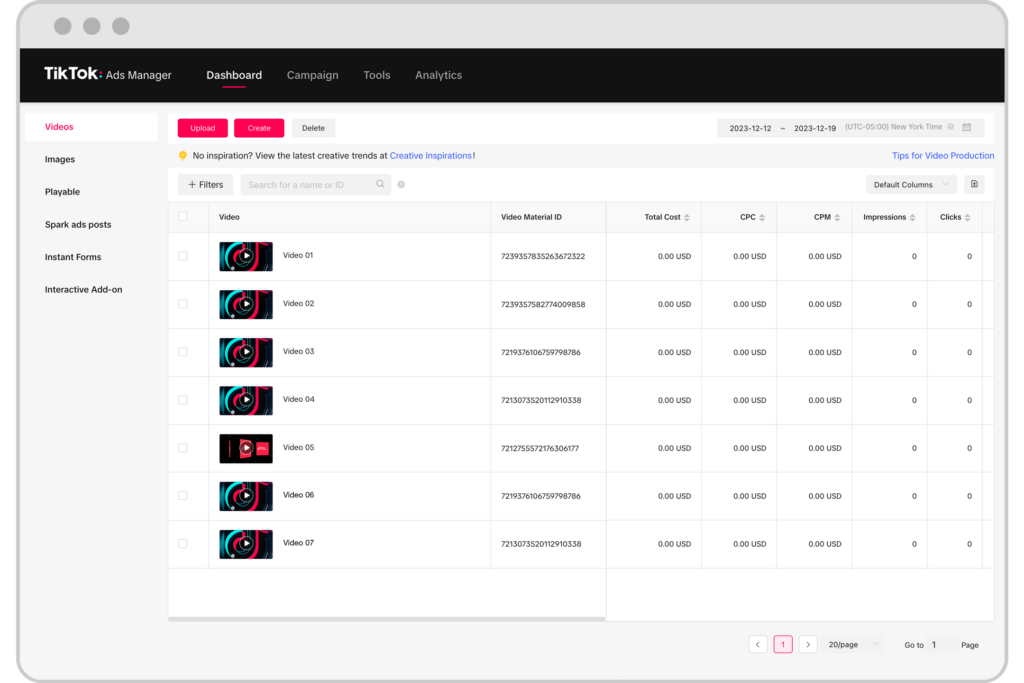
The Technical Reality of Modern Pixel Setup and First-Party Signals
Flawed measurement rarely stems from algorithmic error alone; it starts with signal degradation. A standard browser-based TikTok Pixel setup no longer provides adequate data. Mobile operating systems, privacy-first browsers, and network-level ad blockers strip out conversion parameters before page assets finish loading.
Engineering teams running enterprise TikTok ad accounts now rely on server-to-server tracking via the Events API. Feeding high-match signals, hashed customer emails, telephone prefixes, external checkout IDs, directly back into TikTok Ads Manager stabilizes target CPA benchmarks. Without this server connection, custom audiences deteriorate. Retargeting pools shrink to fractions of their real size, and lookalike algorithms generate broad, unqualified impressions.
Setting the right conversion tracking window serves as the secondary defense against algorithmic budget waste. If an e-commerce brand sells high-ticket luxury luggage, setting an ad group to optimize on a 1-day click window starves the machine learning system of conversion data. The algorithm enters an endless learning phase, spiking acquisition costs. Conversely, setting a low-cost consumable item to an extended window causes the system to claim credit for passive impressions, hiding marketing inefficiencies behind artificially inflated ROAS metrics.
Algorithmic Bidding and the Hidden Drain of Campaign Budget Optimization
Campaign budget optimization (CBO) is designed to allocate capital automatically to the top-performing creative assets. It works remarkably well when conversion feedback loops are swift and accurate. When signals are delayed or noisy, CBO can exhaust monthly marketing budgets with alarming speed.
Automated bidding systems prioritize the lowest hanging fruit. On TikTok, this often means dumping significant budget into an ad variant that drives high comment volume and cheap video views, even if those viewers never initiate a checkout session. The dashboard registers high algorithmic activity, yet down-funnel acquisition remains stagnant.
"When algorithmic bidding systems optimize against weak attribution feedback, they do not pause spend. They accelerate delivery toward low-value users who are easy to show ads to, masking poor conversion rates behind hollow engagement."
Growth operators avoid this issue by implementing strict bid caps and manual cost-per-result limits on exploratory campaigns. Rather than granting CBO full control from the start, teams validate creative assets in isolated testing campaigns using standardized budgets. Only when an asset demonstrates measurable sales lift does it graduate into automated, budget-optimized scaling structures.
Rebuilding Media Mix Modeling for Short-Form Paid Social
Enterprise brands have begun reducing their reliance on platform-native dashboards altogether. Instead of trusting TikTok Ads Manager to evaluate its own financial productivity, data teams are building lightweight marketing mix models (MMM) combined with geo-lift holdout tests.
In a standard geo-lift experiment, a brand maintains steady ad spend across ninety percent of the country while shutting down TikTok ads in specific, matched metro areas for four consecutive weeks. By monitoring the resulting decline in total revenue, branded search volume, and direct site traffic in those dark regions, analysts calculate the channel's actual incremental contribution.
The findings from these holdout tests often reveal surprising dynamics. While last-click reports regularly suggest that TikTok ads deliver weak results, geo-holdout data frequently indicates that turning off spend causes organic search sales to drop by 15% to 28%. The short-form video serves as the catalyst; search engines simply capture the transaction.
Frequently Asked Questions (FAQ)
Q1: Why does TikTok Ads Manager show more purchases than Shopify or WooCommerce?
A1: The platform frequently reports transactions based on default attribution windows that include view-through conversions. If a customer views your video ad and later makes a purchase through an organic search or an email newsletter within the conversion window, TikTok claims credit for that sale, even though your e-commerce backend attributes it to another source.
Q2: How should direct-to-consumer brands set their conversion tracking window?
A2: For impulse items priced under $50, configuring ad groups to a 1-day click or 7-day click window without view-through tracking produces the cleanest operational data. For higher-priced inventory requiring research, run a 7-day click and 1-day view window, but validate reported revenue against post-purchase customer surveys asking where buyers first encountered your brand.
Q3: Does Campaign Budget Optimization work for lower ad spend tiers?
A3: Campaign budget optimization requires at least 50 conversion events per ad set each week to exit the algorithmic learning phase. If your daily spend across all ad groups is under $100, manual ad set budget management provides superior cost control and keeps your capital from gravitating toward hollow, cheap impressions.
Strategic Takeaways for Paid Media in 2026
Navigating TikTok Ads Manager in 2026 requires looking past self-reported platform dashboards. Creative teams must craft content that stops passive scrollers, but media buyers must operate with strict measurement discipline.
Treat platform metrics as indicators of creative velocity, not absolute financial truth. Tie your server directly to the Events API, test conversion tracking windows methodically, and use independent attribution frameworks to cross-reference reported pipeline figures against real bank deposits. Short-form video remains an exceptional driver of brand demand, provided your media spend is guided by clear data rather than platform-generated optimism.
