Why Courage the Cowardly Dog Traumatized a Generation—And Where to Stream It Free Now
Why Courage the Cowardly Dog Traumatized a Generation, And Where to Stream It Free Now
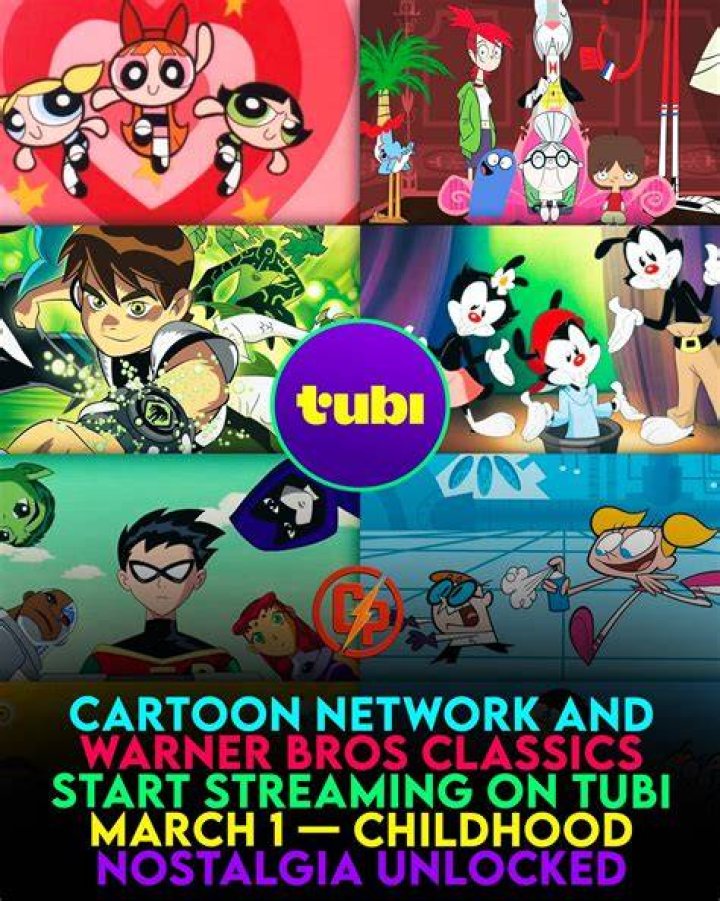
For millions of kids growing up around the turn of the millennium, Friday nights were an exercise in psychological endurance masquerading as children's television. Cartoon Network’s lineup promised comedy, yet one particular series delivered nightmare fuel wrapped in surrealist folk horror. Now, as reported by Collider, John R. Dilworth’s animated classic Courage the Cowardly Dog is migrating to ad-supported video on demand, landing squarely on Tubi as part of a massive 100-title classic animation drop.
The timing could not be more poignant. After years of watching beloved Cartoon Network classics vanish behind shifting paywalls and corporate library cuts, fans have fought an uphill battle tracking down where to watch Courage legitimately. The gothic adventures of an anxious pink beagle protecting an isolated farmhouse in Nowhere, Kansas, are finally accessible without a paid subscription, reopening a pop-cultural vault that permanently altered the landscape of children's horror comedy.
📌 Quick Summary:
- The Streaming Shift: Fox-owned platform Tubi added over 100 classic animation titles for free streaming in February 2026, bringing all 52 episodes of Courage the Cowardly Dog back to mainstream access.
- The Horror Blueprint: Created by animator John R. Dilworth in 1999, the series mixed stop-motion, early CGI, and expressionist art to evoke genuine dread, leaving an indelible imprint on late-90s youth culture.
- Platform Volatility: The shift follows repeated cuts across premium streaming platforms, highlighting how free ad-supported streaming television (FAST) has become the unlikely savior for catalog animation preservation.
The Nowhere, Kansas Gothic That Rewrote Children’s TV
When Courage the Cowardly Dog premiered its full series run on November 12, 1999, Cartoon Network was in the middle of a golden era driven by creator-driven animation. Shows like Dexter’s Laboratory and The Powerpuff Girls relied on hyperactive slapstick and comic book pacing. Dilworth brought something fundamentally different: existential dread.
The premise was deliberately claustrophobic. Courage lived in a weather-beaten two-story home in the middle of Nowhere, Kansas, alongside Muriel and Eustace Bagge. Muriel offered unconditional warmth and rolling-pin defense. Eustace, bitter and bald, subjected the dog to relentless verbal abuse while brandishing a wooden monster mask. Beyond their fenced perimeter stretched miles of cracked earth, empty horizons, and zero human support systems.
That isolation was terrifying because it felt real. When supernatural abominations arrived at the front porch, there was no cavalry coming. Courage had only his wits, his dial-up desktop computer in the attic, and an overwhelming panic response. He did not fight because he was brave; he fought because Muriel’s life was constantly on the line. That dynamic taught young viewers a mature lesson: courage is action taken despite bone-chilling fear, not the absence of it.
The Monsters That Haunted Millennial Childhoods
Ask anyone who watched television in the early 2000s about their formative pop-culture traumas, and the answers invariably trace back to specific episodes produced by Dilworth's Stretch Films studio.
Consider "King Ramses’ Curse," originally broadcast in early 2000 during the show's first season. When Eustace refuses to return an ancient stolen slab, an ancient Egyptian pharaoh manifests on the front lawn. Instead of traditional 2D animation, Dilworth rendered Ramses as a jittery, translucent, low-polygon 3D figure standing silently against the wind. His rhythmic chant, "Return the slab, or suffer my curse", felt entirely alien to the visual medium. It looked wrong. It sounded wrong. The clash of visual styles triggered an uncanny valley shock that sticks in the memory decades later.
Then came "Freaky Fred." Visiting his Aunt Muriel, the smiling barber speaks entirely in anapestic tetrameter, recounting his compulsion to shave everything in sight until it is "naughty." The episode ditched bombastic action for psychological terror. Fred never physically harmed Courage; he simply trapped him in a tiled bathroom, smiling warmly while stripping away his fur against his will. The eerie string quartet score and Fred’s unblinking green eyes tapped into predatory dread in a way no contemporary Saturday morning cartoon dared attempt.
| Episode Title | Visual Technique Used | Core Psychological Threat |
|---|---|---|
| King Ramses' Curse | Early 3D CGI layered over 2D painted backdrops | Inevitability, cosmic curses, and unyielding dread |
| Freaky Fred | Hand-drawn expressionism with distorted camera angles | Obsessive compulsion and loss of bodily autonomy |
| The Mask | Stylized noir character design and chiaroscuro lighting | Domestic abuse, cycles of violence, and misanthropy |
| Perfect | Claymation/CGI hybrid ("You're Not Perfect" creature) | Imposter syndrome, inadequacy, and severe self-doubt |
The Max Cartoon Purge and the Scramble for Archives
The path that brought Courage to a free platform like Tubi highlights the instability of modern digital distribution. In August 2022, corporate restructuring following the Warner Bros. Discovery merger triggered severe cuts across HBO Max (later rebranded as Max). Dozens of animated productions were pulled abruptly from digital shelves to reduce licensing obligations and claim tax write-downs.
While Courage the Cowardly Dog avoided immediate erasure, subsequent licensing maneuvers left the catalog fractured. By late 2024 and through 2025, classic animated series vanished intermittently, leaving viewers confused about where legacy Turner properties actually lived. Fans tracking down complete seasons were forced to navigate digital storefronts selling individual episodes at $1.99 each or scour secondhand markets for aging DVD boxed sets.
Warner Bros. Discovery’s licensing pivot toward third-party free ad-supported streaming television (FAST) services changed the equation. Rather than hoarding older library titles exclusively behind paywalled tiers that struggle to retain subscribers, media companies discovered that monetizing catalog hits via unskippable digital ad inventory provides steady revenue without platform hosting overhead.
FAST Platforms and the 90s Nostalgia Economy
Tubi’s licensing agreement to stream 100 classic cartoons, headlined by Courage, Teen Titans, and other vintage Turner properties, demonstrates how viewing habits have evolved. Free, ad-supported streaming is no longer a graveyard for forgotten B-movies. It has become the primary destination for millennial comfort viewing and catalog discovery.
FAST services operate without the subscription fatigue that led millions of households to prune their monthly entertainment budgets between 2023 and 2026. Audiences wanting a quick trip back to their childhood living rooms rarely want to commit to a $16-per-month ad-free subscription just to stream three episodes of an animated horror comedy before bed.
By putting Dilworth’s masterwork on a zero-barrier platform, the show gains a second life with two distinct demographics: nostalgic 30-somethings revisiting the surrealism with adult eyes, and Gen Z or Gen Alpha viewers discovering its dark, meme-ready absurdism for the first time.
Why John R. Dilworth’s Vision Endures
Strip away the nostalgia, and Courage the Cowardly Dog holds up remarkably well against contemporary productions. Modern children’s animation frequently suffers from visual homogenization, with digital pipelines flattening individual artistic quirks. Stretch Films treated every episode like an independent short subject.
Dilworth blended traditional ink-and-paint cells with live-action photographs, stop-motion armatures, and collage art long before mixed-media animation became fashionable in mainstream hits. The sound design was equally ambitious. Composers Jody Gray and Andy Kowalik layered operatic orchestrations alongside industrial static, polka, and dissonant brass swells that echoed 1950s cinema classics.
Most importantly, the series never talked down to children. It assumed kids could handle sadness, unease, and ambiguity. In the series finale, "Perfect," Courage faces down an imperious schoolteacher who demands total behavioral compliance. The nightmare concludes not with a battle, but with an aquatic creature whispering gentle reassurance: "There's no such thing as perfect. You're beautiful as you are, Courage. With all your imperfections, you can do anything you want to do."
Frequently Asked Questions (FAQ)
Q1: Is Courage the Cowardly Dog completely free to watch on Tubi?
A1: Yes. Tubi operates on an ad-supported model, meaning you do not need a paid subscription, credit card, or active cable plan. You can stream the catalog directly through web browsers, smart TVs, and mobile applications with standard commercial breaks.
Q2: Did the series ever receive a definitive ending?
A2: The original television run concluded with Season 4, Episode 13 ("Remembrance of Courage Past / Perfect") on November 22, 2002. It resolved Courage's backstory regarding the loss of his parents while providing a poetic thesis on self-acceptance. A crossover film, Straight Outta Nowhere: Scooby-Doo! Meets Courage the Cowardly Dog, was subsequently released in 2021.
Q3: Why was the show so much darker than other Cartoon Network originals?
A3: Creator John R. Dilworth drew heavy inspiration from classic horror cinema, German Expressionism, and European surrealist art. Cartoon Network’s leadership in the late 1990s granted animation directors near-total creative autonomy through the "What a Cartoon!" incubator program, allowing Dilworth to push broadcast standards without traditional network interference.
The Future of Classic Cartoon Preservation
The return of Courage the Cowardly Dog to accessible, legal streaming solves a preservation problem that has plagued animation history for the past decade. When premium platforms treat artistic catalogs as collateral in financial balance sheets, entire generations of creative risk-taking run the risk of fading into memory.
Seeing Dilworth's neurotic, devoted little dog barking on Tubi provides a refreshing blueprint for the industry. Great art does not belong locked inside corporate vaults or held behind escalating subscription tiers. It belongs where it can startle, disturb, and comfort audiences all over again, one terrifying trip to Nowhere at a time.
