Why Donkey Memes Still Dominate the Internet 25 Years After Shrek's Premiere
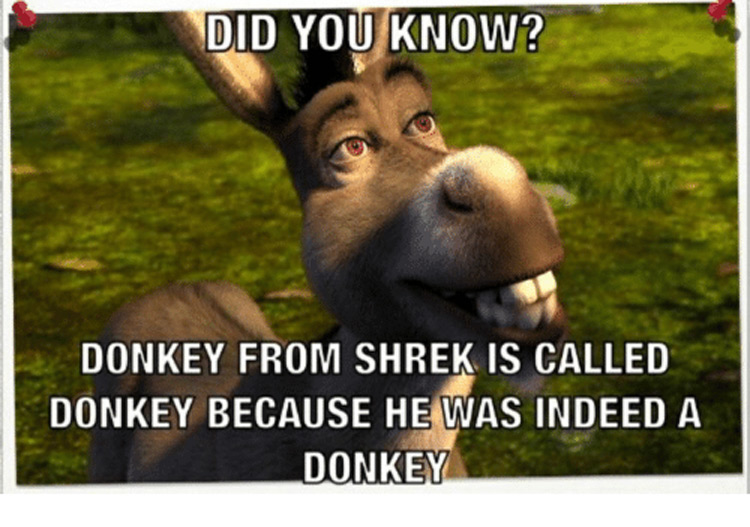
Twenty-five years after DreamWorks Animation introduced a talkative, waffle-loving equine sidekick, Donkey remains an undisputed titan of online culture. As cultural commentators take stock of the franchise's staying power, noted recently in a KFI AM 640 report detailing how the film's milestone anniversary coincides with high-profile box office debates, audiences are revisiting the swamp in droves.
The character's sustained relevance is not an accident of algorithmic nostalgia. Between recent production confirmations surrounding the upcoming Shrek 5 sequel and the explosive reuse of audio clips across short-form video platforms, Donkey represents a masterclass in comedic character design that modern internet humor refuses to retire.
📌 Key Takeaways:
- Enduring Appeal: Eddie Murphy's voice performance established Donkey as an emotional anchor whose cadence seamlessly converts into reaction formats.
- Platform Evolution: The character transitioned from early forum screengrabs to algorithmic short-form audio, maintaining relevance across three distinct internet generations.
- Franchise Momentum: Anticipation for the 2027 sequel featuring Zendaya has sparked renewed activity across digital archives and community fan pages.
Eddie Murphy’s Vocal Imprint on Modern Reaction Culture
When DreamWorks Animation released Shrek in 2001, Eddie Murphy brought an improvisational sharpness that radically departed from traditional animated royalty. Voice performances of that era often leaned on theatrical dignity or exaggerated slapstick. Murphy brought rhythm, sudden shifts in volume, and an undercurrent of street-smart vulnerability. Those vocal choices created soundbites that sit perfectly within current online discourse.
Lines like "I'm making waffles!" and "We can stay up late, swapping manly stories" were quotable on playground blackboards in 2001. By 2026, they serve as the underlying audio for millions of social media posts. The delivery carries an inherent irony that requires zero context to land. When creators match Donkey’s manic cheerfulness against depictions of crushing mundane tasks, the humor clicks instantly. His line deliveries work as emotional shortcuts, communicating hyperactive enthusiasm masking raw exhaustion.
The Architecture of the "Are We There Yet?" Formula
The road-trip sequence in Shrek 2 codified one of cinema’s most effective running gags into what is now a staple format across group chats and message boards. Donkey's relentless pop-sound pacing and badgering questions captured the exact dynamic of modern consumer impatience.
Online communities regularly deploy Donkey reaction loops whenever anticipation reaches a fever pitch. Whether users are waiting for delayed video game launches, fluctuating market prices, or seasonal television premieres, the "Are we there yet?" template provides a shared visual language. The gag does not degrade over time because modern communication rewards relentless repetition. The visual of Shrek's slow-boiling frustration juxtaposed against Donkey’s blank, grinning persistence functions as a universal mirror for digital interactions.
How the Donkey Format Evolved Across Digital Eras
The lifespan of a meme rarely exceeds six months. Donkey has survived twenty-five years by jumping across platforms, mutating from low-resolution stills into audio-visual remix fuel.
| Era & Platform | Dominant Donkey Format | Cultural Function |
|---|---|---|
| 2006, 2012(Forums & Tumblr) | "Donkey Smiling" Reaction Screengrabs | Used as a blunt expression of awkwardness or unearned confidence in thread replies. |
| 2013, 2019(Reddit & Vine/X) | "Shrek finds out where Donkey lives" edits | Deconstructed surrealism; exploring absurd narrative tangents and green-screen overlays. |
| 2020, 2026(TikTok & Short-Form Video) | Audio Soundbites & Dragon Romance Edits | Soundtracking high-stress work scenarios and celebrating unconventional relationship dynamics. |
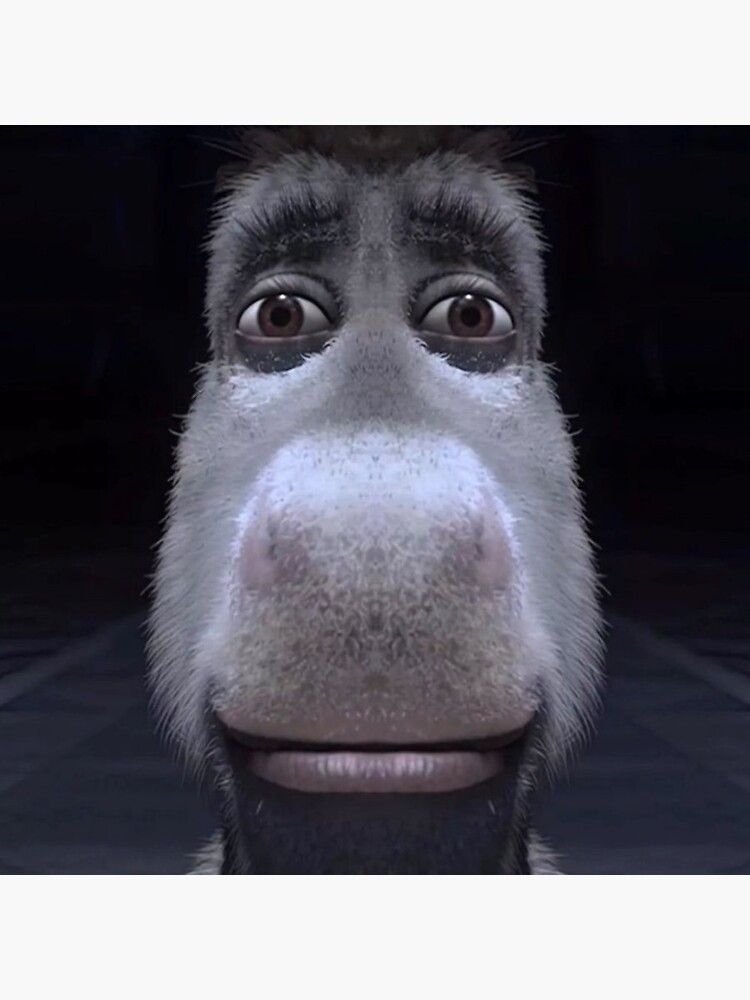
Entries cataloged by digital anthropologists within the Know Your Meme Donkey archive show distinct waves of rediscovery. During the mid-2010s surrealist era, the "Donkey smiling" template became the internet's preferred visual for feigned innocence. More recently, documentation on the "Shrek finds out where Donkey lives" scene highlights how digital creators dissect the movie's background staging to invent new micro-narratives. Donkey is not just an image; he is an adaptable modular asset for creators.
Subverting Fantasy Tropes Through the Dragon Romance
A major pillar of the character's comedic durability rests on his bizarre, wholly sincere relationship with the fire-breathing Dragon. In 2001, pairing a diminutive, anxious donkey with a lethal, massive beast upended classic fairy-tale tropes. Decades later, that coupling fuels a distinct subculture of swamp memes.
The dynamic works online because it treats genuine romance with complete sincerity while looking utterly absurd on paper. The pair’s hybrid children, the flying, fire-breathing "Dronkeys", remain a staple topic of commentary across Reddit and character design forums. When contemporary creators discuss modern relationship tropes or joke about unlikely romantic pairings in pop culture, Donkey and Dragon remain the gold standard. The joke refuses to grow stale because the movie never played it as a temporary punchline; the story committed to the relationship, giving meme creators lasting material to play with.
The Shrek 5 Resurgence and the 25-Year Swamp Renaissance
The announcement of Shrek 5 slated for a 2027 theatrical release has triggered a wave of franchise retrospectives. With Zendaya joining the cast alongside original voice actors, generational interest has converged. Fans who watched the original theatrical release in 2001 are now analyzing the franchise alongside teenagers who discovered the character entirely through algorithmic video feeds.
As South West Londoner noted in their retrospective coverage of the film's 25th anniversary, audiences continually gravitate back to the swamp because the franchise's humor was built on satire rather than polite morality. Donkey represents the heart of that counter-cultural edge. He is irritating, perceptive, fiercely loyal, and completely self-absorbed, all at once. Modern audiences reject characters that feel sanitized by corporate focus groups. Donkey’s unapologetic chaos is tailor-made for an internet culture that defaults to cynical detachment.
Frequently Asked Questions (FAQ)
Q1: Why did the "Donkey smiling" meme become so popular?
A1: The freeze-frame captures Donkey offering an unsettlingly wide, toothy grin to Shrek. The expression perfectly conveys forced positivity, awkward compliance, or unearned confidence, making it ideal visual shorthand for awkward online interactions.
Q2: Is Eddie Murphy confirmed to return for Shrek 5?
A2: Yes, Murphy has publicly confirmed his voice recording sessions for Shrek 5, while also teasing development on a standalone Donkey spin-off film aimed at expanding the character’s backstory.
Q3: How did Donkey audio soundbites become dominant on TikTok?
A3: Short-form video favors fast, emotive vocal deliveries with high comedic contrast. Donkey’s rapid shifts from frantic panic to cheerful optimism provide natural pacing for short-form creators acting out daily frustrations.
The Cultural Staying Power of Donkey
Donkey survives online because he embodies the friction of real friendship. He is the companion who talks too much, shows up uninvited, and refuses to let you stew in self-pity. When modern internet users share Donkey reaction clips, they are doing more than repeating a gag from childhood. They are utilizing a masterfully realized comedic personality that cuts through digital fatigue. As new franchise entries approach, Donkey’s presence across digital culture remains as secure, and as loud, as it was twenty-five years ago.
