Why Escanor’s "Who Decided That?" Broke Anime and Outshined the Main Character
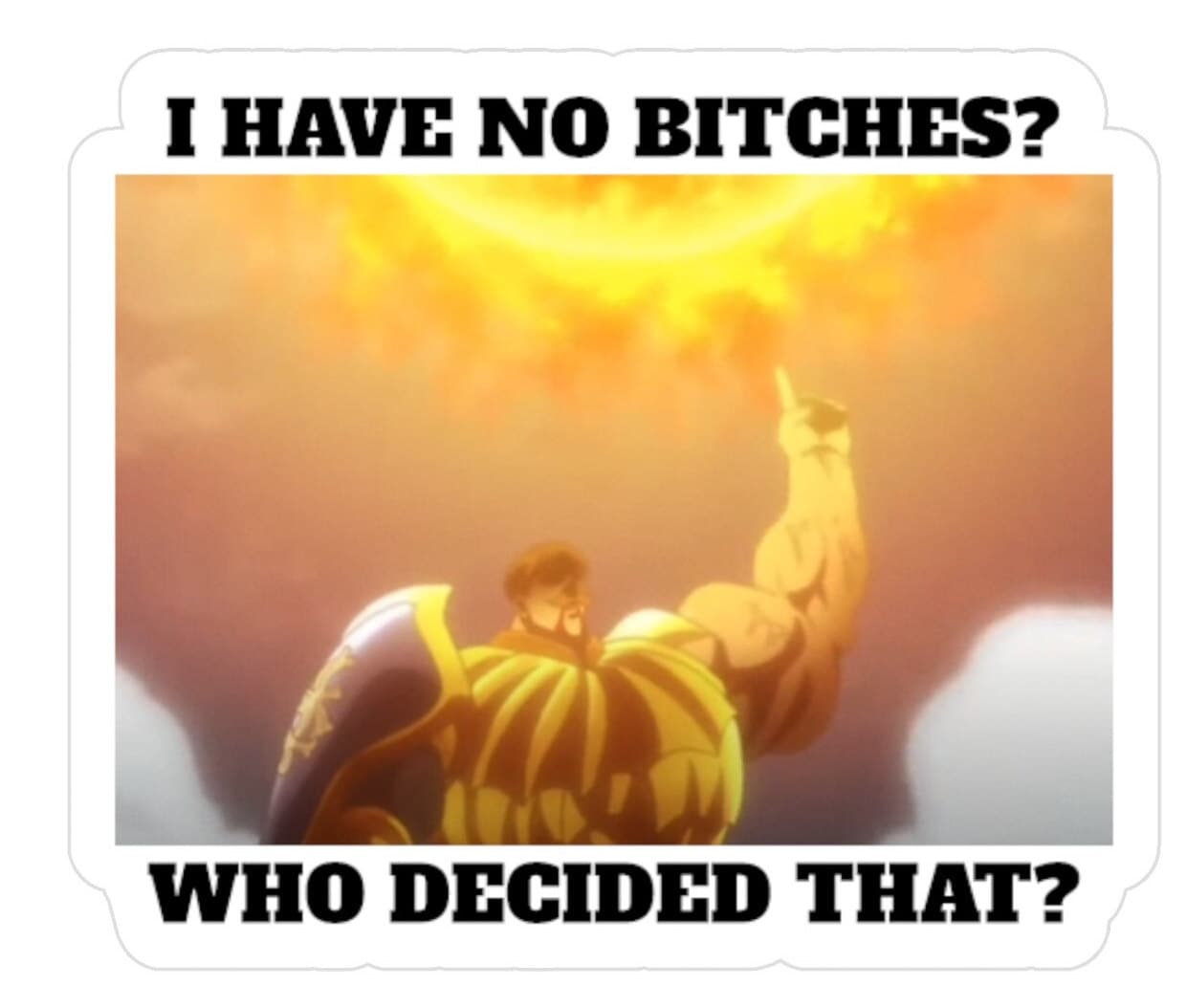
Midday arrived, and the entire power dynamic of Nakaba Suzuki’s fantasy epic inverted. When Estarossa of the Ten Commandments stood smugly over the kingdom of Liones, convinced his demon decree made him untouchable, a towering human clad in gold armor shattered every convention of modern shonen storytelling. That single exchange, culminating in the immortal question, "Who decided that?", did not just dismantle a villain. It turned Escanor, the Lion's Sin of Pride, into an enduring digital sensation that outshined series protagonist Meliodas and permanently altered how fans evaluate anime fight choreography.
Even years later, when production woes plagued the franchise's third season, fan loyalty to the character remained unshakable. When studio outsourcing triggered intense backlash over the climactic assault between the sins, fans went so far as to digitally rebuild sequences from scratch; as detailed in a contemporary ComicBook.com Report, dedicated animators took matters into their own hands to give Escanor's clashes the visual weight his dialogue demanded. Understanding why four simple words reshaped internet culture requires examining the mechanics of Nakaba Suzuki's writing, the vocal delivery of Kyle Hebert and Tomokazu Sugita, and the rare narrative construction of unyielding, justified pride.
📌 Key Takeaways:
- The Turning Point: Escanor’s confrontation with Estarossa subverted conventional shonen power hierarchies by rejecting villain invulnerability through pure, unadulterated arrogance.
- The Grace of Sunshine: Unlike traditional protagonists who unlock power through rage or emotional loss, Escanor operates on an absolute solar schedule that peaks at high noon.
- Production Friction: The gap between the character's narrative greatness and Studio Deen's animation shortcomings sparked an unprecedented wave of community-led restoration projects.
- Cultural Footprint: The phrase remains a top-tier response across social platforms for challenging false dilemmas and projecting absolute self-assurance.
The Anatomy of an Unprecedented Shonen Standoff
The battle began with an aura of total defeat for Britannia's defenders. Estarossa possessed the Commandment of Love, a supernatural curse granted by the Demon King that rendered anyone with hatred in their heart entirely paralyzed. Ban, the Holy Knights, and Liones' strongest warriors could not lift a finger.
Step by heavy step, Escanor approached.
Estarossa smirked, asking why the golden giant could still move. The response laid the foundation for the psychological beatdown: "Why should I bear hatred toward someone who is obviously weaker than myself? All I feel toward you is pity."
The confrontation reached its peak when Estarossa trapped Escanor’s mini-sun attack with his darkness, declaring the human's fate sealed. Rather than panic or reveal an eleventh-hour powerup, Escanor calmly stepped forward and dismantled his opponent's logic sentence by sentence:
"My attack had no effect on you? Who decided that? You swallowed my miniature sun? Who decided that? The only one who gets to decide such things... is me."
A flick of his wrist manifested a miniature star dubbed Cruel Sun, sending Estarossa flying across the horizon alongside Zeldris. The scene inverted standard battle tropes. Shonen usually demands that heroes struggle against arrogant villains before unlocking hidden strength through friendship or grit. Here, the hero was the arrogant force of nature, treating an ancient demon general like an unruly child.
The Mechanics of Sunshine and the Logic of Absolute Pride
Escanor’s authority works because his arrogance is entirely consistent with his curse. Born a prince of the Kingdom of Castellio, he was cursed, or blessed, with the Archangel Mael's former power, the Sunshine grace.
By night, Escanor is a frail, stuttering barkeep with a physical power level barely reaching 15. He apologizes for existing, writes romantic poetry for Merlin, and cowers before basic monsters. At dawn, his muscles swell, his spine straightens, and his personality shifts into cold imperial detachment.
His weapon, the Divine Axe Rhitta, weighs so much that even demon-slaying giants cannot lift it off the ground. Escanor swings it with one hand, describing it not as a superweapon, but as a vessel designed to absorb the immense thermal energy his body continuously leaks.
Most shonen writers punish pride. Hubris usually leads to a hero's downfall, teaching them humility. Nakaba Suzuki took the opposite approach: Escanor's pride is his moral shield. Because he views himself as the apex of existence, he harbors no petty jealousy, no hatred, and no malice. He saves his friends not because he needs their validation, but because protecting the weak is the natural duty of someone standing at the summit.
Comparing Escanor’s Iconic Clashes Across Nanatsu no Taizai
Escanor's trajectory across the Commandments battle arc remains one of the most explosive runs in modern manga. The contrast between his daytime invincibility and his nighttime vulnerability gave every clash distinct tactical stakes.
| Encounter | Opponent & Threat Level | Combat Form / Tactic | Defining Quote & Narrative Impact |
|---|---|---|---|
| Ravens Outskirts (2016) | Galand of Truth & Melascula | Morning Transition (Power Level: 55,000+) | "I will permit you to flee." Galand turned to stone out of sheer terror at Escanor's aura. |
| Defense of Liones (2018) | Commandment of Love Estarossa | Near-Noon Cruel Sun Projection | "Who decided that?" Established Escanor as the definitive powerhouse of the Seven Deadly Sins. |
| Corand Airspace (2019) | Meliodas (Assault Mode) | The One (High Noon Invincibility) | "Holy Sword Escanor." Bare-handed chop that knocked out the series lead, cementing fan adoration. |
| Final Holy War (2020) | The Demon King | The One Ultimate (Life-Force Burning) | Burned his own soul to ash to stand beside his friends as an equal mortal. |

The One Transformation and the Studio Deen Animation Fallout
At precisely 12:00 PM, Escanor enters a state known as The One. For sixty seconds, he stops being a physical fighter and becomes an unstoppable personification of power. During this window, his power level cannot be measured by magic detection tools.
When a corrupted Meliodas reverted to his demonic Assault Mode, threatening to execute his allies, only Escanor could physically hold the line. The climax of that duel, Escanor standing unharmed through Meliodas' lethal strikes, casually dropping his arm in a vertical downward chop called Holy Sword Escanor, should have been the animation high point of the entire production.
Instead, the Studio Deen animation controversy exploded in late 2019 and early 2020.
After A-1 Pictures exited the franchise following the feature film Prisoners of the Sky, production for Wrath of the Gods fell to Studio Deen, who subsequently subcontracted heavy portions of the workload to Marvy Jack. The result was rushed, flat, poorly composited action with static frames, off-model drawings, and bizarre censorship choices like white blood.
The online reaction was swift and fierce. Forums on Reddit, Twitter, and YouTube flooded with frame-by-frame breakdowns analyzing the botched impact frames. Yet, instead of abandoning the character, fans rallied around Escanor's legacy. Freelance animators spent months digitally re-rendering the duel with dynamic camera movements, hand-drawn lighting passes, and synchronized sound design. Escanor's dialogue carried enough weight that the community refused to let subpar production define his most important victory.
Why the Lion's Sin Permanently Eclipsed the Shonen Protagonist
Why does Escanor command more raw enthusiasm than Meliodas, despite the latter possessing thousands of years of backstory and literal demonic lineage?
The answer lies in clarity of purpose.
Meliodas is trapped in a tragic, emotionally convoluted cycle of reincarnation and betrayal. His motivations require decades of lore explanations, secret curses, and shifting moral alignments.
Escanor operates on pure, transparent charisma:
- He knows he is a fragile human who was dealt a divine hand.
- He loves an unattainable woman without demanding that she reciprocate his feelings.
- When danger arrives, he does not hesitate, deliberate, or brood. He simply eliminates the problem and moves on.
His presence solved a common issue in lengthy battle series: the bloated villain monologue. Modern antagonists love giving lectures on why the world is cruel and why the protagonists cannot possibly win. Escanor cuts through that narrative noise. By asking "Who decided that?", he rejects the villain's authority entirely. He does not debate their philosophical framework; he denies their right to establish terms in the first place.
Frequently Asked Questions (FAQ)
Q1: What episode does Escanor say "Who decided that?" in the anime?
The line occurs in Season 2, Episode 19 of The Seven Deadly Sins: Revival of the Commandments (titled "The Meliodas I Knew", or Episode 43 overall). In the original manga, the moment occurs in Chapter 186.
Q2: Who are the voice actors behind Escanor's iconic performance?
In Japanese, Escanor is voiced by Tomokazu Sugita, famous for his deep, aristocratic timber and deadpan comedy timing (also known as Gintoki in Gintama). In the English dub, Kyle Hebert delivers the role, perfectly balancing the weak-willed daytime stammer with booming, theatrical daytime arrogance.
Q3: Did Escanor actually defeat Estarossa in that fight?
Yes. Escanor used his Cruel Sun to launch Estarossa across the continent, directly into the sea, alongside Zeldris who attempted to intercept the blast. Estarossa survived only due to demonic regenerative abilities, but he was completely incapacitated and removed from the battle of Liones.
Q4: Why did Escanor's power kill him in the end?
Sunshine was never designed for a mortal human vessel; it was an Archangel grace created by the Supreme Deity. Decades of channeling that solar energy gradually eroded Escanor's internal organs. In the final confrontation against the Demon King, he willingly burned his own life force to activate The One Ultimate, ensuring his friends survived at the cost of his life.
The Cultural Endurance of Pure Confidence
Escanor remains an anomaly in modern entertainment. Writers often mistake vulnerability for depth, assuming a character must constantly doubt themselves to be relatable. Nakaba Suzuki proved that absolute, unapologetic competence, when balanced by quiet daytime humility, resonates just as deeply.
Whenever a character is told what they cannot do, or whenever an online debate tries to frame an outcome as inevitable, Escanor’s question echoes back across social channels. It is not just a memorable battle line; it is an aggressive, empowering rejection of imposed limits. Four words stripped the Ten Commandments of their terror, rescued a dying fantasy franchise from narrative complacency, and cemented the Lion's Sin of Pride at the peak of shonen history.
