Why Everyone Is Saying 'On the Grind': The Hidden Dark Side of Modern Hustle Culture
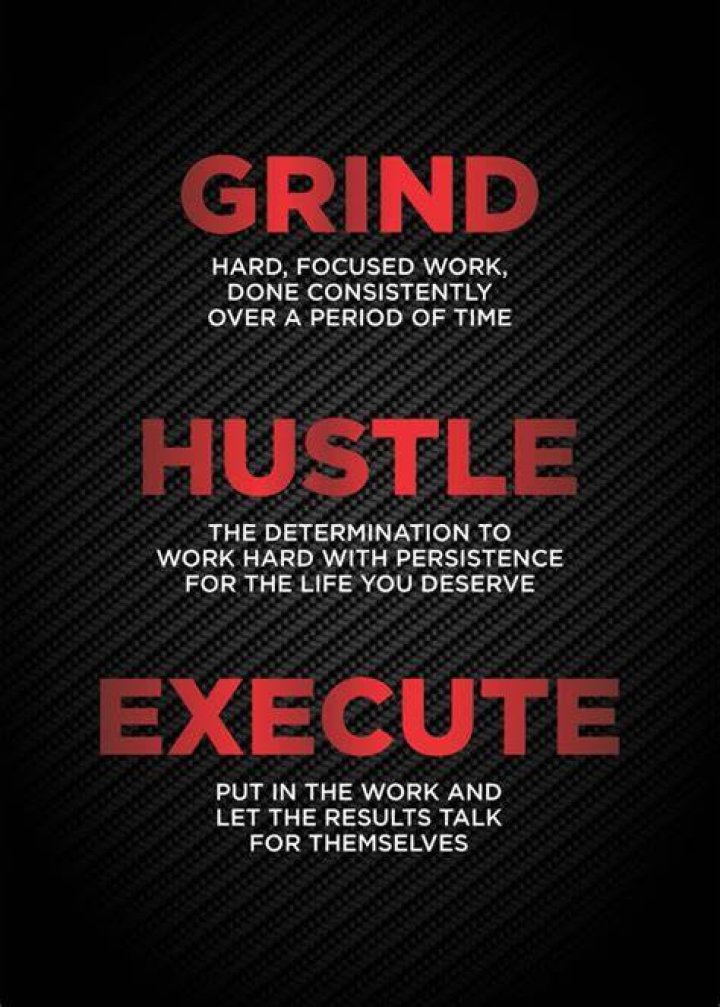
Walk through an open-plan office, browse LinkedIn at midnight, or scroll past early-morning gym creators, and one phrase surfaces everywhere: "on the grind." What began as street vernacular for grueling economic survival has mutated into a ubiquitous corporate badge of honor. As detailed in a recent Revolt TV Report tracking the linguistic heritage of hip-hop terminology, terms describing the pursuit of money carry immense cultural weight because they reflect raw economic endurance. Yet as corporate managers, tech founders, and social media algorithms co-opted the phrase, the daily grind transformed from an authentic hustle into a regime of toxic productivity.
Today, that relentless obsession with perpetual output is meeting its reckoning. Workers navigating soaring rates of exhaustion and stagnant wage growth are questioning why total depletion became an aspirational lifestyle.
📌 Key Takeaways:
- Linguistic Origin: The phrase "on the grind" originated in urban working-class and hip-hop communities during the late 20th century, describing relentless, day-and-night effort to secure basic income under severe economic pressure.
- Corporate Repurposing: Venture capitalists, gym influencers, and startup culture stripped the idiom of its survivalist roots, turning it into the "grindset mentality", a moral mandate prioritizing 80-hour workweeks over physical well-being.
- The 2026 Cultural Shift: Chronic workplace burnout and grass-roots worker pushback have catalyzed a strong counter-movement, repositioning intentional rest and boundary-setting as necessary acts of defense against economic extraction.
From Industrial Machinery to Street Vernacular
The noun "grind" dates back to Old English, invoking the abrasive, pulverizing friction of millstones crushing grain into flour. For centuries, the "daily grind" served as a literal description of monotonous, physically draining factory or agricultural labor. By the late 1980s and early 1990s, Black urban communities and hip-hop lyricists breathed entirely new life into the concept.
On inner-city corners from New York to Oakland, being "on the grind" meant working relentlessly to build financial security where conventional ladders were shut off. It described hawking independent mixtapes from car trunks, working double shifts in service jobs, or navigating underground economies to pay rent. Urban Dictionary entries dating back to 2003 catalog the definition plainly: working hard, hustling every waking hour, and chasing cash through discipline and determination.
In this original context, the grind was never an aesthetic performance. It was pragmatic, unglamorous survival. Rappers rhymed about the grind to honor resilience in neighborhoods starved of institutional investment. Respect went to the person who woke up before dawn and stayed out past dark, because that labor kept families housed and fed.
How Tech Founders and Influencers Hijacked the Hustle
Between 2010 and 2020, the phrase underwent an aggressive cultural repackaging. Silicon Valley accelerators, dropshipping evangelists, and motivational creators stripped "the grind" of its structural grit, rebranding it as individual virtue. The phrase slid into tech pitches, executive keynote speeches, and branded athletic apparel.
Suddenly, elite software engineers making six figures were describing their desk shifts as "the daily grind." Elite universities saw students bragging about four-hour sleep schedules on Instagram under hashtags like #RiseAndGrind and #GrindNeverStops. Wall Street recruits and venture-backed founders claimed the language of street survival to justify venture capital returns.
The gig economy supercharged this shift. Platforms offering rideshare, food delivery, and micro-freelancing relied on algorithmic gamification to encourage constant availability. Workers took on a primary job alongside a secondary side hustle, framing exhaustion as entrepreneurial triumph. The message was unmistakable: if you were struggling, you simply were not grinding hard enough.
The Cultural Evolution of the Hustle Ethos
Tracking the trajectory of "the grind" illustrates how economic survival transformed into performative exhaustion across three distinct decades.
| Era | Primary Context | Defining Motivation | Public Sentiment |
|---|---|---|---|
| 1990, 2008 | Hip-hop culture, street entrepreneurship, working-class communities | Economic survival and self-determination amid institutional exclusion | Respected as raw resilience and authentic perseverance |
| 2009, 2021 | Silicon Valley startups, gym culture, social media influencer feeds | Status-seeking, rapid scaling, performative hyper-productivity | Celebrated widely as the ultimate marker of moral discipline |
| 2022, 2026 | Post-pandemic workplace, mental health advocacy, labor organizing | Sustainable pace, boundary setting, fair compensation for fixed hours | Criticized as exploitative, unsustainable, and psychologically damaging |
When the 'Grindset Mentality' Breeds Chronic Burnout
The corporate co-optation of the term created what researchers classify as toxic productivity. Under the "grindset mentality," rest stopped being a biological necessity. It became framed as personal weakness. Algorithmic feeds flooded young workers with videos urging 4:00 AM wake-ups, aggressive cold plunges, and 16-hour workdays dedicated to building speculative online businesses.
The human toll followed quickly. According to workplace tracking surveys by Gallup, chronic employee stress hovered near record peaks of 41% to 44% through the mid-2020s. Over 39% of working adults in the United States reported maintaining at least one side hustle, not out of passion, but because median real wages struggled against housing and food costs.
Psychologists point out that the grindset traps professionals in an unsustainable loop. When someone ties their self-worth exclusively to productivity metrics, downtime triggers intense anxiety and guilt. Prolonged cortisol spikes, sleep deprivation, and social isolation follow, culminating in clinical depression and cardiovascular strain. The millstone metaphor came full circle: instead of grinding grain, the modern system began pulverizing the workers themselves.
Reclaiming Rest as an Act of Defiance
The mounting exhaustion provoked a cultural correction. Workers began rejecting unpaid overtime, uncoupling their identities from job titles, and demanding humane boundaries. Viral trends like "quiet quitting" and "soft life" were early tremors of a deeper shift: a refusal to burn out for companies that treat labor as disposable.
This pushback draws directly from activist history. As community researchers and historical archives note, visionary writer Audre Lorde identified self-preservation not as self-indulgence, but as an act of political warfare. When economic structures demand continuous output, intentional rest functions as an assertive boundary.
The conversation in 2026 is not an endorsement of apathy. People still value hard work, athletic dedication, and craftsmanship. The distinction lies in agency and sustainability. Pushing hard toward a personal goal you control is vastly different from letting an employer exploit your fear of precarity under the guise of "good work ethic."
Frequently Asked Questions (FAQ)
Q1: What does "on the grind" mean in plain English?
A1: "On the grind" means working persistently and intensely to earn money, build a career, or achieve a demanding personal goal. Originating in urban slang, it describes disciplined, continuous effort over an extended period.
Q2: How is a healthy work ethic different from toxic grind culture?
A2: A healthy work ethic focuses on producing high-quality output while preserving time for rest, community, and physical health. Toxic grind culture treats rest as failure, demands constant availability, and measures human dignity solely through economic output.
Q3: Why did hip-hop slang get adopted by corporate America?
A3: Corporate culture routinely borrows street vernacular to project authenticity, grit, and urgency. By adopting phrases like "on the grind" and "hustle," corporate environments framed long hours and uncompensated labor as exciting personal conquests rather than systemic overwork.
Redefining Ambition Beyond the Machine
The phrase "on the grind" has completed a full linguistic journey: from the survival instincts of neglected city streets, through the glossy boardrooms of startup accelerators, to its current position as a subject of widespread skepticism. Its history reminds us that language absorbs the economic tensions of the people who speak it.
Ambition does not require self-destruction. True resilience means mastering your craft, supporting your household, and having the courage to close the laptop when the workday ends. As the cultural obsession with performative exhaustion wanes, sustainable labor is reclaiming its place as the only form of effort worth celebrating.
