Why Is Kumba Really Closing? Fact-Checking Busch Gardens' Major Coaster Shake-Up
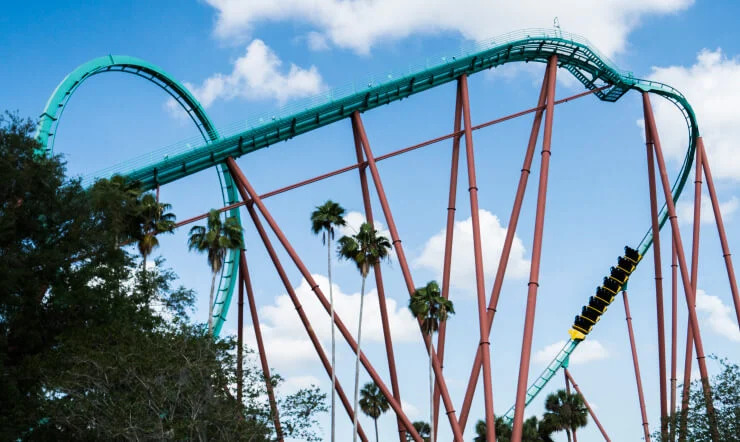
For thirty-three years, the signature hollow roar of steel wheels against tubular rails echoed across the Congo section of Busch Gardens Tampa Bay, serving as an acoustic beacon for coaster enthusiasts worldwide. That era is coming to an abrupt end. The park confirmed that Kumba, the groundbreaking Bolliger & Mabillard sit-down coaster that revolutionized high-thrill ride design in 1993, will give its final ride on August 2. The announcement, first detailed in a breaking MSN Report, ignited intense speculation across the global amusement industry, leaving fans and analysts questioning why a certified engineering landmark is being retired rather than overhauled.
Theme parks rarely shutter iconic, high-capacity machinery without severe financial and operational imperatives. While casual visitors see a timeless classic, park accountants and structural engineers see a 33-year-old steel structure facing punishing thermodynamic cycles under the relentless Florida sun. The decision signals a strategic shift for Busch Gardens Tampa Bay as it balances historic preservation against soaring capital expenditures and competition in Central Florida's ruthless theme park market.
📌 Key Takeaways:
- The Hard Deadline: Kumba officially ceases operations on August 2 after 33 continuous years of service.
- The Structural Reality: Compounding maintenance expenditures, steel fatigue, and proprietary component obsolescence made a full mechanical rebuild economically non-viable.
- The Future Footprint: Park officials have confirmed a new replacement attraction is destined for the Congo plot, clearing valuable acreage for next-generation hardware.
The Roar That Defined Modern Florida Coasters Since 1993
When Kumba opened in April 1993, it transformed Busch Gardens Tampa Bay from a respected zoological park with a few thrill rides into an elite coaster destination. Designed by the then-fledgling Swiss engineering firm Bolliger & Mabillard (B&M), Kumba was an absolute tour de force: a 143-foot lift hill, a 135-foot drop, speeds touching 60 mph, and seven intense inversions, including a first-of-its-kind diving loop and interlocking corkscrews. Its un-sand-filled steel supports generated an unmistakable, thunderous roar that became synonymous with the park’s identity.
Kumba also set the gold standard for ride smoothness and pacing, laying the groundwork for subsequent B&M masterpieces in the park. Without Kumba's commercial triumph, Busch Gardens likely never greenlights Montu in 1996, the inverted coaster classic, or SheiKra in 2005, America's first floorless dive coaster. For over three decades, Kumba anchored the park's thrill lineage alongside multi-launch attractions like Cheetah Hunt, the family-focused spinning coaster Cobra's Curse, and the record-shattering hybrid Iron Gwazi. Yet, operating an aggressive, high-g-force steel coaster year-round in Central Florida comes with an inevitable expiration date.
The Economics of Steel Fatigue: Why Retracking Wasn't an Option
The primary driver behind Kumba's retirement is pure material science. Operating 365 days a year for 33 years subjects steel track, wheel assemblies, and foundation footers to tens of millions of high-stress cycles. Florida's intense humidity, frequent thunderstorms, and extreme daytime heat accelerate wear through thermal expansion and microscopic fatigue along weld lines. For the past decade, maintenance crews performed heroic nightly inspections to keep the train assemblies running smoothly, but the structural intervention needed to extend Kumba's lifespan another decade required far more than routine track grinding.
Universal Studios Florida faced a similar crisis with The Incredible Hulk Coaster in 2015, opting to demolish and rebuild the entire layout from scratch with freshly fabricated track and trains. That undertaking cost an estimated $30 million to $40 million. For Busch Gardens parent company United Parks & Resorts, spending tens of millions simply to preserve a 1993 layout made little commercial sense. Retracking would yield zero new marketing hooks, fail to generate significant attendance spikes from out-of-state tourists, and tie up capital needed to develop marketable new thrill hardware.
Three Decades of Busch Gardens Tampa Bay Coaster Evolution
Kumba's departure marks the close of the park's foundational steel era. The operational parameters and capital lifecycle of Busch Gardens Tampa Bay's major coasters highlight how engineering priorities have shifted over the past 30 years.
| Attraction | Debuted | Manufacturer / Type | Operational Status |
|---|---|---|---|
| Kumba | 1993 | Bolliger & Mabillard (Sit-Down) | Closing August 2, 2026 |
| Montu | 1996 | Bolliger & Mabillard (Inverted) | Active (Received structural refurbishments) |
| SheiKra | 2005 | Bolliger & Mabillard (Dive) | Active |
| Cheetah Hunt | 2011 | Intamin (Multi-Launch) | Active |
| Cobra's Curse | 2016 | Mack Rides (Spinning) | Active |
| Iron Gwazi | 2022 | RMC (I-Box Hybrid) | Active flagship thrill ride |
Dissecting the Replacement Attraction and Congo Land Rumors
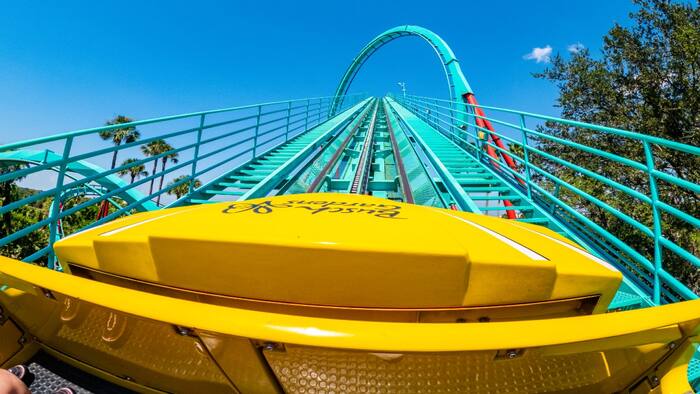
Closing Kumba unlocks one of the most geographically valuable plots in the entire park. The coaster occupies a sweeping parcel buffered by dense vegetation, maintenance access roads, and existing pathways in the back of the Congo sector. Park statements have already teased that a brand-new experience is in development to take Kumba's mantle. Early site planning documents and industry insiders point toward several viable directions for the footprint.
One prevailing theory involves a modern, low-noise multi-launch or terrain coaster. Unlike Kumba's raw, unshielded scream, contemporary coasters utilize magnetic LSM launches, nylon-compound wheels, and sound dampening to minimize noise bleed into adjacent animal habitats. Another option circulating through regional development circles is a next-generation family-thrill hybrid capable of bridging the demographic gap between Cobra's Curse and Iron Gwazi. Clearing Kumba's sprawling footers will provide engineers with flat, unencumbered topography to design an attraction featuring modern loading systems, high hourly throughput, and lower long-term operating overhead.
What Kumba’s Retirement Signals for Aging 1990s B&M Classics
Kumba's impending departure is a bellwether moment for the entire global coaster landscape. Throughout the 1990s, Bolliger & Mabillard built dozens of custom sit-down, inverted, and stand-up roller coasters across North America, Europe, and Asia. These installations earned reputations as virtually indestructible workhorses. But even the sturdiest Swiss engineering has a finite design life when running constant daily cycles for more than three decades.
Parks are now approaching a critical juncture with their legacy steel assets. Cedar Point, Six Flags Great Adventure, and Carowinds all operate heavy-duty 1990s B&M designs approaching their 30-to-35-year operational thresholds. Busch Gardens' decision demonstrates that even legendary cultural status will not save a ride once maintenance curve lines cross profitability metrics. The industry is entering a generational turnover where early CAD-designed classics must either justify whole-cloth mechanical rebuilds or yield their valuable ground to higher-efficiency, lower-stress modern concepts.
Frequently Asked Questions (FAQ)
Q1: What is the exact final day to ride Kumba at Busch Gardens Tampa Bay?
A1: Kumba will make its final official runs on August 2. After park closing on that date, the ride queue will permanently close, and decommissioning procedures will commence shortly thereafter.
Q2: Why couldn't Busch Gardens just retrack Kumba like Universal did with The Incredible Hulk?
A2: A ground-up retrack requires tens of millions of dollars in fabrication, new train chassis, and electrical overhauls. Universal justified that cost because The Incredible Hulk is a cornerstone intellectual property inside a destination resort. Busch Gardens determined that spending similar capital on a 33-year-old ride layout would yield poor returns compared to installing a completely new, marketable coaster.
Q3: Is Montu also in danger of being retired soon?
A3: Montu remains safe for now. While Montu opened just three years after Kumba in 1996, the inverted coaster has received targeted track rehabilitation, runs with consistently higher ridership metrics, and serves as the visual centerpiece of the Egypt plaza, giving it a longer operational runway.
Q4: What will replace Kumba in the Congo area?
A4: Busch Gardens confirmed that a new attraction is in the pipeline for the site, though specific details regarding the manufacturer, track layout, and thematic storyline have not yet been formally revealed.
The Next Era for the Tampa Coaster Capital
Saying goodbye to Kumba evokes real nostalgia for generations of coaster fans who cut their teeth on its diving loop and interlocking corkscrews. For 33 years, it served as the baseline against which all modern sit-down thrill rides were measured. But theme parks cannot remain museum curators indefinitely. By retiring Kumba on August 2, Busch Gardens Tampa Bay is accepting the reality of heavy industrial wear to clear the runway for its next era of high-speed engineering.
