Why 'Makes Me Want a Hot Dog Real Bad' Is Suddenly Dominating Your Entire Feed
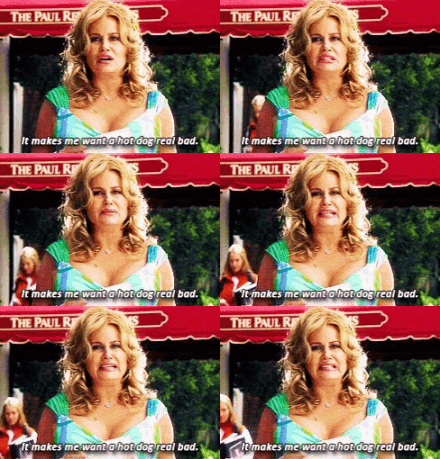
Every summer holiday, a breathless, brassy Massachusetts drawl surges through digital feeds with the force of an algorithmic tsunami. The scene never changes: Jennifer Coolidge, dressed in manicured kitsch as Paulette Bonafonté, squints admiringly at Reese Witherspoon’s Elle Woods, who stands clad in a star-spangled ensemble. "You look like the Fourth of July," Coolidge purrs in the 2003 sequel Legally Blonde 2: Red, White & Blonde. "Makes me want a hot dog real bad."
More than two decades after its theatrical debut, that brief exchange has taken on a surreal second life. In 2026, the audio clip routinely clocks tens of millions of views across short-form video platforms, serving as the universal soundtrack for ballpark vlogs, cookout blunders, runway parodies, and viral food tours. The line remains iconic not merely for its eccentric cadence, but because Coolidge herself famously guarded it against corporate exploitation. As detailed in a People.com Report, Coolidge actively turned down lucrative hot dog endorsement offers following the film's release, inadvertently preserving the quote as pure, unbought pop culture currency.
📌 Key Takeaways:
- The Cinematic Origin: Delivered by character Paulette Bonafonté in 2003’s Legally Blonde 2: Red, White & Blonde, the improvised delivery turned a throwaway script line into cinematic comedy gold.
- The Rejected Paycheck: Coolidge refused corporate offers to star in commercial campaigns for meat brands, citing personal skepticism about the ingredients in processed hot dogs.
- The 2026 Renaissance: The soundbite now drives organic food trends, high-fashion satire, and Independence Day marketing across TikTok, YouTube Shorts, and Instagram.
The Accidental Genius of Paulette Bonafonté’s Delivery
Scriptwriters rarely predict which single line will outlive an entire production. When screenwriters plotted Elle Woods’ journey to Washington, D.C. to pass a federal animal testing ban, the narrative stakes were lighthearted. Elle’s Boston confidante, the manicurist Paulette, existed to anchor the heroine’s pink-hued universe back home. When Elle emerged in her patriotic red-and-white stripes, Coolidge had only a couple of seconds to make an impression.
She did not simply read the line. She inhaled it. Her idiosyncratic breathiness, punctuated by a prolonged pause between "hot dog" and "real bad," lent the joke a bizarre, hypnotic innocence. The humor stemmed from visceral incongruity. Elle Woods looked like a couture version of Uncle Sam, yet Paulette’s mind leapt straight to processed street meat. Audiences in 2003 laughed at the absurdity. Today, digital creators treat that exact vocal cadence as a masterclass in comedic timing, analyzing every inflection and tongue placement.
The line was never meant to be the movie’s defining phrase. The original film had the "Bend and Snap." The sequel had Elle’s passionate speeches before Congress. Yet cultural memory frequently rejects manufactured climaxes in favor of strange, off-kilter human reactions. Coolidge created an indelible comedic signature that outlasted the movie’s box office run.
Why Jennifer Coolidge Rejected Corporate Hot Dog Money
When an actor creates a catchphrase that enters the popular lexicon, brand representatives typically descend with checkbooks in hand. Meatpackers and fast-food giants recognized the immediate retail utility of Coolidge's line. The marketing strategy wrote itself: place Coolidge in front of a grill, dress her in patriotic gear, and let her utter the catchphrase to drive supermarket sales ahead of Memorial Day and the Fourth of July.
Coolidge refused every pitch. During press appearances reflecting on her legacy, she confirmed that multiple brands approached her representatives with lucrative commercial offers. She flatly declined. Her logic was straightforward: she was cautious about processed meats and did not want to deceive audiences into eating foods she personally avoided.
Her decision ran counter to standard Hollywood instincts. Mid-budget comedic actors in the 2000s regularly cashed in on secondary ad deals to bolster their earnings. By walking away from brand sponsorships, Coolidge insulated the quote from commercial fatigue. If an ad agency had saturated morning television with corporate variations of the line in 2004, the joke would have worn out its welcome. Because it remained preserved solely within the context of the movie, the line maintained an unpolished purity that digital platforms would rediscover decades later.
The Evolution from Movie Screen to Short-Form Video
The transition of a 2003 cinematic line into a multi-million-view digital audio trend highlights how humor travels across media eras. When TikTok and rival platforms introduced audio-sync mechanics, Coolidge's voice became prime material for creators wanting to express impulsive cravings, absurd aesthetic comparisons, or sudden realizations.
| Era | Primary Medium | Cultural Role |
|---|---|---|
| 2003, 2005 | Theatrical release & DVD rentals | A quotable comedic punchline inside a Hollywood comedy sequel. |
| 2015, 2020 | Twitter gifs & Tumblr image sets | A seasonal Fourth of July meme resurrected every July 4th weekend. |
| 2021, 2023 | TikTok audio lip-syncs | A viral audio template used by over 500,000 creators for outfit transformations. |
| 2024, 2026 | Culinary vlogs, meme formats & AI parodies | An omnichannel shorthand for unbridled culinary cravings and Y2K aesthetic irony. |
The data demonstrates an accelerating lifecycle. Between 2003 and 2015, the quote's reach was largely static, locked in rerun rotations on cable television. Once short-form video platforms turned audio files into remixable building blocks, users untethered the audio from the original scene. Creators began using it to show gourmet hot dogs sizzling on cast-iron skillets, dogs wearing hot-dog buns for Halloween, or models stepping out in haute-couture red-and-white gowns at fashion weeks.
The Culinary Ripple Effect in 2026
The sustained popularity of the meme has quietly influenced specialty food dining. Independent frankfurter shops, artisanal sausage makers, and street vendors across cities from Chicago to Austin have incorporated the line into their menu boards and promotional branding. In 2026, finding a "Paulette Special" featuring classic mustard and pickled relish is common at hip street-food stalls.
Major corporate brands like Nathan's Famous have engaged with the trend indirectly, hosting community-led social media challenges where participants recreate Paulette's outfit while holding classic ballpark franks. The beauty of the meme lies in its open-source nature. Because no single conglomerate owns the commercial rights to Coolidge's spoken delivery outside of the film's copyright, small businesses use the audio on social channels without needing million-dollar licensing agreements.
This dynamic has produced unexpected cross-promotions. Vintage boutiques pair patriotic 2000s halter tops alongside frankfurter-themed merchandise, tapping into Gen Z’s fascination with early-millennium cinema. The quote bridges food culture and retro style seamlessly.
The Jennifer Coolidge Renaissance and Camp Nostalgia
The sustained virality of the hot dog clip coincides with a broader public reappraisal of Coolidge’s career. Her career resurgence, fueled by her Emmy-winning turns in modern prestige television, prompted younger audiences to revisit her early-2000s filmography. Viewers did not just watch Legally Blonde 2; they cataloged her mannerisms with scholarly affection.
Coolidge represents an unapologetic brand of camp that feels scarce in current cinema. Her characters are rarely cynical. Paulette Bonafonté was generous, emotionally exposed, and hilariously literal. When she looked at Elle Woods and thought of a hot dog, she was expressing genuine admiration through the only sensory comparison that made sense to her. That authenticity cuts cleanly through modern irony.
Younger creators relate to the line's emotional directness. In an era dominated by polished aesthetics and algorithmic curation, Coolidge’s delivery feels delightfully unhinged. The meme acts as an antidote to self-seriousness.
Frequently Asked Questions (FAQ)
Q1: What movie is the quote "makes me want a hot dog real bad" from?
The quote originates from the 2003 comedy film Legally Blonde 2: Red, White & Blonde. It is spoken by character Paulette Bonafonté, played by Jennifer Coolidge, to Elle Woods, played by Reese Witherspoon.
Q2: Why did Jennifer Coolidge decline an actual hot dog commercial?
Coolidge turned down promotional offers after the movie's debut because she was personally concerned about the health effects and ingredients of heavily processed hot dogs, refusing to endorse products she preferred not to consume.
Q3: How did the quote become a viral trend on TikTok?
The movie soundbite was extracted and turned into an original TikTok audio clip. Users initially paired it with Fourth of July transformations and outfit reveals, but it gradually expanded into food reviews, comedy sketches, and general expressions of intense food cravings.
Q4: Is the hot dog line scripted or improvised?
The core concept was written in the production screenplay, but Coolidge's signature vocal delivery, the pauses, and the breathy emphasis were developed on set through her comedic instincts and collaboration with director Charles Herman-Wurmfeld.
The Lasting Appetite for Unfiltered Comedy
Internet trends fade quickly. An audio clip usually exhausts its lifespan within three weeks, discarded as the next audio hook climbs the recommendation rankings. The enduring life of "makes me want a hot dog real bad" shows that genuine comedic craft defies typical digital decay.
By declining to license the line for an easy commercial paycheck two decades ago, Jennifer Coolidge protected the joke from becoming disposable marketing ephemera. She preserved it as art, absurd, campy, and irresistibly funny. As digital creators continue to remix her delivery for new audiences, Paulette Bonafonté’s sudden, heartfelt craving remains as delightfully infectious as the day it was filmed.
