Why Native Speakers Rarely Say 'De Nada': The Real Ways to Say 'No Worries' in Spanish

Walk into a bakery in Madrid, a café in Buenos Aires, or a convenience store in Mexico City, and you will quickly notice a curious gap between classroom grammar and the living street. Foreign travelers reflexively reply with "de nada" whenever someone holds an elevator or hands back loose change. Native speakers, however, lean into an entirely different social frequency. Rather than offering a formal absolution of debt, they dissolve the interaction with low-friction phrases that mirror the English "no worries."
Bridging that conversational divide is essential for anyone doing business or traveling across the Spanish-speaking world. As highlighted in a classic Hawaii Business Magazine report on intercultural commerce, local enterprises thrive when staff speak the organic language of their customers rather than textbook scripts. Clinging rigidly to textbook idioms often creates awkward social distance, signaling an outsider who understands vocabulary lists but misses the emotional cadence of everyday Spanish greetings and quick courtesies.
📌 Key Takeaways:
- The Social Shift: Standard classroom phrases like "de nada" feel increasingly stiff in relaxed environments, replaced by casual dismissals of obligation.
- Regional Cadence: Spain favors "no pasa nada," whereas Mexico and Colombia gravitate toward "no te preocupes" and colloquial reductions like "tranquilo."
- Linguistic Etiquette: Shifting from formal "no se preocupe" to peer-level "fresco" or "dale" demands awareness of power dynamics, age, and setting.
The Hidden Rigidity Behind Standard Classroom Phrases
Textbooks teach "de nada" as the universal counterpart to "you're welcome." The phrase literally translates to "of nothing," indicating that the favor was so negligible it carries no debt. Yet in spontaneous encounters, repeating "de nada" after every routine courtesy sounds theatrical. It draws unnecessary attention to an interaction that required virtually no effort from either party.
Sociolinguists often compare this to the modern English shift away from "you are welcome" in favor of "sure thing," "no problem," or "no worries." In Anglophone urban hubs, responding to a mundane grocery checkout with a crisp "you are most welcome" feels jarringly ceremonial. The same friction occurs in modern conversational Spanish. When someone steps aside on a crowded metro platform or passes a napkin across a counter, native speakers deploy phrases that de-escalate social obligation instantly.
Linguistic urban legends have long exaggerated cross-cultural friction in business. Snopes famously chronicled the debunked myth of the Chevrolet Nova, which supposedly failed across Latin America because "no va" translates to "it doesn't go." In truth, General Motors exceeded sales targets in Venezuela and Mexico because native speakers easily distinguish between the compound noun "Nova" and the phrase "no va." Everyday Spanish functions on contextual flexibility, not literal traps. The preference for colloquial alternatives over "de nada" is not a linguistic crisis; it is simply conversational efficiency at work.
The Core Equivalents: No Pasa Nada and No Te Preocupes
When English speakers look for an exact emotional match for "no worries," two ubiquitous expressions lead the pack: no pasa nada and no te preocupes.
No pasa nada translates directly to "nothing is happening." In practice, it works as an all-purpose social sponge. If you accidentally bump shoulders with someone on the street, spill a drop of water, or apologize for running five minutes late to lunch, "no pasa nada" evaporates the tension. It communicates that zero harm occurred and no apology was necessary. In Spain, this phrase forms the backbone of casual interaction, uttered hundreds of times a day across tapas bars, offices, and neighborhood markets.
No te preocupes addresses the listener directly, translating to "do not worry yourself." It targets situations where one person feels uneasy about causing an inconvenience. If a colleague forgets to print a handout or a friend arrives late due to traffic, "no te preocupes" reassures them emotionally. When speaking to older individuals, clients, or strangers in professional settings, speakers smoothly switch to the formal address: no se preocupe. That single grammatical vowel shift honors social hierarchy while keeping the underlying reassurance warm and intact.
Decoding Regional Alternatives Across the Spanish-Speaking Map
A phrase that sounds effortless in downtown Madrid might sound dated or peculiar in Bogotá or Santiago. Regional variations reflect distinct cultural rhythms, ranging from breezy Caribbean pacing to dry Andean understatement.
| Expression | Primary Geographic Base | Context and Register |
|---|---|---|
| No pasa nada | Spain, Mexico, Central America | Universal; ideal for minor accidents or trivial apologies |
| No hay de qué | Pan-regional (Mexico, Colombia, Spain) | Polite, polished alternative to "de nada" in service encounters |
| Por nada | Mexico, Central America, Caribbean | Casual; shorter, punchier version of "de nada" |
| Tranquilo / Tranquila | Colombia, Dominican Republic, Puerto Rico | Highly informal; calms anxiety or waives payment/favors |
| Fresco / Fresca | Colombia, Ecuador | Colloquial street slang; translates to "stay chill" |
| Dale / Dale gas | Argentina, Uruguay, parts of Central America | Informal acknowledgment meaning "all good, move ahead" |
In Mexican casual speech, speakers frequently drop the second-person pronoun entirely, saying ni te preocupes or wrapping up an encounter with no hay bronca. The word bronca denotes a quarrel or fight, so saying "no hay bronca" functions exactly like the English colloquialism "no sweat." In Castilian Spanish, idioms like está todo bien or no te rayes (literally "don't scratch yourself," slang for "don't overthink it") perform similar duties among young professionals.
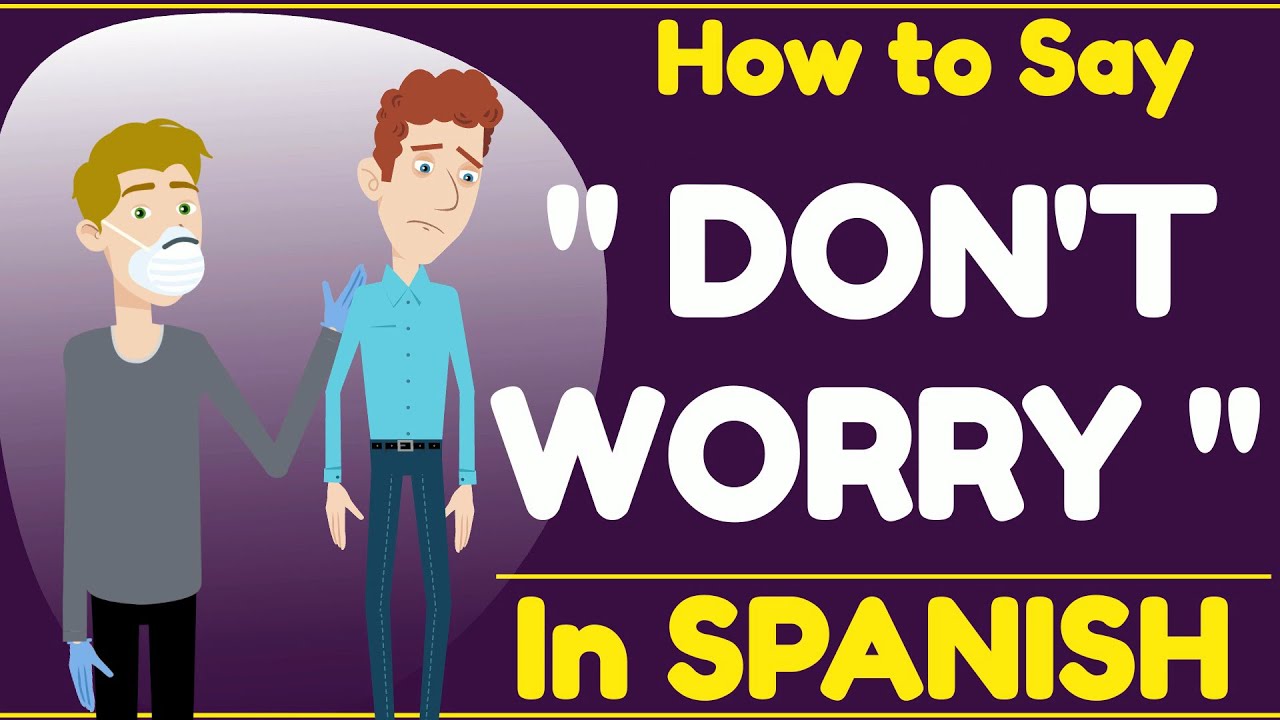
The Power of 'Tranquilo' as a Social Reset Button
Single-word responses carry remarkable emotional weight in Spanish. Few words embody this better than tranquilo (or tranquila when addressing a woman). It serves as an adjective, an imperative, and a peace offering all at once.
If you drop your wallet while paying a street vendor in Medellín or Santo Domingo, the vendor will rarely utter a lengthy sentence. They will smile, offer a slight palm gesture, and say "Tranquilo." In that single syllable, they communicate three separate thoughts: take your time, there is no emergency, and nobody is judging you. Often shortened to just tranqui across urban centers in Spain and the Southern Cone, it has become the default soundtrack of low-stakes hospitality.
Colloquial Colombian Spanish pushes this relaxed ethos further with fresco. Telling someone "fresco, no te afanes" tells them to chill out and stop rushing. In neighboring Venezuela, you might hear plomo or fino used to confirm that an arrangement is settled without friction. These local gems illustrate how native speech prioritizes emotional reassurance over rigid lexical correctness.
Navigating the Line Between Friendly and Disrespectful
Abandoning textbook formalities requires situational tact. Slang builds instant rapport with peers, but using peer idioms with government officials, elderly hosts, or corporate superiors can read as flippant indifference.
When dining at an upscale restaurant or speaking with someone two generations older, drop modern youth slang like "tranqui" or "no hay bronca." Instead, rely on time-tested mid-tier phrases:
- No hay de qué: Elegant, respectful, and never outdated.
- Es un placer: Professional and warm, ideal for customer service interactions.
- A la orden: Heavily favored across Colombia, Venezuela, and Central America, signaling ready assistance.
- Con gusto: The gold standard in Costa Rica and Colombia, striking an effortlessly polite balance.
The distinction between the informal pronoun tú and the formal usted governs these exchanges. Saying "no te preocupes" to a legal magistrate or an elderly bank manager in Santiago creates immediate discomfort. Adjusting to "no se preocupe" maintains conversational lightness while honoring the institutional boundaries of the room.
Frequently Asked Questions (FAQ)
Q1: Is saying "de nada" considered rude or incorrect in modern Spanish?
A1: No, "de nada" is neither rude nor incorrect. It remains fully understood and acceptable across the Spanish-speaking world. Native speakers simply find it somewhat repetitive and sterile when used for tiny favors. Swapping it out for "no pasa nada," "por nada," or "a la orden" makes your conversational rhythm sound far more authentic.
Q2: Should I use "tranquilo" or "tranquila" when reassuring someone?
A2: The ending depends on the gender of the person you are speaking to, not your own gender. If you are reassuring a man, say "tranquilo." If you are speaking to a woman, say "tranquila." In regions where the shortened slang "tranqui" is prevalent, such as Spain or Argentina, the term is gender-neutral.
Q3: How do I say "no worries" when accepting an apology versus acknowledging a thank you?
A3: If someone says "gracias," standard replacements include "por nada," "no hay de qué," or "con gusto." If someone apologizes by saying "perdón" or "disculpa," the correct choices are "no te preocupes," "no pasa nada," or "está todo bien." Mixing them up can sound unnatural, as "de nada" does not work as an apology acceptance.
Modernizing Your Everyday Spanish in 2026
Language learning consistently rewards those who observe how words function under real human conditions. The enduring myth that non-native speakers must memorize stiff, standardized scripts ignores the warmth that defines conversational Spanish from Madrid to Montevideo.
Retiring "de nada" from every routine interaction opens the door to real fluency. Next time an acquaintance apologizes for a minor slip, bypass the textbook defaults. Offer a calm wave and a natural "no pasa nada," or tell them "tranquilo." By matching your phrasing to the emotional context of the moment, you stop translating English in your head and start speaking the language as it actually lives on the street.
