Why the Family Guy Death Pose Took Over the Internet: The Anatomy of a Modern Slapstick Phenomenon
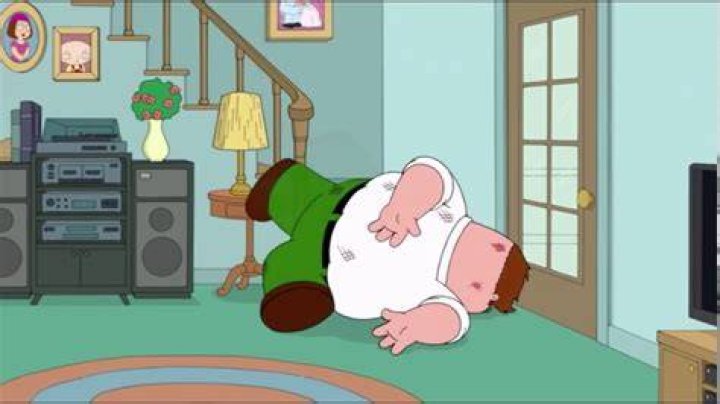
Few visual punchlines have endured the churning churn of internet humor quite like the sight of Peter Griffin sprawled facedown against the pavement, one arm contorted unnaturally across his lower back. As tracked in a detailed looper.com Report, this specific cartoon injury trope evolved from a recurring broadcast sight gag into an omnipresent visual shorthand for sudden, undignified defeat across global digital culture.
The image operates on immediate recognition. A character slips, trips, or takes a routine tumble, and instantly freezes into an anatomically ruptured silhouette: legs splayed, chin glued to the floor, and an elbow pointing toward the ceiling. Decades after animator Seth MacFarlane first put Peter Griffin through the domestic ringer, the pose has become a foundational pillar of modern meme syntax, infiltrating fan art, 3D video game modifications, and competitive cosplay circuits.
📌 Key Takeaways:
- The Origin: The posture originated in early seasons of Family Guy as an anti-cartoon gag, swapping dynamic bounce-backs for deadpan, unmoving trauma.
- The Mechanics: Defined by a faceplant and a twisted arm folded behind the torso, the pose parodies video game ragdoll physics and genuine human clumsiness.
- The Cultural Reach: Spanning viral redraw trends on Twitter and Tumblr to death-state mods in titles like Elden Ring, the visual serves as the internet's premier symbol of humiliating failure.
The Accidental Origin of Peter Griffin’s Twisted Limbs
Traditional American animation historically treated character injury with kinetic buoyancy. When Wile E. Coyote plummeted off a cliff, he compressed into an accordion or flattened into an elastic pancake before springing back to life. Family Guy abandoned that squash-and-stretch convention entirely. When Peter Griffin falls down the stairs or trips over a living room rug, he drops like lead weight.
The defining posture, a flat faceplant, one leg bent upward at an awkward angle, and the signature twisted arm posture resting on the lumbar spine, first registered with viewers during broadcast runs in the mid-2000s. Instead of playing musical stings or adding sound effects, the animation team held the camera motionless over Peter's prone body for uncomfortably long stretches. The humor relied on the sudden suspension of movement. In a medium defined by constant motion, nothing is funnier than complete, paralyzed stillness.
Why the Faceplant Pose Emulates Ragdoll Physics
The visual mechanics of the pose resonate because they capture the unpredictable collapse of a body robbed of motor control. In the mid-2000s, video games adopted middleware physics engines such as Havok, which introduced ragdoll mechanics to titles like Grand Theft Auto IV and Skate. Instead of playing canned falling animations, digital characters collapsed based on pure skeletal mass and environmental friction, frequently ending up in broken, pretzel-like arrangements.
Peter’s posture arrived at the exact cultural moment when players were spending hundreds of hours watching video game avatars bounce down staircases and tumble down highway medians. The cartoon mirrored the glitchy awkwardness of early digital physics: the sudden limpness, the lack of bracing for impact, and the jarring stillness that follows a hard collision. The posture stripped slapstick animation of its theatricality and replaced it with cold, domestic realism.
Mapping the Evolution of Peter’s Fall Across Digital Media
Over two decades, the joke evolved from a broadcast running gag into a blank canvas for digital creators. What began as a recurring cutaway joke within 20th Television's production pipelines gradually transformed into an open-source aesthetic template.
| Timeframe | Primary Platform | Cultural Phenomenon & Meme Shift |
|---|---|---|
| 2005, 2012 | Fox Broadcast & YouTube Cliphouses | Peter falls down the stairs repeatedly across multiple episodes; clips circulate as early YouTube reaction videos. |
| 2018, 2021 | Twitter, Tumblr, Know Your Meme | The "viral redraw trend" ignites; illustrators sketch anime protagonists, Sonic, and comic heroes into the exact contorted posture. |
| 2022, 2026 | TikTok, Steam Workshop, Nexus Mods | Custom ragdoll physics inject the frame into 3D engines; custom death animations replace default screens in mainstream gaming titles. |
As documented by internet archivists at Know Your Meme, digital interest hit critical mass when the frame decoupled completely from Peter Griffin himself. The posture became a geometric wireframe that artists could map onto any recognizable silhouette.
The Redraw Trend and Fandom Deconstruction
Between 2018 and 2021, an illustrative wave swept digital art platforms: the redraw challenge. Illustrators picked iconic, untouchable figures from pop culture, ranging from Dragon Ball's Goku and Sephiroth to Sonic the Hedgehog, and drew them flat on the floor in Peter’s exact configuration.
The comedic engine here is contrast. Taking an all-powerful, brooding anime antihero and reducing them to a motionless lump with an arm draped over their hip completely deflates their status. The redraw movement exposed the posture as a universal equalizer. It strips away fictional power dynamics, demonstrating that no matter how celestial or fearsome a character appears, a trip down the front porch stairs leaves everyone looking equally ridiculous.
From Animation Cel to Video Game Death Mods
The migration from 2D fan illustration to 3D gaming modifications completed the meme's historical arc. In contemporary game engines, modders routinely replace default player-defeat animations with Peter's ragdoll frame. When an adventurer falls in FromSoftware’s Elden Ring, or when a fighter hits zero health in custom PC builds of Super Smash Bros. Ultimate, their character snaps instantly into the twisted-arm collapse.
The recursive irony is inescapable: a television gag inspired by the clumsy nature of digital ragdoll physics was manually coded back into interactive games to parody those very same systems. On short-form video platforms, clips featuring master-level boss fights that culminate in an immediate, static Griffin-style wipeout consistently log millions of views.
Frequently Asked Questions (FAQ)
Q1: Which episode did the Family Guy death pose originally come from?
A1: The posture did not emerge from a single one-off scene, but rather consolidated across several classic episodes where Peter Griffin suffers domestic falls, most notably in Season 4's "Blind Ambition" and Season 6's "Peter's Daughter," where tumbling down staircases resulted in identical motionless collapses.
Q2: Why is the arm positioned behind the back in the pose?
A2: The animation department crafted the twisted arm posture to simulate realistic, unglamorous orthopedic dislocation. By placing the limb unnaturally on the lower spine, the animators made the aftermath look like an awkward, painful accident rather than a staged stunt.
Q3: What sparked the massive redraw trend on social media?
A3: Digital illustrators discovered that placing dignified or hyper-competent characters, such as superheroes, video game protagonists, and anime figures, into Peter's awkward pose produced instant comedic contrast, driving widespread community challenges across art platforms.
The Enduring Mechanics of Digital Slapstick
Visual trends online typically burn hot and disappear within weeks, crushed by the speed of content feeds. Peter Griffin's collapse has survived for over two decades because it addresses a fundamental human impulse: laughing at sudden, total deflation.
The frame contains no dialogue, requires no subtitles, and translates instantly across linguistic boundaries. Whether rendered in hand-drawn digital ink, captured in high-resolution video game rendering engines, or recreated in real life on comic convention floors, that single bent limb and grounded nose remain the undisputed universal symbol of taking a total, unrecoverable loss.
