Why You Have Been Cooking Kale All Wrong: The Secret to Eliminating Bitterness

Most home cooks treat kale as an indestructible substitute for spinach or romaine, tossing raw leaves into salad bowls or flashing them under intense heat until they shrivel into charred, sulfurous leather. The result is almost universally unpleasant: a mouthful of fibrous, bitter greenery that feels more like an endurance test than dinner. The culinary physics behind this brassica tells a different story. As detailed in a recent investigative analysis by the Serious Eats Report, standard home prep fails because it ignores the dense cellulose matrix and enzymatic defense mechanisms built into the leaf.
When crushed improperly or exposed to dry, uncontrolled heat, kale unleashes glucosinolates, sulfur-rich compounds designed by nature to deter foraging animals. Yet top restaurant kitchens routinely flip this chemical profile on its head, coaxing out nutty, deeply savory, and naturally sweet notes. With a grasp of basic plant cellular mechanics, any cook can transform tough foliage into silky braised greens, blistered snacks, or tender cold-weather staples.
📌 Key Takeaways:
- The Chemical Cause: Kale releases bitter isothiocyanates when ruptured carelessly, requiring acid, salt, or targeted heat to deactivate the harsh enzymatic reaction.
- Mechanical Tenderizing: Physical abrasion combined with sodium softens structural cellulose in under three minutes, rendering raw leaves silky without cooking them.
- Culinary Application: Proper prep unlocks high-end restaurant textures, turning tough greens into warm pomegranate braises and golden, savory fritters.
The Cellular Architecture Behind Kale Bitterness
Kale belongs to the species Brassica oleracea, grouping it alongside cabbage, Brussels sprouts, and collards. Unlike delicate butterhead lettuce, which consists mostly of water contained within thin cell membranes, kale produces dense lignified cellulose to survive frost. Trapped inside those cells are two separate components: glucosinolates and an enzyme called myrosinase.
When you slice or chew raw kale, cell walls rupture. Myrosinase immediately mixes with glucosinolates, producing isothiocyanates. This chemical warfare gives the raw green its sharp, peppery sting. Leaving raw kale untreated means forcing your palate to tackle active sulfur compounds wrapped in rigid plant armor.
Eliminating kale bitterness requires neutralizing that enzyme or softening the fibrous walls so seasonings penetrate the leaf tissue. Acid deactivates myrosinase. Heat denatures it. Salt draws out moisture through osmosis, collapsing the stiff cellular scaffolding. Understanding this balance determines whether a bunch of greens turns into kitchen trash or a standout dish.
The Science of Tenderizing Raw Leaves for Salads
For years, home cooks dumped chopped greens into bowls and drowned them in ranch, wondering why the salad felt abrasive. The fix is physical manipulation. Kitchen testing documented across professional test kitchens, including longstanding trial work at Allrecipes, shows that tenderizing raw kale takes less than three minutes of deliberate mechanical friction.
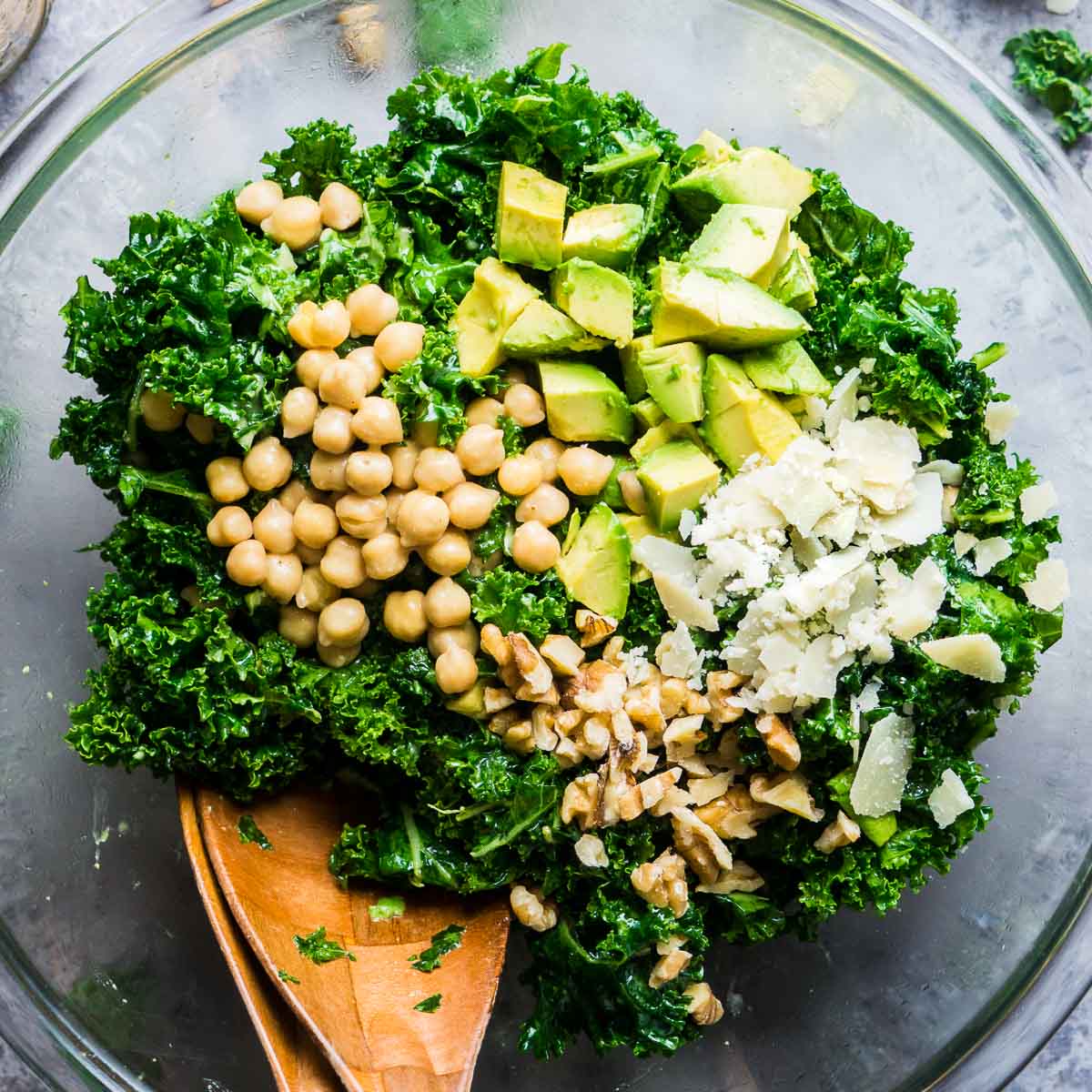
Strip the leaves cleanly from the central woody ribs. Tear the green fronds into bite-sized shards, place them in a wide stainless steel bowl, and add a heavy pinch of coarse kosher salt along with a splash of fresh lemon olive oil dressing. Using clean hands, crush and knead the foliage firmly.
Within ninety seconds, the volume shrinks by roughly 40 percent. The color deepens from dusty jade to a glossy, dark forest green. You are physically fracturing the cellulose network while the salt pulls water across ruptured membranes. The acid in the lemon juice arrests enzymatic bitterness, shifting the flavor profile toward earthy, mildly sweet notes. A classic massaged kale salad treated this way will hold its crisp-tender bite in the refrigerator for up to 72 hours without turning to brown sludge.
Beyond the Bowl: Warm Pomegranate Braises and Savory Fritters
Restaurant kitchens rarely stop at cold salads. Chefs often lean into kale's structural durability to craft dishes that would turn softer greens into watery pulp. In autumn and winter service, warm composed salads demonstrate the leaf's resilience against hot fats and sharp acids.
To execute a warm pomegranate salad, cook thick-cut bacon or pancetta in a wide skillet until the fat renders. Remove the meat, leave the rendered lard over medium heat, and immediately add roughly sliced lacinato dinosaur kale. The flat, pebbled surface of dinosaur kale wilts evenly under the hot fat in roughly two minutes. Toss in toasted walnuts, sharp pomegranate molasses, fresh arils, and a splash of sherry vinegar. The intense tartness of the pomegranate cuts right through the earthy brassica, while the lingering pork fat coats the palate and masks lingering bitter compounds.
In Southern-inspired culinary kitchens, chefs take tenderizing one step further by incorporating greens into deep-fried cornmeal batters. Finely shredded, blanched curly kale folded into traditional hush puppy batter brings moisture and earthy complexity to the interior while the exterior fries to a golden crust at 365°F (185°C). The steam trapped inside the cornmeal orb finishes softening the greens, yielding a tender, savory center that upends expectations of how brassicas behave.
Comparing Culinary Approaches for Optimal Texture
Not all kale behaves the same way in a pan. Choosing between tightly ruffled curly kale and dark, strap-leaf lacinato (also known as Tuscan kale or cavolo nero) dictates cooking times, required moisture levels, and seasoning strategies.
| Culinary Method | Optimal Variety | Ideal Fat & Acid Pairing | Structural Outcome |
|---|---|---|---|
| Salt-Acid Massage | Curly Kale | Extra virgin olive oil + fresh lemon juice | Silky, tender-crisp, retains toothsome bite |
| Flash Sauté | Lacinato Dinosaur Kale | Warm olive oil + slivered garlic + white wine | Bright emerald, slightly charred, soft margins |
| Long Simmer / Stew | Lacinato or Siberian | Parmesan rind broth + apple cider vinegar | Velvety, melts into starch, completely sweet |
| Convection Dehydration | Curly Kale | Avocado oil + nutritional yeast + fine sea salt | Shatteringly crisp, zero sulfur aftertaste |
Mastering Heat: Garlic Sautés, Stews, and Chip Physics
When deploying high heat, timing makes the difference between sweetness and sulfur. Sautéed kale with garlic ranks among the most reliable quick weeknight side dishes, provided you respect moisture control. A recent culinary overview from Better Homes & Gardens highlighted that heat distribution dictates whether brassicas turn tender or dry out into parchment.
Heat two tablespoons of olive oil over medium-low heat. Add four thinly sliced garlic cloves and a pinch of red pepper flakes, cooking gently until the garlic turns translucent and fragrant. Crank the burner to medium-high and toss in dry, ribboned kale. Stir continuously for 90 seconds to coat the greens in aromatic fat, then deglaze the pan with two tablespoons of dry white wine or vegetable stock. Cover the skillet with a tight-fitting lid for exactly 60 seconds. The trapped steam breaks down the remaining tough fibers before the sulfur can concentrate, yielding tender greens with sweet, savory garlic notes.
For braised hearty greens, the plant's fibrous nature works to your advantage. In traditional ribollita or classic white bean and kale soup, dinosaur kale simmers for 30 to 45 minutes alongside cannellini beans, mirepoix, and a rich broth seasoned with a spent wedge of Parmigiano-Reggiano. Starchy beans and savory umami from the cheese rind absorb every trace of remaining sharpness, turning the kale unctuous and sweet.
Baking crispy baked kale chips requires the exact opposite strategy: zero trapped moisture. Wash your greens thoroughly, then run them through a salad spinner until completely dry. Blot any remaining moisture with clean kitchen towels. Moisture left on the leaf steams the greens in the oven, making them limp and bitter. Toss the dry leaves with a light coat of oil, no more than one teaspoon per baking sheet, and bake at 300°F (150°C) for roughly 15 to 18 minutes. Low, dry heat evaporates the plant's water while leaving the crispy green structure intact.
Zero-Waste Techniques: Cooking Stems and Curly Kale Prep Hacks
Throwing away kale ribs wastes nearly 30 percent of the bunch's total weight. Those fibrous stalks contain concentrated sugars and moisture, provided you treat them like celery or asparagus rather than tender leaf tissue.
To prep curly kale efficiently, grip the base of the thick stem firmly with your non-dominant hand. Form an O-ring with the thumb and forefinger of your dominant hand around the stalk just above the cut base, then pull upward in one continuous motion. The leafy fronds strip cleanly off in seconds, leaving bare stalks behind.
Cooking kale stems requires targeted knife work. Slice the fibrous stalks crosswise into thin disks about one-eighth of an inch thick. These small rounds lack the stringiness of longer cuts. Sauté them alongside your onions and aromatics at the very start of cooking; they take about four to six minutes to soften and brown. Alternatively, drop thin matchsticks of kale stem into a quick pickle brine of rice vinegar, sugar, salt, and mustard seeds. Within 24 hours, the tough ribs transform into crisp, tangy additions for grain bowls and sandwiches.
Frequently Asked Questions (FAQ)
Q1: How do I tell if I have massaged kale for too long?
Over-massaged kale turns limp, soggy, and loses all toothsome texture, taking on the bruised appearance of thawed frozen spinach. Stop kneading the moment the leaves turn a uniform dark green, reduce in volume by roughly a third, and feel pliable rather than stiff, typically within two to three minutes.
Q2: Why did my baked kale chips turn bitter and burned?
Oven temperature is the most common culprit. Baking above 300°F (150°C) scorches the fragile leaf margins before the internal moisture fully evaporates, converting chlorophyll and natural sugars into acrid, bitter carbon. Keep heat low, ensure leaves are bone dry before oiling, and season lightly.
Q3: Can I freeze raw kale without blanching it first?
Freezing raw, unblanched kale causes internal enzymes to continue breaking down the plant's flavor and cellular structure, resulting in a dull color and an intensely bitter, sulfurous taste upon thawing. Blanch clean leaves in boiling salted water for two minutes, shock them in ice water, squeeze out excess liquid, and pack tightly before freezing.
Reclaiming the Brassica on the Dinner Table
Kale never deserved its reputation as a punishing health-food chore. Its culinary failures are almost always procedural, born of treating an exceptionally sturdy, chemically complex brassica as if it were fragile garden lettuce. By matching the variety to the cooking method, using salt and acid to break down rigid cellulose, and letting rendered fats balance natural glucosinolates, cooks can tame its bite completely. Handled with basic culinary science, these cold-hardy greens consistently produce some of the most dynamic, satisfying dishes in the modern kitchen.
